
By Yukun Zhang, Ellen Zhang and Liz Lee
BEIJING, Oct 14 (Reuters) - China's trade surplus widened more than expected in September as exports surged, keeping the country on track to surpass last year's record
surplus and likely intensifying trade tensions with major partners.
Global demand for semiconductors and green-tech products has helped keep China's factories humming, easing pressure on policymakers to shore up economic growth against subdued domestic demand and investment.
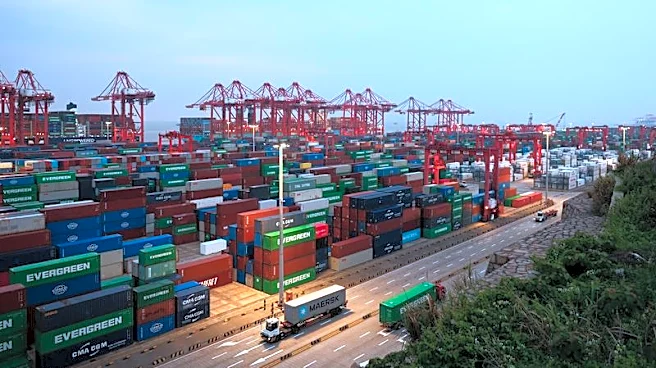
Exports soared 36.3% from a year earlier, outstripping August's 25.0% rise and far exceeding expectations for 25.5% growth, customs data showed on Wednesday. September's growth was the fastest since February when exports expanded 39.6%.
Imports also remained robust, up 31.0% compared with 28.2% growth in August and economists' forecasts of a 24.5% gain.
Wang Jun, a vice customs minister, told a press briefing there would be external uncertainties including geopolitical conflicts that might affect trade, but added there was foundation and support for continued growth in exports and imports in the fourth quarter.
Analysts expect trade to remain buoyant, with tech products continuing to drive exports and imports.
"Key trade ties look set to remain stable through year-end, which should keep this year's key growth engine humming," said Lynn Song, ING's chief Greater China economist.
RISING TRADE SURPLUS
China's trade surplus topped $1 trillion in November last year and posted a record $1.189 trillion for the whole year.
The surplus reached $938.11 billion in the first nine months of this year, putting the manufacturing powerhouse on course to hit the $1 trillion mark sooner unless exports slow sharply in the final quarter. For now, such a slowdown appears unlikely.
September's trade surplus widened to $133.53 billion, helped by a 20-month-high $34.01 billion surplus with the United States and a larger $34.8 billion surplus with the European Union.
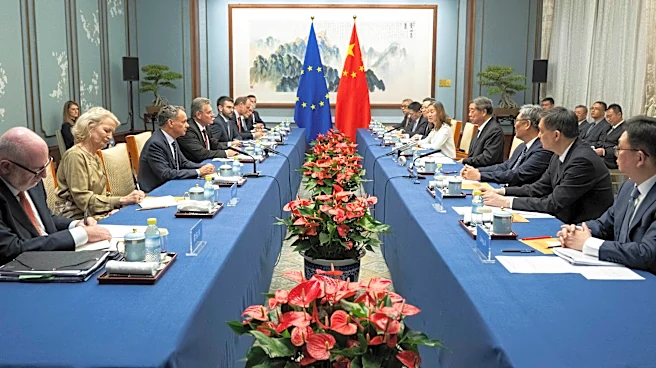
A deal with the EU to limit Chinese exports of hybrid vehicles to the bloc, announced earlier this month, is likely to weigh on China's booming auto trade over time. But with the trade measures likely being laid out in December, exporters may drive up shipments to beat the deadline.
"The widening trade surplus with Europe could spur broader EU restrictions beyond last week's narrow deal, though we expect the resulting economic fallout for China to be small," said ANZ's China economist Nguyen Hoang Nam.
President Xi Jinping's September summit with US President Donald Trump in Washington secured an extension to their tariff truce and an agreement to cut tariffs on $30 billion worth of goods from each side.
High-tech goods and cars continued to underpin shipments, with semiconductor exports rising 108.1% year-on-year in value terms in the first nine months. Auto exports expanded more than 50% in both value and volume terms.
With the global build-out of AI infrastructure showing little sign of slowing, analysts expect demand for Chinese-made technology products, including semiconductors, to remain robust.
China's factory-gate prices rose at their fastest pace in more than four years in September, separate data showed, while consumer inflation edged up but lagged forecasts, underscoring an uneven recovery.
The Canton Fair, China's largest trade exhibition, kicks off on Thursday for Chinese manufacturers to showcase their products to foreign buyers.
In commodities, September crude oil imports fell 21.5% year-on-year in volume terms, while soybean imports were down 7.7% from the same month last year.
RISKS LOOM
The strength in exports indicates that policymakers could still rely on moderate policy support to meet China's 4.5% to 5% annual GDP growth target.
Risks of curbs on Chinese exports loom as China continues to defend its industrial and monetary policies, which Washington and Brussels blame for Beijing's massive trade surplus.
China's central bank last week pushed back against criticism of its exchange-rate policy with a lengthy statement, arguing that it never pursued competitive depreciation and rejecting claims that China keeps the yuan artificially weak to gain a trade advantage.
Any major hit to exports, a key growth engine, could prompt policymakers to step up stimulus measures to address weak domestic demand and the years-long property market downturn.
(Reporting by Yukun Zhang, Ellen Zhang and Liz Lee; Editing by Jacqueline Wong)