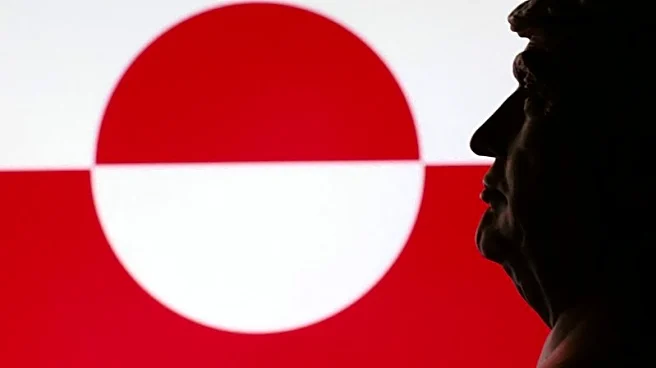




Jan 19 (Reuters) - Investors headed for safe havens while Europe prepared to push back on Monday after U.S President Donald Trump threatened escalating tariffs on allies in the way of his ambition to buy the Danish arctic territory of Greenland.
Trump said additional 10% tariffs would take effect on February 1 on goods from Denmark, Norway, Sweden, France, Germany, the Netherlands, Finland and Great Britain, rising to 25% on June 1 unless some sort of Greenland deal is struck.
Precious metals and bonds
rallied, stocks were down and the dollar lower in response in Asia trade. The euro, yen and Swiss franc were all higher. [MKTS/GLOB]
Here are analyst and investor comments on Trump's threatened tariffs:
KHOON GOH, HEAD OF ASIA RESEARCH, ANZ, SINGAPORE
"Typically you would think tariffs being threatened would lead to a weaker euro, but ... the impact in FX markets actually has been more towards dollar weakness every time there is heightened policy uncertainty emanating from the U.S.
"I think markets are pricing in increased political risk premia on the U.S. dollar.
"The big question now is how much and how hard does Europe push back against President Trump over this issue. For now, it looks like the U.S.-EU trade deal is probably not going to be in place and the U.S.-UK trade agreement as well is now up in the air."
VISHNU VARATHAN, HEAD OF MACRO RESEARCH, ASIA EX-JAPAN, MIZUHO, SINGAPORE
"It throws the so-called agreements out of the window now...(and) that reassessment is probably triggering some risk repricing.
"Markets actively have to reassess very key assumptions around euro/dollar, which has got a huge impact on your dollar assumptions, particular recovery stories in Europe, given the latest data led us to believe Germany had just turned a corner.
"(Trump) is still willing to use tariffs with abandon and making threats and belittling partners. So we're not over the phase."
CHARU CHANANA, CHIEF INVESTMENT STRATEGIST, SAXO, SINGAPORE
"Markets have learned that tariff threats get watered down or delayed, so the initial reaction tends to be cautious rather than panic. But linking tariffs to geopolitics feels less like trade bargaining and the uncomfortable truth for markets is that it raises the odds of tariffs becoming a tool for non-trade disputes. This is harder to price, and potentially demands a stickier risk premium.
"Even without big tariff hikes, uncertainty can make companies delay capex and supply-chain decisions, which could be a slower-burn drag on growth. If we get firm dates, sector targets, or EU retaliation, volatility can broaden."
MATT SIMPSON, SENIOR MARKET ANALYST, STONEX, BRISBANE
"Like any time Trump speaks, we question whether he is seriously serious this time, or its just another throw away comment. But given he's brought tariffs into the equation, markets may be under-reacting this time. As the geopolitical fallout from this has serious implications for NATO. And true allies will be revealed."
(Reporting by Rae Wee and Ankur Banerjee in Singapore; Compiled by Tom Westbrook; Editing by Christian Schmollinger)