
By Liam Mo and Brenda Goh
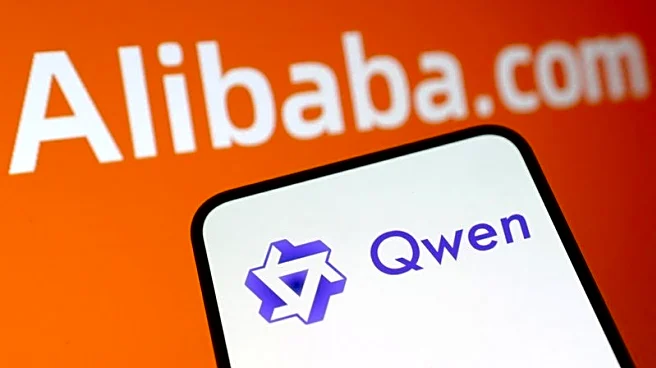
BEIJING, Jan 15 (Reuters) - Alibaba on Thursday launched significant upgrades to its Qwen artificial intelligence app, saying it could now execute tasks such as order food delivery
and make travel bookings as it more aggressively pushes into consumer-facing AI.
The new features, now in public testing in China, enable users to complete such tasks entirely within the AI chat interface, without switching between applications.
The upgrade comes two months after Alibaba's major upgrade on the Qwen App as part of a strategic pivot into consumer-facing AI, an area where it had previously lagged domestic rivals ByteDance and Tencent while focusing primarily on enterprise AI services through its cloud business.
"What we are launching today represents a shift from models that understand to systems that act—deeply connected to real-world services," said Wu Jia, Vice President of Alibaba Group.
AI agents are growing in popularity worldwide as companies seek to use AI to aid real-world tasks. Meta Platforms acquired startup Manus last month to improve its AI systems that can complete multi-step tasks, while OpenAI has rolled out its "Operator" agent that can book restaurants and fill out forms on behalf of users.
The upgrade integrates core Alibaba ecosystem services including e-commerce platform Taobao, instant commerce, payment system Alipay, travel service Fliggy and mapping platform Amap into a unified AI interface.
By integrating Alipay with the Qwen app, for instance, users can authorise and complete transactions without leaving the conversation. The AI payment feature currently supports instant commerce orders and will expand to additional services over time, Alibaba said.
The company also unveiled a "Task Assistant" feature in invite-only beta that can make real phone calls to restaurants, process up to 100 documents simultaneously and plan multi-stop travel itineraries.
Since its public beta launch on November 17, Qwen App has surpassed 100 million monthly active users within two months, according to the statement.
Powered by Alibaba's Qwen3 foundation model, the expansion reflects broader competition in China's AI sector, where companies are racing to translate advanced language models into practical consumer applications.
(Reporting by Liam Mo and Brenda Goh; Editing by Stephen Coates)