






By Alex Lawler
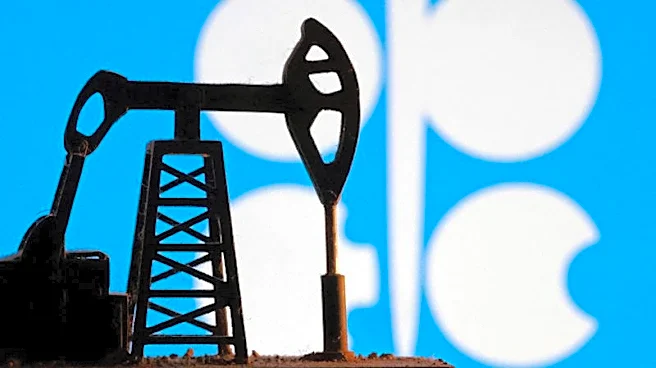
LONDON, April 13 (Reuters) - OPEC on Monday lowered its forecast for world oil demand in the second quarter by 500,000 barrels per day, the producer group's monthly oil report showed in its first public assessment of the Iran war's impact on the market.
OPEC sees a smaller hit to oil demand from the war this year than some other forecasters, such as the U.S. government's Energy Information Administration nL6N40Q0XR. OPEC also made no change to its full-year outlook as it sees consumption
rebounding in later months.
The war has effectively closed the Strait of Hormuz, the world’s most important oil route, shutting in millions of barrels of Middle East production and sending fuel prices soaring. The price surge is pressuring consumers and businesses across the globe, and triggering government action to conserve supplies.
Global oil demand is projected to average 105.07 million bpd in the second quarter, OPEC's report said, down from the 105.57 million bpd forecast in last month's report.
"The demand growth for the second quarter of 2026 is revised down for both the OECD and non-OECD, driven mainly by slight transitory weakness in oil demand growth, given ongoing developments in the Middle East," OPEC said, referring to countries inside or outside the Organisation for Economic Co-operation and Development grouping of industrialised nations.
OPEC+ OIL OUTPUT PLUNGES IN MARCH
OPEC kept unchanged its forecast that world oil demand will rise by 1.38 million bpd in 2026, in contrast to the EIA which halved its prediction in an April 7 report.
OPEC+, which includes the Organization of the Petroleum Exporting Countries plus other producers such as Russia, had agreed to resume oil production hikes as of April, although the report highlighted how steeply output has fallen since the Iran conflict began at the end of February.
Crude oil output by OPEC+ averaged 35.06 million bpd in March, down 7.70 million bpd from February, citing secondary sources, the report showed, with Iraq and Saudi Arabia making the biggest cuts.
OPEC+ agreed nL6N40O02A on April 5 to raise its oil output quotas by 206,000 bpd for May, a modest rise that will largely exist on paper as long as key members are unable to raise production due to the effective Hormuz blockage.
(Reporting by Alex Lawler; Editing by Joe Bavier, David Goodman and Susan Fenton)