

By Elizabeth Howcroft and Tommy Reggiori Wilkes
PARIS/LONDON, Feb 3 (Reuters) - U.S. investigators are examining whether specific crypto platforms have facilitated sanctions evasion by Iranian officials, a blockchain researcher told Reuters, as cryptocurrency activity booms in the Islamic Republic.
Iran's crypto transaction volumes hit an estimated $8-10 billion last year as both state-linked groups and retail investors have turned to digital currencies, according to estimates from TRM Labs and Chainalysis.
The U.S. Treasury is now looking at whether crypto platforms have enabled state-linked players to evade sanctions when seeking to move money abroad, access hard currency or procure goods, said Ari Redbord, global head of policy at U.S.-based blockchain analysis company TRM Labs, who said he had direct knowledge of the Treasury's concerns.
A Treasury spokesperson referred Reuters to a September statement announcing measures the department was taking against "shadow banking" networks supporting Iran, including those it said used crypto to skirt sanctions.
Redbord did not identify any cryptocurrency platforms being probed or where they were based.
TRM Labs estimates there was around $10 billion of crypto activity in Iran last year, against $11.4 billion in 2024. Chainalysis, another U.S.-based blockchain analysis company, said Iranian wallets received a record $7.8 billion in 2025, up from $7.4 billion in 2024 and $3.17 billion in 2023.
Iran's mission at the United Nations did not respond to emailed requests for comment for this article.
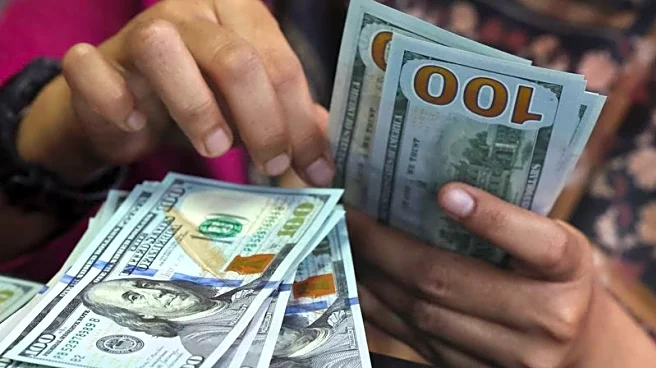
Cryptocurrencies remain a small part of the global financial system, but their use is expected to grow in emerging markets with weak currencies, the International Monetary Fund has said. Iran has been effectively severed from the dollar-based system and has seen a rapid devaluation of its rial currency. Oil revenues remain by far its largest source of foreign currency, hitting $53 billion in 2023, according to the latest estimates from the U.S. government's Energy Information Administration.
"The harder one squeezes the Iranian economy, the more one better be ready to deal with the consequences, one of which is the expanding use of crypto," said Tom Keatinge, director of the Centre for Finance and Security at UK think-tank the Royal United Services Institute.
Iran has also faced a series of crises over the past year, including the 12-day war with Israel as well as American strikes on its nuclear facilities. A recent wave of anti-government protests and the Tehran government's deadly crackdown have prompted threats of further military action from U.S. President Donald Trump as well as fresh scrutiny of Iranian finances.
Washington imposed new sanctions on Iran last month, including on 18 people it accused of being part of shadow-banking networks of sanctioned Iranian financial institutions.
IRAN'S REVOLUTIONARY GUARDS
Crypto wallet addresses are pseudonymous - recorded on the blockchain as a string of letters and numbers - making it difficult to establish who is behind transactions or their locations. Researchers estimate crypto activity using data sources including web traffic and wallet addresses identified by countries including the U.S. and Israel as linked to sanctioned entities.
Gaining a complete picture of Iran's crypto usage is near-impossible, the researchers said. Indeed, estimates of the split between state-linked and retail volumes vary significantly.
Chainalysis estimates that 50% of Iran's volumes last year were linked to the Islamic Revolutionary Guard Corps (IRGC), a powerful political, military and economic force with close ties to Supreme Leader Ayatollah Ali Khamenei.
By contrast, TRM Labs estimates that 95% of Iran-linked flows come from retail investors. Still, the company says it has identified more than 5,000 addresses it labels as IRGC-linked and estimates the Guards have moved $3 billion worth of crypto since 2023.
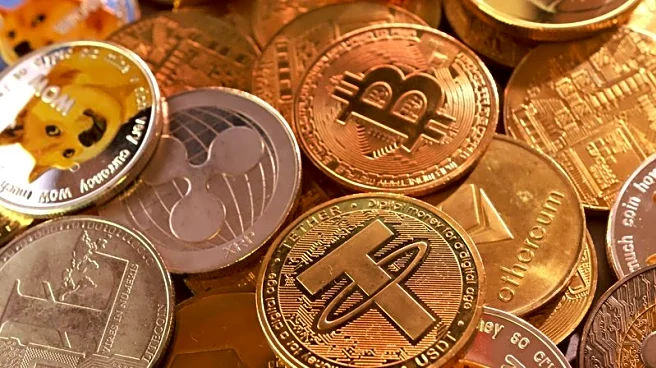
British blockchain research company Elliptic said last month that the Central Bank of Iran, which like the IRGC is subject to international economic sanctions, had acquired at least $507 million worth of the stablecoin USDT in 2025, in what Elliptic called a "sophisticated strategy to bypass the global banking system."
Iran's U.N. mission didn't respond to questions on the IRGC's or the central bank's alleged use of crypto. Reuters couldn't independently verify the findings of Elliptic and other blockchain researchers.
Tether, which issues USDT, said it maintained a "zero-tolerance policy toward the criminal use of our tokens", and that it worked closely with law enforcement agencies to identify and freeze assets linked to illegal activity.
Andrew Fierman, Chainalysis' head of national security intelligence, said that when a crypto wallet is publicly identified or sanctioned, owners can easily create new ones to use instead, complicating the task of U.S. authorities.
RUSI's Keatinge said the scale of the challenge facing U.S. authorities was enormous.
"It requires significant resources to do the kind of blockchain tracing and so on, to issue the sanctions," he added. "It's the ultimate high-speed whack-a-mole game."
15 MILLION CRYPTO USERS IN IRAN
Ordinary Iranians, meanwhile, may be buying crypto because of the rapid rial devaluation, the researchers told Reuters. Crypto activity rose sharply during bouts of social and geopolitical instability last year including during the recent protests, until the government blocked the internet on January 8, the analysts added, citing activity on Iranian exchanges.
Nobitex, the largest of Iran's crypto exchanges, told Reuters that about 15 million people in Iran had some exposure or used crypto assets, based on industry estimates. It said it had 11 million customers, with the majority of activity from retail and smaller investors. "For many users, crypto primarily functions as a store of value in response to the continued depreciation of the local currency," Nobitex said in an email.
Iranians can move money off local exchanges to wallets and platforms located elsewhere, blockchain researchers and finance experts say.
Singapore-based blockchain researchers Nansen said some Iranians had pulled funds from Nobitex in 2025, with balances of major cryptocurrencies having declined sharply from a mid-year peak. Nobitex was hit by an anti-Iranian hacking group in June last year.
Nansen said it had identified hundreds of thousands of dollars worth of crypto which were transferred from Nobitex to international cryptocurrency exchanges.
"These funds did not simply leave crypto. Instead, they increasingly moved to international exchanges," said analyst Nicolai Sondergaard. "Overall, the data suggests crypto in Iran acted as a slow, structural exit route throughout 2025."
Nobitex said some customers may use crypto to transfer funds internationally, but it did not track the destination or purpose of such transactions. The exchange said it safeguards user assets by robust monitoring of activity, including checks to identify potentially suspicious transactions. It said it was understandable that some users may have had concerns regarding asset safety following the June hack.
"In many cases, users transfer assets to self-custodied wallets (not other international exchanges) as a precautionary measure, allowing them time to assess the situation and determine whether to redeposit funds at a later time," Nobitex added.
(Reporting by Elizabeth Howcroft and Tommy Reggiori Wilkes; Additional reporting by Tom Wilson and Parisa Hafezi; Editing by Pravin Char)