





By Saeed Azhar and Pritam Biswas
Oct 13 (Reuters) - Goldman Sachs on Tuesday beat third-quarter profit estimates, as dealmaking remained steady and volatile markets tied to the Middle East conflict lifted its equities revenue, sending its shares up 3.8% before the bell.
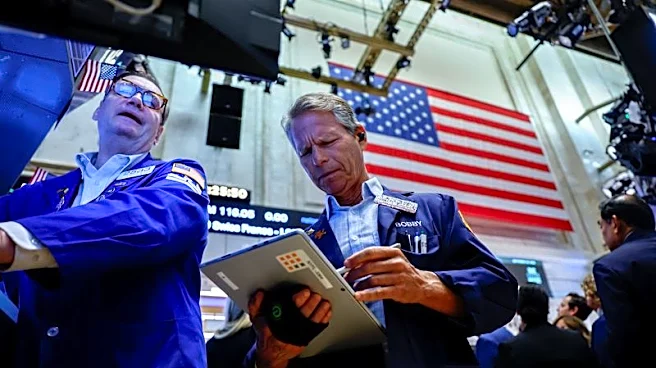
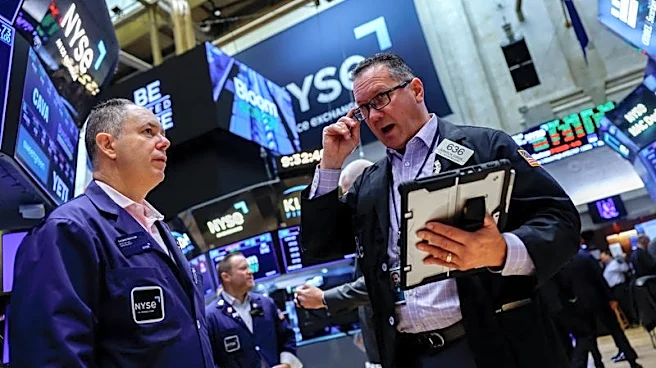
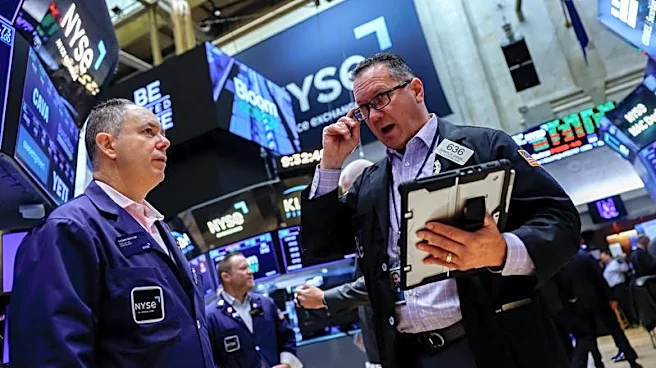
US equity markets were volatile during the quarter, driven by the Federal Reserve's September interest-rate hike, rising fuel costs and a selloff in chip stocks. Investors aggressively reshuffled portfolios, resulting in higher revenue
for the trading desks of banks.
The equities business posted a 72% jump in quarterly revenue to $6.44 billion. The fixed income, currency and commodities business revenue, however, came in at $3.47 billion, down 1% from a year ago.
"FICC came in light, which was somewhat expected based on recent bank conferences, but investment banking was a clear beat relative to consensus, which demonstrates a still robust pipeline of deal activity that is expected to keep this revenue line elevated into the next several quarters," said Stephen Biggar, analyst at Argus Research.
Goldman's FICC business has been volatile this year. Net revenue surged 32% in the second quarter, but had dropped 10% in the first quarter when its rates business was hit by volatility from the Iran war.
"Notwithstanding the current complexity and uncertainty in the world, we remain very well positioned to continue to deliver for our clients," CEO David Solomon said in a statement.
Total profit was $5.29 billion, or $17.01 per share, for the three months ended September 30. That compares with $4.10 billion, or $12.25 per share, a year ago. Analysts expected a profit of $13.02 per share, according to estimates compiled by LSEG.
Goldman's shares have gained about 1.7% so far in 2026, underperforming closest peer Morgan Stanley and the S&P 500.
INVESTMENT BANKING HOLDS
Goldman's investment banking division navigated a brief slowdown in dealmaking as M&A activity in the third quarter fell 41% from the prior three months to $993 billion, falling below $1 trillion for the first time since the second quarter of 2025, LSEG data showed.
Investment banking fees rose 21% from a year ago to $3.22 billion. Goldman defied the broader market slowdown through higher debt and equity underwriting, alongside an 18% jump in advisory revenues. Advisory revenue was a record for the investment bank.
The investment bank acted as joint lead bookrunner for Intel's $23 billion equity offering and global coordinator for SK Hynix's $26.5 billion US offering.
It also advised the New York Yankees on a $2.6 billion financing deal with Apollo Sports Capital affiliates and Nvidia on its $3.5 billion investment in MediaTek.
On a sequential basis, owing to significant activity in the second quarter, investment banking fees dropped 5%.
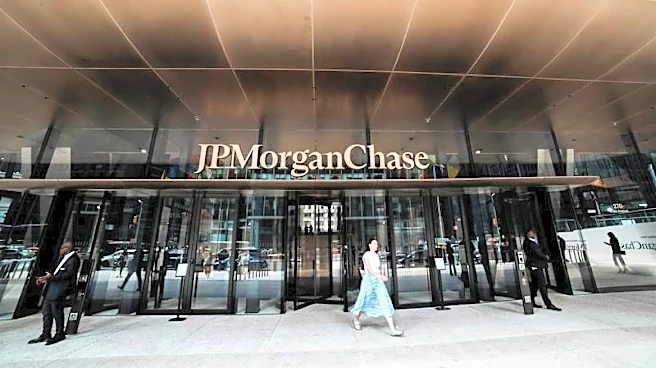
However, JPMorgan Chase missed third-quarter estimates for profit on a softer performance in investment banking and less activity at its trading desks.
STRESS-FREE PRIVATE CREDIT
Goldman Sachs' private credit fund said in September investor requests to pull money slowed further in the third-quarter tender offer from one of its funds, keeping the number under the threshold 5% cap for the third straight quarter at a time when other private credit players have been facing redemption requests.
Private credit firms are facing pressure from investors seeking to pull their capital, driven by concerns that artificial intelligence could disrupt software companies in their portfolio.
However, withdrawal requests at major funds have slowed in the third quarter as asset managers clear backlogs and investor sentiment rebounds.
The asset and wealth management division, which houses the bank's private credit fund, reported a 14% jump in its revenue, marking another strong quarter. That helped total net revenue rise 23% to its second highest at $18.68 billion.
The bank has expanded its asset and wealth management business in recent years to generate steadier earnings and reduce reliance on its volatile trading and investment banking units.
CEO SUCCESSION
The Wall Street Journal reported late last month Goldman had discussed a plan for Solomon to step down as CEO, to be replaced by Chief Operating Officer Waldron as soon as next year, citing people familiar with the matter. Goldman had declined to comment at the time.
Solomon was appointed CEO in 2018, the same year Waldron became of COO. Solomon scaled back the firm's consumer banking by shedding assets after its foray into retail banking flopped.
If finalized, the transition would crown a nearly three-decade career at Goldman for the 57-year-old Waldron, who has worked in lockstep with Solomon to engineer the firm's modern strategic direction.
(Reporting by Saeed Azhar in New York and Pritam Biswas in Bengaluru; Editing by Arun Koyyur)