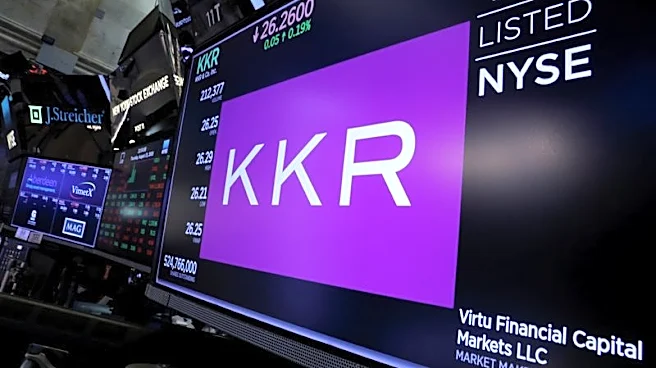








May 11 (Reuters) - KKR will inject $300 million into struggling private credit fund FS KKR Capital, the fund said on Monday as it reported growing losses and a sharp drop in net asset value.
Traded funds like FSK, which KKR manages alongside Future Standard, have suffered on the stock market, and investors have flocked to withdraw money from their non-traded equivalents, as fears have grown about lending standards and the impact on software borrowers of disruption from artificial intelligence.
FSK
has lost 46% of its value over the past year and ratings agency Fitch downgraded it to junk territory last month.
KKR will buy $150 million in convertible perpetual preferred stock, and launch a tender offer for up to $150 million in common stock, it said in a statement. It is offering $11 per share, although it said it "believes the intrinsic value of FSK’s common stock is in excess" of that.
The fund also authorized a $300 million stock repurchase program.
Non-accruals, or cases where loans stop paying interest or are unlikely to be repaid, rose to 4.2% of the portfolio's fair value from 3.4% at the end of December. Raymond James analysts said the deteriorating rate was "exacerbating FSK's concerning credit trends versus peers".
FSK said the decline in asset value was driven by investments that had weighed on prior quarters, new non-accrual assets and spread widening, or investors demanding higher yields for riskier assets across debt markets.
Net asset value per share fell to $18.83 from $20.89 on December 31, while loss per share widened to $1.57 from 41 cents.
The fund marked down holdings in companies including software firm Medallia, which is set to be returned to its creditors in a move that could wipe out $5.1 billion in equity for its owner Thoma Bravo and co-investors, people familiar with the matter have said.
"We believe the remaining portfolio quality ... is likely to deteriorate through the remainder of 2026," Raymond James said.
(Reporting by Isla Binnie in New York and Patturaja Murugaboopathy in Bengaluru; Editing by Tasim Zahid and David Gregorio)