





By Indradip Ghosh
BENGALURU, April 22 (Reuters) - The U.S. Federal Reserve will wait at least six months before cutting interest rates this year, according to a Reuters poll of economists, as war-driven energy shocks reignite already-elevated inflation.
The nearly two-month war in the Middle East has led to soaring fuel prices, eroding consumer confidence to a record low and wiping out market pricing for rate cuts.
Even the Fed's most dovish policymakers now warn inflation remains uncomfortably high,
underscoring a lack of urgency to move. Economists have again delayed the timing for an expected cut in the latest poll.
Still, most forecasters have clung to the view that rates will fall at least once more. They hold much milder inflation expectations than households that are noticing prices rising more sharply since the start of the war, particularly for gasoline and energy.
A slim majority of economists, 56 of 103, in the April 17-21 Reuters poll predicted the Fed's benchmark interest rate would remain steady in the 3.50%-3.75% range by the end of September, compared to the nearly 70% who expected at least one reduction by then in a survey in late March. Most expected a cut by the end of June in a poll in early March.
There was no clear consensus where rates would end the year, but 71 economists still expected at least one cut. The median forecast expects a single reduction, matching the dot‑plot projections released by the Fed last month.
Nearly a third of economists now expect rates to remain unchanged this year, nearly double the share in the previous survey.
FED LEADERSHIP TRANSITION
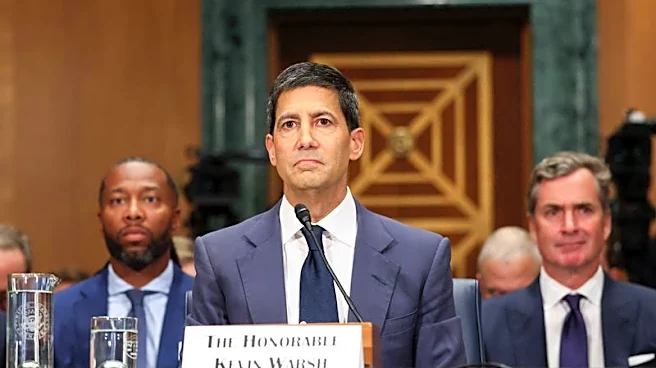
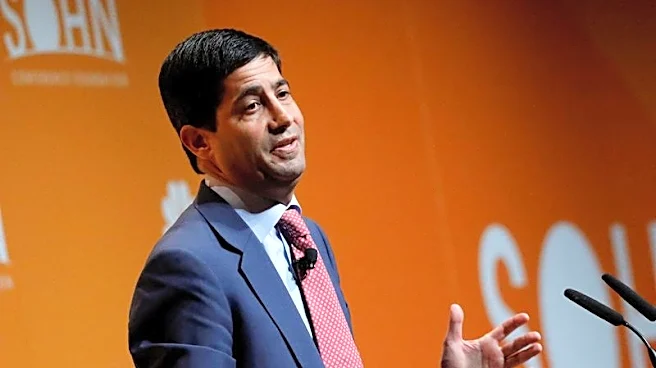
The poll was largely conducted ahead of Fed chief nominee Kevin Warsh's confirmation hearing before a U.S. Senate committee on Tuesday, although economists contacted afterwards to discuss their forecasts said his testimony did not alter their views.
"We have a favorable outlook broadly similar to the Fed's, where tariff inflation is transitory and oil puts upward pressure on headline inflation but doesn't translate into faster core inflation. Therefore, the Fed will be able to ease rates later this year," said Michael Gapen, chief U.S. economist at Morgan Stanley.
"The main risk to our call is parts of inflation do not behave as favorably as we think they will and the Fed just stays on hold."
U.S. President Donald Trump has expressed confidence that Warsh, his nominee to take over from Fed Chair Jerome Powell, would lower rates if confirmed and said he would be disappointed if it did not happen.
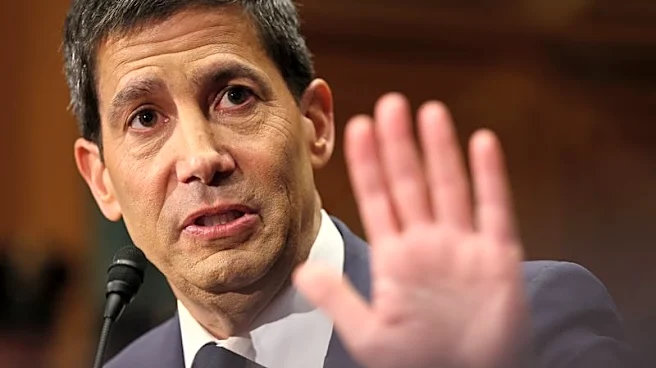
In his testimony on Tuesday, Warsh denied making any such promises to Trump but called for "regime change" at the Fed.
"Warsh is just one voice and he would need to convince the (Fed's policy-setting) committee if he were to come in with the idea of cutting quickly. He's going to need some time to earn the credibility, the trust of the committee," said Brett Ryan, senior U.S. economist at Deutsche Bank.
Adam Schickling, an economist at Vanguard, agreed.
"Changing just one member of the Fed is really not enough to change our view of what policy is going to be doing," he said.
The Fed's preferred inflation gauge, the Personal Consumption Expenditures Price Index, is now expected to rise by an annual rate of 3.7%, 3.4% and 3.2% in the second, third and fourth quarters, respectively, about 30 basis points higher than the forecasts in late March. The Fed has a 2% inflation target.
Those survey changes mark a second straight upward revision but are still mild compared with the nearly 5% inflation expected by consumers over the year ahead.
"With the backdrop to inflation missing their target for the better part of five years, they really need to be careful of inflation expectations becoming unanchored," Deutsche Bank's Ryan said.
Forecasts for unemployment and growth were broadly unchanged. Joblessness was seen averaging 4.3% in coming years, around where it is now, while growth was expected to average about 2%.
(Other stories from the Reuters global economic poll)
(Reporting by Indradip Ghosh; Polling by Anant Chandak and Devayani Sathyan; Editing by Ross Finley and Paul Simao)