








By Joanna Plucinska and Ilona Wissenbach
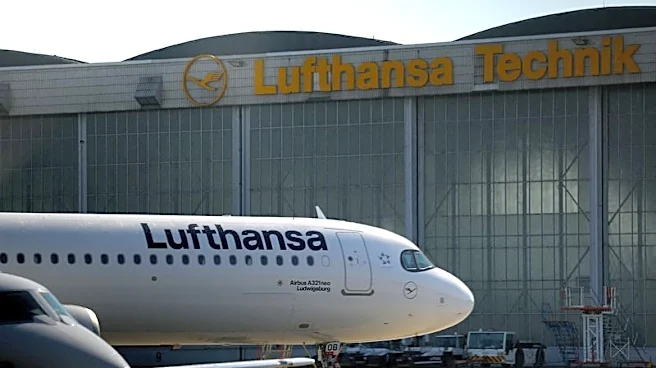
LONDON/FRANKFURT, Aug 4 (Reuters) - Germany's Lufthansa cut its profit outlook on Tuesday and warned earnings could fall this year after the Iran war drove up fuel costs, sending its shares down more than 10% and putting them on track for their biggest one-day drop since 2021.
The warning underscores the pressure on European airlines as higher jet fuel costs pressure margins despite hedging programmes. Lufthansa has also been grappling with costly strike disruptions
as it works to turn around its business.
"Today, we reflect on a challenging second quarter that was once again marked by multiple geopolitical crises and uncertainties," CEO Carsten Spohr said in a statement.
"Despite our further improvement in load factor and a significant increase in yield, we were unable to fully offset the considerable rise in fuel costs." The load factor is a measure of how full an airline's planes are.
Investors are closely watching the sector's ability to cope with sustained fuel-price volatility, with some analysts warning that successive crises could intensify pressure on weaker players.
SHARE GAINS ERASED AS IRAN WAR BITES
Lufthansa forecast 2026 adjusted earnings before interest and tax of €1.7 billion to €2.2 billion ($2.0 billion to $2.5 billion). It had previously expected adjusted EBIT well above the previous year's €1.96 billion.
The company's shares were down 10.8% at 1330 GMT as investors reacted to the weaker outlook. After peaking in June, the stock is now down about 2% this year.
"Lufthansa missed second-quarter expectations, which had already come down in the run up to results," said Ruairi Cullinane, transport analyst at RBC Capital, adding the shares looked inflated ahead of the results.
"Before today's sell-off, Lufthansa share prices were higher year-to-date, despite consensus downgrades on the Iran war and increase in fuel prices."
Chief Financial Officer Till Streichert told journalists the second half of the year remained uncertain as customers were booking closer to departure dates.
However, Lufthansa maintained its longer-term targets, including an operating margin of 8% to 10% between 2028 and 2030, despite disruption linked to the war.
Analysts and investors view 2026 as a crucial year for the group's turnaround plan as it seeks to bolster finances weakened by years of strikes and a complex fleet structure.
CAPACITY CUTS
The U.S. war on Iran sent fuel prices surging when it began in late February. While prices have since eased, they remain highly volatile amid uncertainty over whether diplomatic efforts will succeed.
European airlines, including British Airways-owner IAG and Air France-KLM, have been hit hard by higher fuel costs despite hedging programmes. Both have said they plan to trim capacity to help offset the impact.
Lufthansa said capacity fell about 3% in the second quarter, partly due to strike days in April. However, its full-year capacity plans remain unchanged and are expected to be broadly flat.
Adjusted EBIT fell to €383 million in the second quarter from €870 million a year earlier, below analysts' average forecast of €401 million in a company-compiled consensus.
The company now expects 2026 fuel costs of €8.66 billion, compared with an earlier forecast of €8.9 billion.
RETIRING OLD PLANES
Lufthansa said it plans to retire or temporarily ground several aircraft to streamline operations, reduce fuel consumption and limit exposure to unhedged fuel costs.
In its financial report, Lufthansa said this would include the early retirement of fuel-intensive long-haul aircraft such as the Airbus A340-600 and the temporary grounding of two Boeing 747-400s from the start of winter.
The company added that 86% of its fuel needs for this year are hedged, while Spohr told reporters fuel supplies are expected to remain stable.
($1 = 0.8690 euros)
(Reporting by Ilona Wissenbach, Linda Pasquini and Joanna Plucinska. Editing by Sherry Jacob-Phillips, Louise Heavens and Mark Potter)