


By Howard Schneider and Ann Saphir
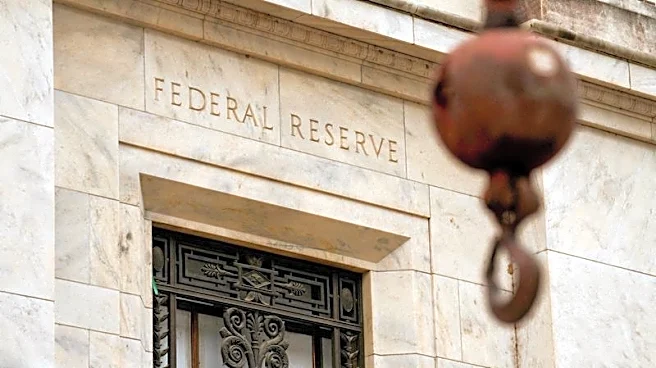
WASHINGTON/SAN FRANCISCO, Sept 24 (Reuters) - US Federal Reserve officials, who have begun hiking interest rates to tame high inflation, believe they can do so without damaging the job market if businesses come to anticipate falling inflation as a reason to raise prices less.
Success may hinge on what's driving prices higher, a matter of debate among policymakers, but comments by Fed Chairman Kevin Warsh last week and others since then show central bank officials
feel a soft, if slow, landing from inflation is attainable, requiring little if any rise in the unemployment rate.
"If people think the Fed is on the case in doing something about inflation, that does tend to flow through to people's expectations in price-setting behaviors. Flip side, if they don't think we're on the case, I think it flows through to price-setting behaviors," Richmond Fed President Thomas Barkin said on Wednesday, channeling his McKinsey & Co consulting years to describe the fight within companies between raising prices and preserving market share. "You could reduce inflation physically: less demand, more supply, prices come down. You could reduce inflation based on expectations."
There exists a counterargument: Absent an abrupt end to the energy, tariff and other supply shocks currently stoking inflation, something needs to take a hit from rate hikes in order to slow inflation, whether it is consumers cutting back or businesses slowing investment.
Whether inflation stems from supply shocks or classic overheated growth, "the only way the central bank can close the gap is by reducing demand — and, with it, output and employment," Chicago Fed President Austan Goolsbee said earlier this week.
Now, however, Fed officials including Warsh appear to be banking on factors that would allow expectations rather than demand destruction to do their work. The labor market is seen as balanced near full employment, with the jobless rate of 4.1% and moderate wage gains considered consistent with 2% inflation. Inflation, as measured by the Personal Consumption Expenditures Price Index, is high enough at 3.7% to concern central bank officials, but not near the post-COVID-19-pandemic levels that prompted the stiffest Fed rate hikes since the 1980s.
PHILLIPS CURVE DEFIANCE
Inflation expectations are considered anchored around the 2% target, an asset the Fed is counting on heavily, and some easing of price pressures may be already in train if tariff and energy shocks ease as expected.
"Right now, the labor market is not a source of inflation. There's not necessarily a need to slow the labor market down or to cool it to attain our inflation target. ... It comes by changing the expectations of folks that are thinking they need to raise prices by 3 or 4%," St. Louis Fed President Alberto Musalem told Reuters in an interview on Monday. "There doesn't necessarily have to be a Phillips curve trade-off," a reference to the tendency of inflation and unemployment to move in opposite directions.
The latest median projection among Fed policymakers sees no change to the current unemployment rate through 2029, even with PCE inflation anticipated to decline and economic growth seen staying above its long-run potential — what might be considered a somewhat gravity-defying outlook.
When inflation soared to a 40-year high after the pandemic, prominent economists relied on Phillips curve economics to estimate that the unemployment rate would perhaps need to hit double-digits for inflation to ease. Then-Fed Chair Jerome Powell warned of the "pain" facing households and businesses because of punishing rate hikes.
Instead, businesses adjusted not by firing workers who were hard to find during the pandemic, but by slashing high levels of job openings. Global supply chains recovered from the pandemic snarl, and consumers smoothed spending across goods and services in a way that eased what had been pockets of fast-rising prices.
Both inflation and the unemployment rate plummeted in defiance of models based on the classic trade-off between ample jobs and tame inflation.
It was a unique set of circumstances, but to Fed policymakers it emphasized the importance of anchored expectations — market-based measures throughout that period showed investors and businesses kept faith the central bank would quell inflation — and of not assuming rising joblessness was the only path back to 2% inflation.
WARSH SEES NO NEED TO HARM JOB MARKET
The current approach may mean slower progress and a longer inflation fight. In its September 16 policy statement announcing the first rate hike in three years, the Fed said the increase would "support a timelier return" to the 2% target — though not necessarily a timely one. Accompanying projections showed officials saw PCE inflation remaining above 2% until 2029.
The rate hikes anticipated alongside that modest inflation path were similarly modest, with policymakers projecting just one more quarter-percentage-point hike this year and opinion divided over anything further. Investors see a more aggressive path, with three more quarter-percentage-point increases over the Fed's next five meetings through April, beginning as soon as the October 27-28 session a week before US midterm elections.
Future data will shape the response, including a PCE report for August due next week. Fed officials are also increasingly attuned to evidence inflation is no longer just being fueled by tariff and energy shocks, but is coming from stronger economic demand and growth, and as a spillover from the artificial intelligence boom that is driving up some relative prices, from the cost of copper to the hourly rate for electricians.
Overheating demand, particularly if it begins to stretch the job market and raise the pace of wage hikes, would likely trigger a faster Fed response.
"You don't have this magic bullet that, 'Oh, we're going to raise rates and it's going to hit just AI,' right? And AI is going to then slow and that's going to take this demand pressure off," said Tim Duy, chief US economist at SGH Macro Advisors. "I think it's going to be very hard to slow inflation without inflicting some collateral damage on the economy, on the labor market."
For now, though, that's the hope.
"I don't believe that we need to do harm to the labor markets to achieve our objective," Warsh said in his post-meeting press conference last week. "I don't believe that the two parts of our mandate, price stability and full employment, are working at cross purposes over the medium term."
(Reporting by Howard Schneider in Washington and Ann Saphir in San Francisco; editing by Dan Burns and Paul Simao)