
By Tassilo Hummel and Helen Reid
PARIS, April 13 (Reuters) - Sales at Europe's biggest luxury brands have shrunk in Dubai and Abu Dhabi as the Iran conflict https://www.reuters.com/world/iran/ hit the sector's
fastest-growing market in the latest setback for the $400 billion industry whose value has contracted over the last three years.
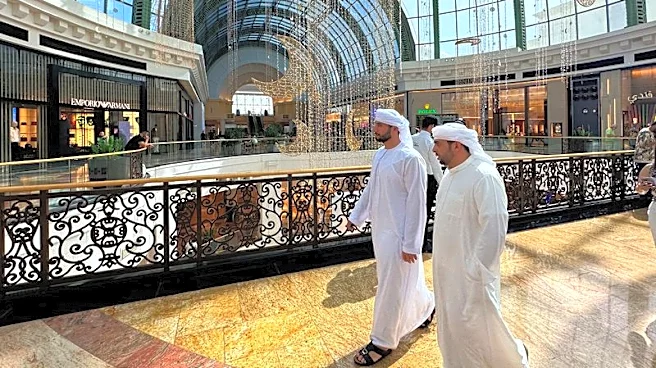
Luxury brands in March reported sales drops of 30-50% at the Mall of the Emirates, one of Dubai's largest, compared to the same month last year, according to a source with knowledge of the previously unreported figures.
The figures are a gauge of the impact of the conflict on the luxury sector just as LVMH, Kering and Hermes are due to report quarterly sales this week.
Footfall at the Mall of the Emirates, home to luxury boutiques spanning LVMH's Louis Vuitton and Dior, Kering's Gucci, Richemont's Cartier, Chanel and Rolex alongside an indoor ski resort and a wellness clinic, dropped by 15% in March, according to the source.
Traffic at the larger Dubai Mall, which is more popular with tourists, was down around 50%, this source and a second industry source added, indicating a potentially even larger sales drop.
In Abu Dhabi, a smaller shopping hub than Dubai which is less reliant on tourist spending, March sales at the Galleria mall were more resilient, but still down around 10% across the board, according to the second industry source.
None of the companies responsible for operating the Mall of the Emirates, Dubai Mall and Galleria replied to a Reuters request for comment.
LVMH, Kering and Hermes also did not respond to a request for comment on their Middle East sales and the impact of the conflict.
THE GULF WAS A 'STRATEGIC REGION' FOR LUXURY
Since a luxury boom ended in 2022 as China struggled to recover from the COVID-19 pandemic and growth slowed, the combined market capitalisation of LVMH and Kering has fallen by more than 100 billion euros, more than a quarter of their value.
Annual industry-wide sales fell by 2% last year, according to consultancy Bain & Company.
The Middle East, accounting for roughly 5% of global luxury consumption, had been one of the luxury industry's rare bright spots, reporting double-digit annual revenue growth in recent years, said Carole Madjo, head of luxury research at Barclays.
"It was definitely a strategic region. Everything was okay," Madjo added.
But Dubai's carefully curated image of glamour and stability has been shaken by the conflict that began with U.S. and Israeli strikes on Iran on February 28.
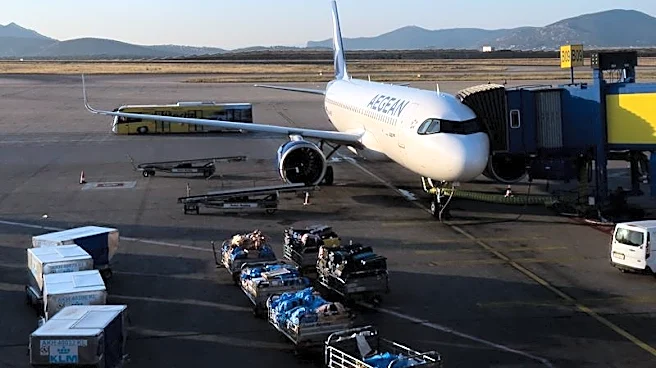
Some of its buildings and infrastructure https://www.reuters.com/world/middle-east/several-loud-blasts-heard-over-dubai-doha-second-day-witnesses-say-2026-03-01/, including its landmark Burj Al Arab luxury hotel and parts of its giant airport, were hit by Iranian drone attacks.
RECOVERY FROM THE CONFLICT IS LIKELY TO TAKE TIME
Getting back to normal will take months for the hub, even if diplomatic efforts https://www.reuters.com/world/asia-pacific/us-iran-ceasefire-deal-shows-strain-ahead-talks-with-oil-flows-squeezed-2026-04-10/ succeed in bringing an end the conflict in the near term.
Bernstein analysts said in a note this month that the conflict's ripple effects, including higher costs for oil and travel, inflation or a possible stock market rout, could "easily disrupt" shopper appetite beyond the Gulf too, in particular in the United States.
"If it now turns out that whatever luxury recovery we were hoping for in 2026 is not going to happen, and it's going to be postponed at best into the second half or into next year, I don't think anybody can be surprised by it," said Christopher Rossbach, portfolio manager at J Stern & Co in London.
LVMH, the world's biggest luxury group, is due to report first-quarter sales on Monday, followed by Gucci-owner Kering and Hermes later this week. Kering will hold its capital markets day on Thursday.
Due to the Middle East's relatively small size, the conflict's immediate impact on quarterly sales will be limited. But the war's effect on profits, which most listed luxury groups only report on a half-year basis, could be far more significant, Rossbach said.
With low rents and labour costs, higher retail prices than other regions and virtually no taxes, Dubai is one of luxury's most lucrative sales spots.
For megabrands like Louis Vuitton, Hermes or Chanel, annual sales per square metre can surpass several hundred thousand euros in Dubai, multiple times the global average, the source with knowledge of the Mall of the Emirates' performance said.
(Reporting by Tassilo Hummel and Helen Reid; editing by Barbara Lewis)