







By Stephen Nellis
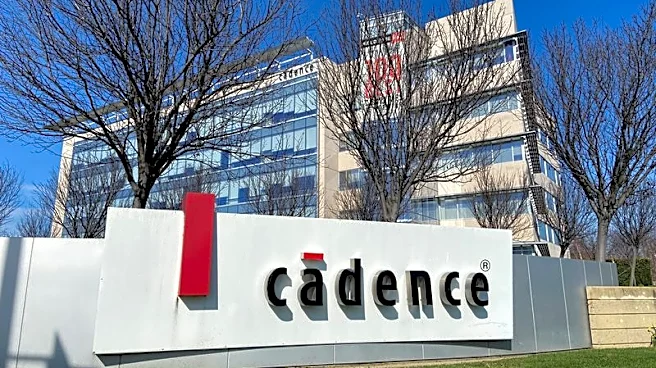
SAN FRANCISCO, Oct 26 (Reuters) - Cadence Design Systems on Monday launched a portfolio of AI models tuned to help design computer chips, deepening its open-source model work with Nvidia and diverging from rival Synopsys' recent deal with OpenAI.
Both companies make software used to design computing chips — a process that involves arranging billions of transistors precisely to meet cost and performance targets — and are racing to have AI "agents" use those tools on behalf of human
engineers to speed up the process.
The new suite, called Cadence Maestro, introduced on Monday, was built in part on Nvidia's open-weight Nemotron model and secured with Nvidia's OpenShell safety technology, the companies said.
Cadence said customers can run the models on its own cloud or any public cloud, or keep them entirely in-house behind their own firewalls and data centers.
Shares of Cadence, which reports earnings after market close on Monday, rose 3.9% after the announcement.
Customers can also fine-tune the models on their own chip designs, and early results show up to 30% higher quality and up to five times better cost-efficiency than general-purpose models, it added.
The Cadence approach contrasts with that of its largest competitor, Synopsys, which on September 30 said it would develop an AI model with OpenAI and share revenue with the ChatGPT maker. That model, GPT-Synopsys, will run on OpenAI-hosted infrastructure.
Paul Cunningham, a Cadence senior vice president, framed Maestro as model-agnostic, saying, "there are more (AI) model providers out there than there are (chip design software) vendors."
When asked whether Cadence might strike its own deals with proprietary AI labs, Cunningham said both open- and closed-weight approaches were being "pursued equally," and that working with commercial labs was "part of the Maestro vision," though he declined to elaborate.
The first Maestro models will reach select early-access customers in the fourth quarter, Cadence said.
(Reporting by Stephen Nellis in San Francisco; Editing by Vijay Kishore and Matthew Lewis)