



By Heekyong Yang
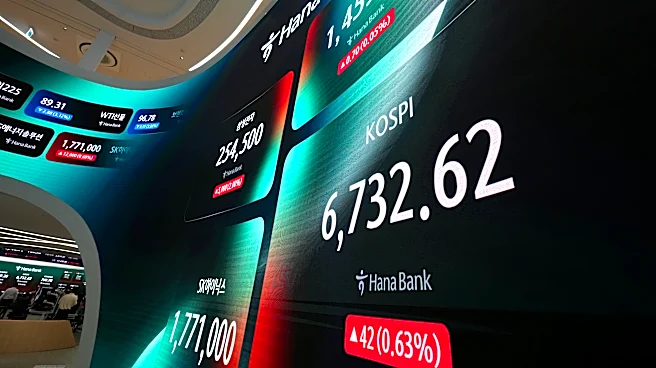
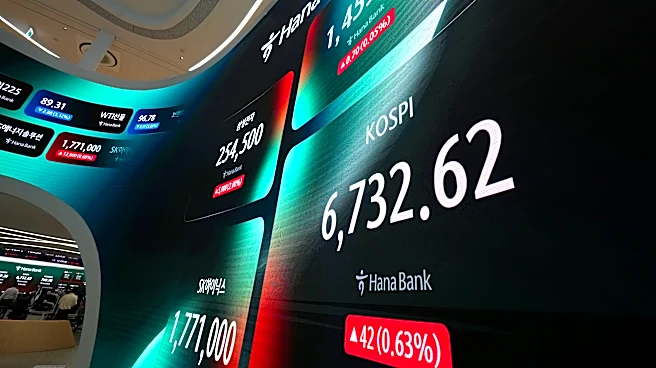
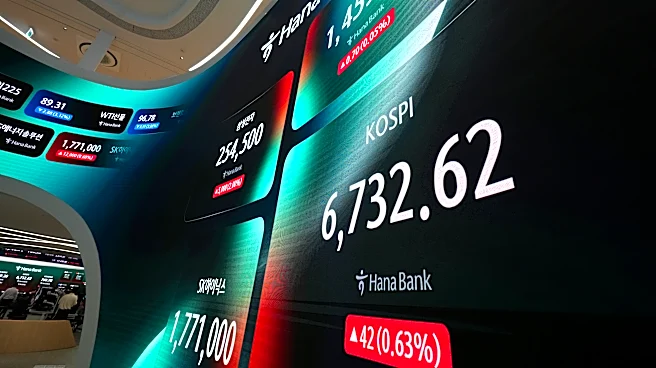
SEOUL, July 28 (Reuters) - South Korean chip stocks slumped on Tuesday, with Samsung Electronics and SK Hynix falling as much as 9.5% and 10.9%, respectively, as investors dumped AI-related bets amid mounting concerns over financing risks tied to AI infrastructure spending and intensifying competition from China.
SK Hynix's U.S.-listed shares had already slumped overnight, closing at $143.02, below their initial public offering price of $149.
The benchmark KOSPI was trading down 7.3%
as of 0032 GMT.
The sector-wide selloff followed several developments that renewed doubts about the sustainability of the AI-driven semiconductor rally.
SK Hynix, a key supplier of high-bandwidth memory (HBM) chips to Nvidia, has been one of the biggest beneficiaries of the AI spending boom, making its shares particularly sensitive to shifts in investor sentiment toward the sector.
Analysts said the selloff reflected a combination of concerns over AI infrastructure financing, China's technological advances and rising competition from Chinese firms.
A Wall Street Journal report that Nvidia could provide a roughly $250 billion financial backstop for an OpenAI data-centre project sent Nvidia shares down nearly 5%, with investors questioning the extent to which the AI chip leader may be financing its own customers.
Separately, investors were unsettled by reports of China's progress in developing homegrown deep ultraviolet (DUV) lithography tools, a potential step toward reducing the country's reliance on Western semiconductor equipment despite U.S. restrictions on Chinese access to imported chip technology.
Adding to the caution, the growing popularity of low-cost Chinese open-source AI models such as Kimi K3 raised questions about whether future AI workloads could prove less intensive than previously expected — meaning less demand for advanced AI chips and HBM.
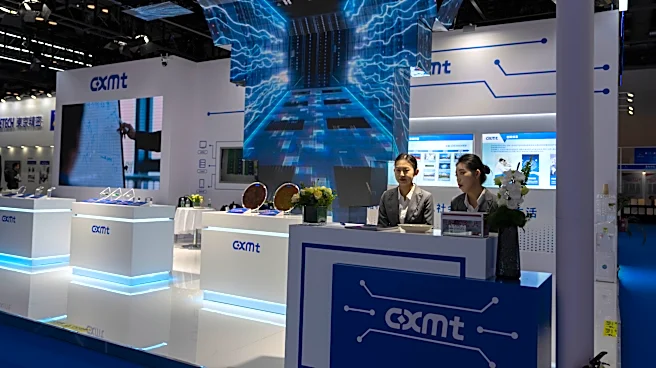
Meanwhile, Chinese memory-chip maker CXMT's strong stock-market debut fuelled concerns about intensifying competition in the global memory industry.
The listing came after reports that Apple had been lobbying the Trump administration to allow the use of Chinese-made chips in some of its products, further unsettling investors already concerned about China's growing technological capabilities.
(Reporting by Heekyong Yang; Editing by Kevin Buckland)