
March 4 (Reuters) - Chip designer Broadcom forecast second-quarter revenue above Wall Street estimates on Wednesday, a sign of strong demand for advanced chips used in data centers powering artificial intelligence applications.
Big Tech firms such as Alphabet, Microsoft, Amazon and Meta are expected to spend at least $630 billion to build AI infrastructure this year, which would boost demand for chips, servers, storage and networking equipment from companies like Broadcom.
"Our AI revenue growth is
accelerating, and we expect AI semiconductor revenue to be $10.7 billion in Q2," CEO Hock Tan said in a statement.
The company expects quarterly revenue to be about $22.0 billion, above analysts' average estimate of $20.56 billion, according to data compiled by LSEG.
It also announced a new share repurchase program of up to $10 billion.
Broadcom said last month that it expects to sell at least 1 million chips by 2027 based on its stacked design tech, marking a new product and a sales target that could represent a revenue stream potentially worth billions of dollars.
The company's stacking approach enables its customers to build chips that have more horsepower and use less energy to meet the rapidly growing computing requirements of AI software.
Growth in its infrastructure software segment slowed down to around 1% at $6.80 billion in the first quarter, compared with analysts' expectations of 2.6% growth to $6.88 billion.
Shares of Broadcom were largely flat in volatile extended trading. The stock has fallen around 8% so far this year. It had risen around 49% in 2025.
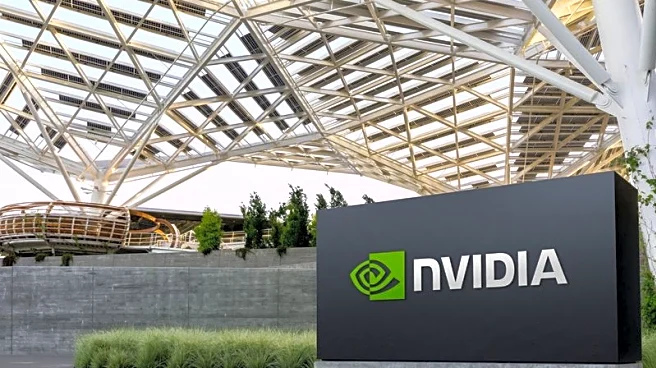
Last month, AI chip heavyweight Nvidia posted better-than-expected results for the January quarter, and forecast current-quarter revenue above market estimates. But that did not avert a selloff as investors remained concerned about an AI spending bubble.
Investors are also wary that Nvidia continues to channel capital into expanding the AI ecosystem, the payoffs for which are still unclear, rather than boosting shareholder returns.
(Reporting by Jaspreet Singh in Bengaluru; Editing by Shinjini Ganguli)