
/images/ppid_a911dc6a-image-177562367725879208.webp)
/images/ppid_a911dc6a-image-177579852693968118.webp)
/images/ppid_a911dc6a-image-17757915260509984.webp)
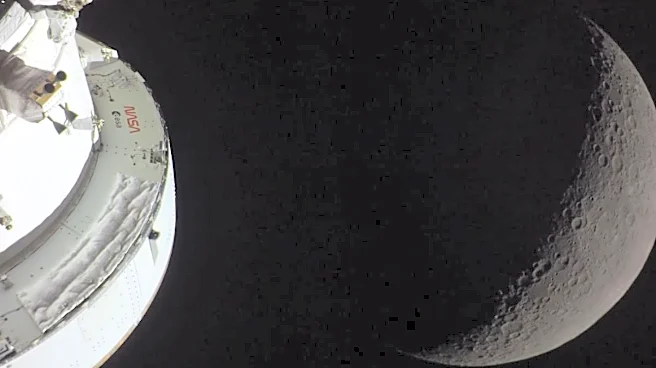
NASA’s Artemis II mission has come to a close with the Orion spacecraft successfully splashing down in the Pacific Ocean off the coast of California but for the agency’s lunar programme, it is only the beginning.
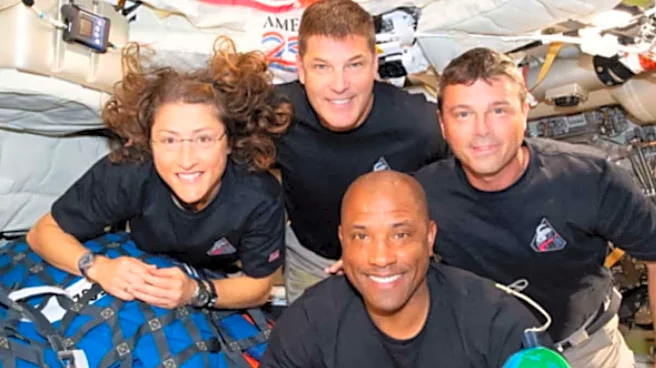
Commander Reid Wiseman, Christina Koch, Victor Glover and Jeremy Hansen spent more than a week circling the Moon, travelling farther from Earth than any humans in history. They flew beyond the Moon’s far side, captured rare views of its hidden terrain and tested critical systems needed for future lunar landings. It was the second step in NASA’s Artemis programme. The question now is: what comes next?
Read more: It’s A Splashdown: NASA Shares Video Of Artemis II Crew Returning Home | Watch
NASA’s Wave Of Robotic Missions Before astronauts
set foot on the Moon again, a fleet of robotic spacecraft will go first. NASA and its commercial partners are planning multiple uncrewed lunar landings under the agency’s Commercial Lunar Payload Services programme, which contracts private companies to deliver science instruments and technology demonstrators to the lunar surface. Among the nearest on the horizon is Astrobotic’s Griffin-1 lander, which could launch as early as July 2026. It will be followed by landers developed by Blue Origin, Firefly Aerospace and Intuitive Machines, carrying instruments to study lunar soil, radiation and potential resources including water ice.
Artemis III: Back On The Moon
While robots prepare the ground, NASA is simultaneously pushing toward its next crewed milestone: Artemis III, currently targeted for 2027. The mission will mark humanity’s first return to the lunar surface since Apollo 17 in 1972. Astronauts will travel aboard the Orion spacecraft and rendezvous in lunar orbit with a commercial lander- developed with partners including SpaceX and Blue Origin- before a crew of two descends to the Moon’s south pole region. Artemis III will also debut next-generation spacesuits developed by Axiom Space, purpose-built for lunar surface operations.
Read more: Artemis II Crew To Face Space Suit Obstacle Course Hours After Splashdown: What Is It?
Building A Permanent Presence
Beyond Artemis III, the ambitions scale up sharply. Artemis IV and V are expected to begin assembling infrastructure both in lunar orbit and on the surface, laying the groundwork for what NASA describes as a sustained lunar presence- effectively a Moon base, built incrementally through a combination of crewed and robotic missions.
/images/ppid_a911dc6a-image-177586152919559056.webp)

/images/ppid_a911dc6a-image-177586852085130574.webp)

/images/ppid_59c68470-image-177587010743863218.webp)

/images/ppid_a911dc6a-image-177588252793652807.webp)


/images/ppid_a911dc6a-image-177573212908214760.webp)