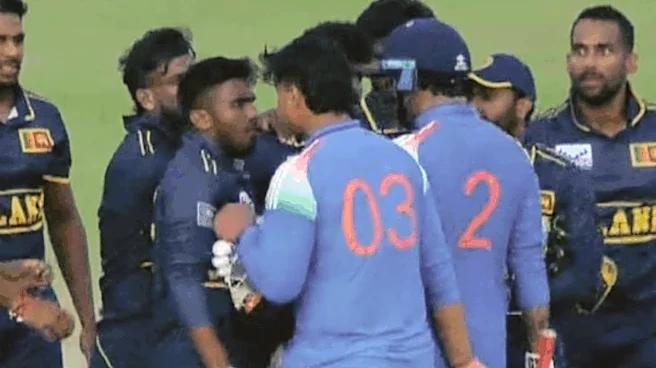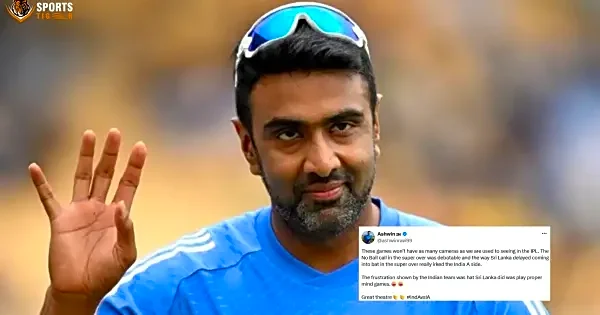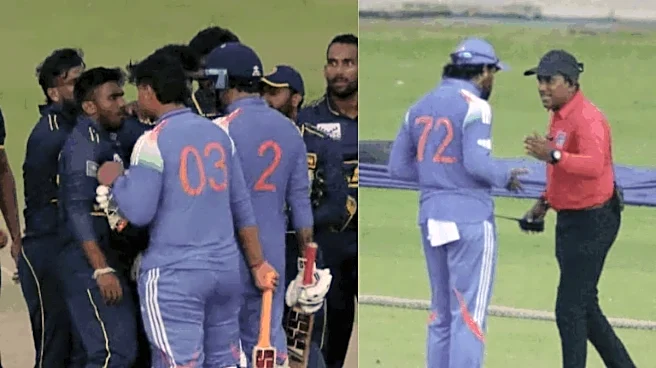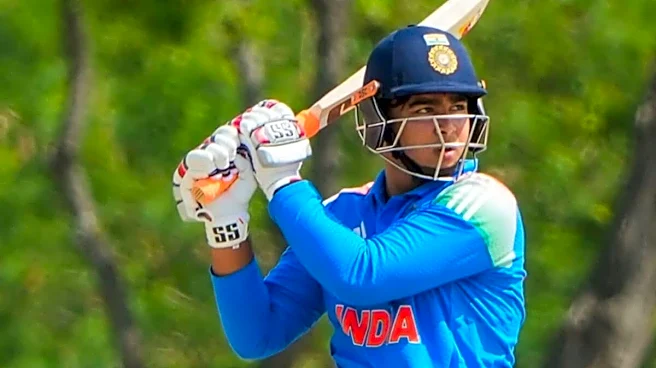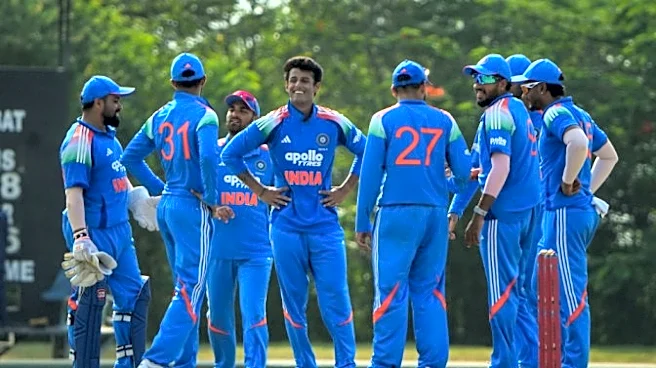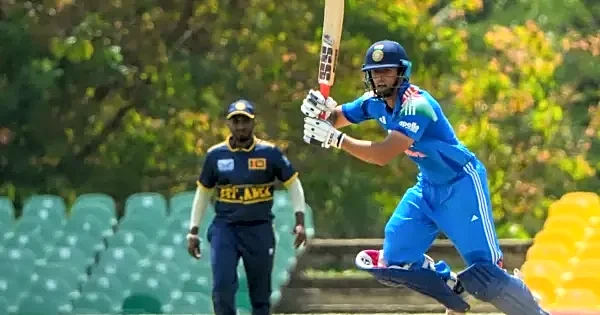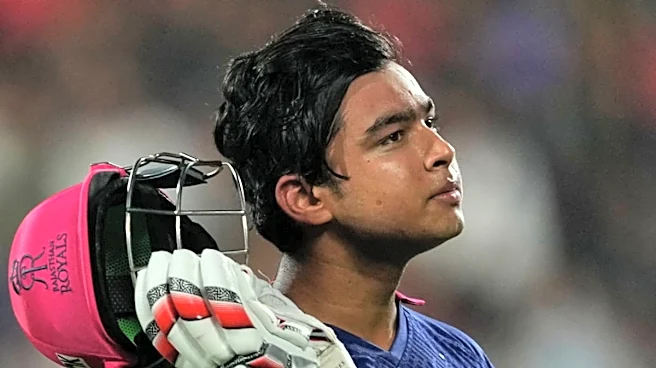

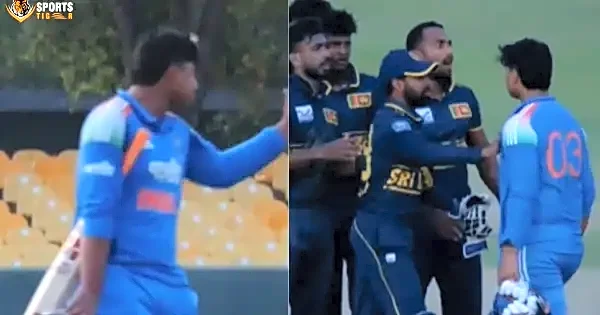
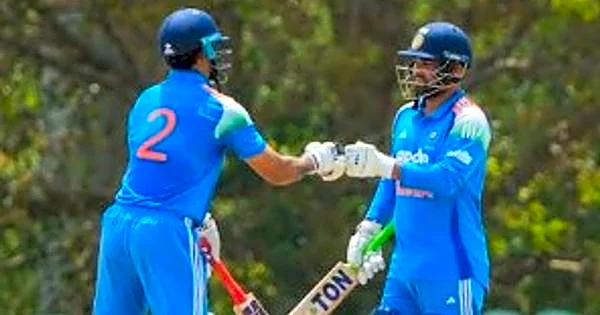
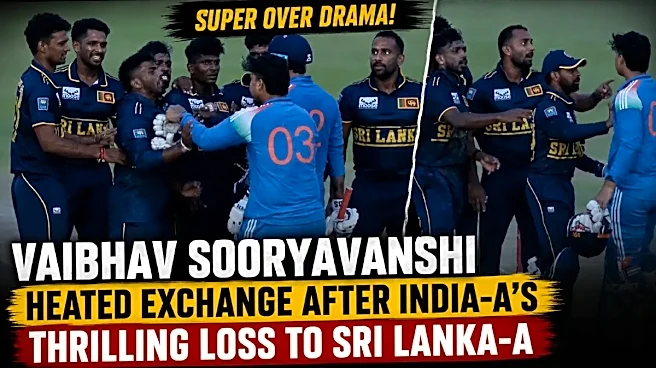


There has been a lot of criticism about Vaibhav Sooryavanshi for shoving the Sri Lankan cricketer, Vishen Halambage, during Monday’s tense match between India A and Sri Lanka A in a one-day Tri-Series fixture. Some of it has been fair, like reminders of how cricket is a non-contact sport, but most of it is extremely over-the-top.
For starters, cricket is a rare sport where even a push is considered not just against the rules, but outright sacrilegious. Most other sports understand that things can get heated, and there are emotions felt that need an outlet somewhere, which can be the opponent as long as it doesn’t cross the line.
Sooryavanshi, at best, just dabbled in that line. We can only judge by video replays — because neither team’s cricketers
will reveal the details anytime soon — and from that, it was obvious that Sooryavanshi was calmly walking back after missing the last ball of the Super-Over while being bombarded by sledging.
Almost every young Sri Lankan player was having a go at him and his partner, Suryansh Shedge. From the looks of it, Shedge, 23, broke character first and let himself turn around to confront his hecklers.
Sooryavanshi stepped in for his teammate and ended up going a step ahead in his replies.
But that’s all it was — a yellow-card offence, at best.
The reactions to Sooryavanshi’s action, within minutes of the incident, seem like an attempt to just somehow command him how this is a gentleman’s game, as if he wouldn’t have been taught that while growing up in Bihar. It is as if the custodians of the game think it’s their personal responsibility to teach him how to behave.
The same custodians have conveniently ignored another video from the match — of Sooryavanshi trying to stop Tilak Varma, his eight-year senior India international cricketer, from arguing with the umpire. It’s strange how Sooryavanshi saw his captain angrily berate the umpires in two separate incidents for over ten minutes, and would see himself as the target of cricket lessons.
So, this is the time, more than ever, for everyone to take a breath and remember that he’s just fifteen years old. Yes, he is smashing bowlers like no one else twice his age can, and yes, he’s getting more than enough money for it, comparable to adults in the same competition, but he didn’t ask for any of it.
At the heart of it, Sooryavanshi came through as a kid who loved to play cricket, to bat, to hit the ball cleanly enough that no fielder can catch it. The riches and the glory and the records and the stories are all by-products that the custodians gave him to make him stay and keep doing it.
Heck, he didn’t even ask for this game to be broadcast; it was the broadcaster going out of its way to market it on Sooryavanshi’s name. This makes the attempts to make him feel bad about this new weight of moral expectations even stranger.
A big part of what has made Sooryavanshi this popular, to become the youngest IPL MVP of all time, is his utter disregard for the quality of bowlers he plays. During the league, his teammate Dhruv Jurel told reporters how Sooryavanshi’s USP was simply ‘watching the ball and not the bowler’ — something that every kid is told in the academy, only to forget it when they come across a bowler whose reputation is big enough.
The point of his being so good that he can be unfazed by Jasprit Bumrah’s reputation is the fact that he plays cricket in its truest form, putting bat against the ball. Not 10% of those criticising him today would have stopped themselves from pushing an opponent in their gully after being sledged relentlessly.
The environment around him has always been built around that protection — ‘Go out there and do your thing’. So, why are we surprised that ‘doing his thing’ includes standing up for a teammate, thinking that the rest of his squad would have his back?
As always, the older custodians of the sport have repeatedly cited Sachin Tendulkar. How he was so calm, how he knew what to say and never crossed the line. But it’s so easy to forget that there will always be one Sachin Tendulkar.
Just like he can’t be the yardstick for on-field cricket for every young Prithvi Shaw or Ayush Mhatre growing up, he can’t be the yardstick for off-field cricket for Sooryavanshi either. There’s a reason why he was a one-of-one.
Why don’t we think about Virat Kohli? His rebellious nature polarised opinions when he came through, and everyone loves him for the same thing now, for giving it back, for not being the turn-the-other-cheek Indian.
Kohli, in his 20s, was giving it back to the Australians — a cricketing nation that was the dominant force for the majority of his childhood years. Would he not have given back half a push to sub-continent peers in not even an international but an ‘A’ game?
It’s not fair to suddenly shoehorn what Sooryavanshi is supposed to be, after spending the better part of the last couple of years telling him that he can be whatever he wants to be.
This is the time, more than ever, to not police Sooryavanshi’s emotions but to tell him that it is OK to be angry and feel the need to react. However, it’s also imperative to tell him that it would be much more satisfying if he replies with his bat in the next match instead.
In that conversation, someone can also tell him that this is the bane of being good — everyone from opponents and columnists wants a piece of you, more than any of your other teammates. It’s time to caution him with a yellow card, and not lose our collective minds to send him off to ‘cricket spirit’ school with a red.