

/images/ppid_59c68470-image-178521502841516942.webp)
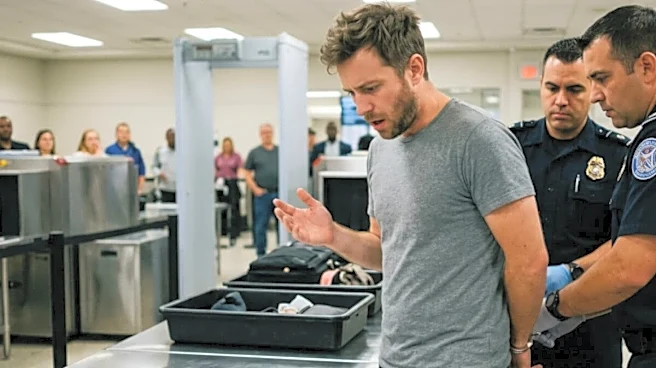
Picture this: you’re at an airport, security agents ask you to unlock your phone, you type in your passcode, and instead of your home screen, the device wipes itself and restarts. That’s essentially what a federal prosecutor in Atlanta says happened to Samuel Tunick, and now the case is testing something with implications far beyond one traveller, whether owning privacy software can itself be treated as suspicious.
The case
Tunick was flying back into Hartsfield-Jackson Atlanta International Airport on January 24, returning from a trip to the Dominican Republic. Border agents pulled him aside and demanded he unlock his phone, telling him it would be confiscated if he didn’t comply. The Guardian, which broke the story, reports that Tunick gave them his passcode,
but rather than opening the device, the screen went dark, flickered repeatedly, and the phone rebooted itself. Whatever data had been stored on it was gone.
The Department of Justice is now pursuing Tunick under a federal statute that makes it illegal to destroy property specifically to keep it out of the hands of investigators. His defence attorneys have confirmed the phone was running GrapheneOS, a hardened, privacy-focused version of Android built for Google Pixel devices. Part of what GrapheneOS offers is a duress passcode, a second code you can set up that, instead of unlocking your phone, silently erases it.
Buried in the court record is a detail that changes the whole picture. According to testimony cited by The Guardian, Tunick’s name and photo had already been circulated among federal agents beforehand, reportedly tied to his suspected involvement with protests against Atlanta’s police training facility, the project widely nicknamed “Cop City.” Agents pulled him into secondary screening and questioned him at length. His lawyers now allege that the agents’ questions about child sexual abuse material were essentially a cover story, a pretext to dig into his politics rather than investigate any actual crime.
Tunick’s defence team wants the entire case thrown out. Their argument is that the phone seizure itself was unconstitutional, and that anything that followed from it, including the alleged wipe, shouldn’t be usable as evidence at all.
Is it illegal?
Here’s where this story stops being purely a US legal curiosity. Privacy advocates have long argued that features like GrapheneOS’s wipe-on-passcode option are reasonable protections against theft, surveillance, or unlawful searches, not tools built for criminals. But that argument hasn’t fully landed with police everywhere. In Catalonia, Spain, there are reports of law enforcement effectively profiling anyone carrying a Google Pixel phone, assuming they’ve installed GrapheneOS and are therefore connected to drug trafficking or organised crime, based on nothing more than the phone model itself.
GrapheneOS responds: “We are legal”
Once the Tunick case went public, the team behind GrapheneOS posted a detailed rebuttal, explaining that the operating system’s real purpose is blocking unauthorised access to your data, not simply nuking it on command. They were unambiguous about the legal standing of their software: “GrapheneOS is completely legal. We have no obligation to weaken any of the security protections it provides. Creating and using GrapheneOS is strongly protected by the US constitution. Laws attempting to make it illegal or require weakening the security would be unconstitutional.”
They also broke down the technical side of how the protection actually functions: “There’s no way to bypass a strong encryption passphrase once data is at rest. A typical weak PIN or password depends on the secure element limiting the number of attempts. Secure element only accepts firmware updates after Owner authenticates to protect against state coercion. By default, GrapheneOS devices automatically return to Before First Unlock state if they aren’t unlocked within 18 hours of being locked. Users can set it as low as 10 minutes. GrapheneOS has strong generic exploit protections and specialized defenses against physical attacks.”


/images/ppid_59c68470-image-178521506345044573.webp)

/images/ppid_59c68470-image-178521512834993172.webp)
/images/ppid_59c68470-image-178521515727523665.webp)
/images/ppid_59c68470-image-178521509673969334.webp)