
/images/ppid_a911dc6a-image-178289287544885067.webp)
/images/ppid_a911dc6a-image-178279662219623516.webp)


Russia is facing a widening fuel crisis after months of Ukrainian drone attacks on oil refineries, depots and supply routes. The shortages have disrupted transport, pushed up petrol prices, affected essential services and raised concerns over the harvest season in one of the world’s biggest oil-producing countries.
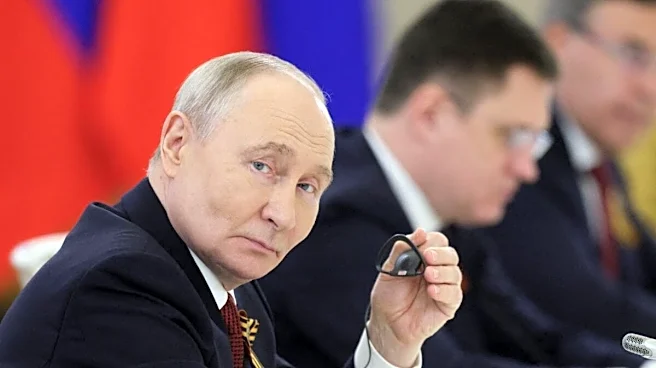
The pressure has also forced President Vladimir Putin to publicly acknowledge the problem after Moscow initially portrayed the shortages as localised disruptions.
The crisis, however, is not simply about whether Russians can fill their cars. Ukraine’s campaign is aimed at damaging the refining and logistics network that supports both the Russian economy and its military operations. Kyiv hopes that sustained pressure on fuel supplies,
especially in occupied Crimea and areas near the front, will weaken Moscow’s war effort and push it towards negotiations.
The key question is whether the shortages are serious enough to alter Putin’s calculations.
How Severe Is Russia’s Fuel Crisis?
Ukrainian forces have been striking energy infrastructure in Russian regions and on the annexed Crimean Peninsula for several months. In June, refineries in Moscow, Nizhnekamsk, Tyumen and Volgograd were attacked, according to DW. Another 16 refineries were targeted in May.
The damage has reportedly reduced Russian gasoline production by 25%. Reuters, citing sources, said the country is currently producing around 85,000 metric tonnes of gasoline a day, while summer demand stands at about 110,000 metric tonnes.
“This summer, Russia appears to be heading toward what could be the worst fuel crisis in its history,” experts at the US think tank Energy Intelligence told DW.
The full geographical extent of the disruption remains unclear. Russian business outlet RBC estimated that 40 regions had introduced restrictions on fuel sales. Independent Russian outlet Vyorstka suggested that as many as 78 regions may be affected.
Long queues have formed at filling stations in several cities. Drivers have started sharing maps and tips online about which petrol stations still have fuel and where waiting times are shorter. Social media footage has also shown tempers flaring and drivers fighting while waiting to refuel.
🇷🇺 ⛽ 🇺🇦 Russia struggles with fuel shortages amid Ukraine strikes
Russia has introduced a swath of restrictions on petrol sales across the country, as Ukrainian strikes on its refineries, depots and logistics affect domestic supply. Several regions have introduced rationing,… pic.twitter.com/YNYmnveRWb
— AFP News Agency (@AFP) July 1, 2026
In one video titled “The Ultimate Luxury 2026”, a man pours petrol from a jerry can into a lawnmower and jokes: “What riches. Who can afford this now?”
Online searches for “how to siphon fuel” rose from 697 a month earlier to more than 9,300 by June 21, technology website iPhones.ru reported, citing Yandex data.
Why Are Petrol Prices Rising Sharply?
The shortages have driven up retail fuel prices, particularly in badly affected regions.
Russia’s average gasoline price stood at 72.38 roubles, or about $0.93, per litre last week, according to Rosstat. However, Reuters reported that some stations in shortage-hit regions were charging as much as $2.42 per litre.
In Sevastopol, the largest city in Russian-controlled Crimea, gasoline prices jumped 30% in one week, Rosstat said.
For Moscow, the shortages are particularly uncomfortable because Russia is a major oil producer and exporter. The problem is not necessarily a lack of crude oil, but damage to the facilities needed to process it into petrol and diesel and move fuel to consumers.
As more refineries and depots come under attack, the gap between domestic production and demand has widened.
How Has Putin Responded To The Fuel Crisis?
Moscow initially played down the problem as a series of local bottlenecks. But on June 28, Putin publicly acknowledged “certain fuel shortages” for the first time.
“There is some damage,” he said in an interview on Russian state television, while maintaining that damaged facilities were being repaired quickly and that the situation was not critical.
Political scientist Zavadskaya of the Finnish Institute of International Affairs told DW that the admission itself was significant. “Putin was forced to openly admit that the problem exists,” she said. “Most importantly, he identified the cause of the problem — Ukrainian drone attacks.”
Putin later promised measures to stabilise the market and stressed the need to maintain fuel supplies to agriculture “because the harvest depends on it”.
Deputy Prime Minister Alexander Novak, Putin’s point man on energy, said the authorities were addressing the shortages.
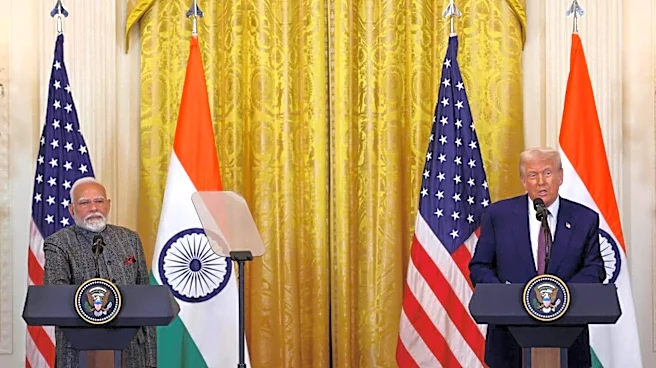
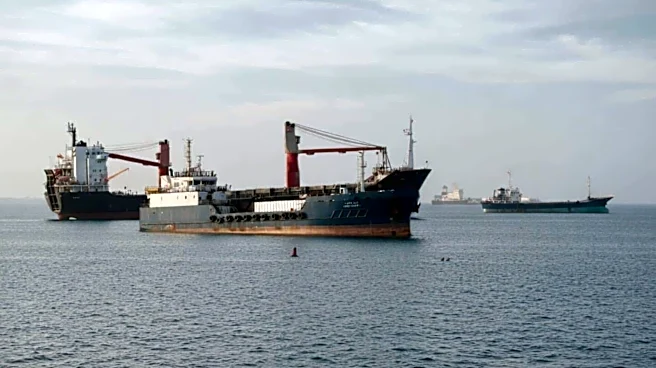
Russia has also turned to imports. Reuters reported that Moscow had begun seaborne gasoline imports from India, while Kazakhstan had agreed to supply 50,000 metric tonnes to Russia in July and August.
The decision to import fuel underlines the strain on Russia’s domestic refining and distribution network.
Why Is The Harvest Season A Major Concern?
The crisis has hit at a critical time for Russia’s grain-producing regions, with farmers worried that fuel shortages could disrupt the harvest.
Any prolonged shortage could delay harvesting and increase agricultural costs. It could also push up food prices because crops, groceries and other essential goods are transported largely by road.
In the Zabaikalsky region, which borders China and Mongolia, authorities cancelled some bus routes, while a waste collection company suspended services in four districts because of fuel constraints.
“More scary is how much groceries will cost. All deliveries are done by road,” one person wrote in response to an article on the cuts published by regional outlet Chita.ru.
Is Ukraine Also Targeting Russia’s Military Supply Lines?
Ukraine’s campaign is not confined to civilian fuel infrastructure.
Its forces have increasingly targeted logistics and military supply routes between 20 and 200 kilometres behind the front. Christina Harward of the Institute for the Study of War said this marked a new development in Ukraine’s operations.
“What’s different this year is that Ukraine has clearly scaled up the quantity of their drones and the quality of their drones. They’ve improved the range of their drones and, for the past couple of months, they’ve also been undertaking an effort to identify and destroy Russian air defense systems,” Harward told DW.
She said there were growing reports that Russian units near the front were receiving fewer supplies.
“We’ve seen reports that soldiers in the Huljajpole direction — east and west of the Zaporizhzhia region — are not getting as much fuel. They’re not getting as much ammo. And they’re not getting as much of all the other supplies they need,” she said.
There have also reportedly been problems delivering artillery ammunition and reconnaissance drones in the Donetsk region.
If sustained, such disruptions could have a more direct impact on Russia’s battlefield capabilities than civilian shortages alone.
Why Is Crimea Especially Vulnerable?
Crimea has emerged as a central target in Ukraine’s pressure campaign because of its dependence on limited supply routes.
A state of emergency has been in force in Crimea and Sevastopol since June 26 after Ukrainian attacks caused fuel and food shortages.
The Crimean Bridge remains a crucial route for both Russian military supplies and civilian movement. Harward said that if Ukraine were able to destroy it completely, “this would really cut off one of the main arteries that Russia has”.
British historian Mark Galeotti said Ukraine had identified Crimea as one of Russia’s key vulnerabilities. “It’s very hard to keep resupplied. It’s very hard to keep up with fuel and power and water and all the things it needs,” he told DW.
Ukrainian President Volodymyr Zelenskyy has described attacks on refineries and fuel depots as “long- and medium-term sanctions” aimed at forcing Moscow to negotiate.
Galeotti said Ukraine’s strategy in Crimea was “about pressure rather than conquest”, dismissing speculation that Kyiv was preparing to retake the peninsula through a direct military assault.
Is Putin Under Enough Pressure To Negotiate?
The crisis is clearly creating economic, logistical and political strain. But there is no indication yet that the shortages are severe enough to threaten Putin’s grip on power or force an immediate change in strategy.
Galeotti said there was “no reason to think that the economy is going to collapse, or that the masses are going to rise up, or that there’s going to be a coup or any of these other sort of extreme scenarios”.
Putin also retains options to escalate, including mobilising more reservists or deploying conscripts, although Galeotti said these measures would be politically damaging.
“He could mobilise hundreds of thousands of extra reservists, even though it would be politically incredibly unpopular and disruptive,” he told DW.
The risk for Kyiv is that greater pressure may push Putin towards negotiations, but it could also trigger further escalation.
For now, Russia’s fuel crisis appears more likely to weaken Moscow gradually than produce an immediate turning point. However, if refinery damage continues to accumulate and shortages begin to affect military logistics, food prices and basic services at the same time, the political cost of sustaining the war could rise considerably.
/images/ppid_59c68470-image-178297252901881797.webp)

/images/ppid_59c68470-image-178301002755453140.webp)


/images/ppid_59c68470-image-178288503833321434.webp)
/images/ppid_59c68470-image-178291753278236226.webp)
