


/images/ppid_59c68470-image-178853514116921927.webp)
ChatGPT has started showing ads to users in India, and the rollout is now visible in the app itself. Screenshots shared by users show sponsored listings appearing directly below chat responses, along with new privacy and control screens explaining how the system works.
Here is what changed, who sees ads, and what settings users have.
Where Ads Show Up
Ads appear as a separate card below a ChatGPT response, not inside the answer itself. In one screenshot, a search-related response is followed by a labelled “Ad” card from SerpApi, showing a headline, description and a small “Ad” tag next to the brand name.

In another example, a chat about meal planning is followed by a “Sponsored” card from Heirloom Groceries, showing a product, its price and delivery time, with a follow-up
prompt for “Topping and garnish ideas.” OpenAI’s own blog post shows the identical format: a potluck-planning chat followed by a grocery-kit ad, visually boxed off from the answer above it.
OpenAI Says Ads Don’t Change The Answer
OpenAI has repeated one line throughout this rollout: ads do not influence what ChatGPT tells you. The company says answers are generated independently, and only after that does the system decide whether a relevant ad exists to show underneath. Advertisers cannot pay to change, rank or edit a response.
Ads are matched using three signals: the topic of the current conversation, a user’s past chats and memory, and how that user has interacted with ads before. OpenAI says this matching happens without sharing actual chat content with advertisers. Brands only get aggregate numbers, like how many people saw or clicked an ad.
Who Sees Ads, And Who Doesn’t
Ads only appear for logged-in adult users on the Free and Go tiers. In India, the Go plan costs ₹399 a month. Anyone on Plus, Pro, Business, Enterprise or Education remains ad-free.
OpenAI also says it will not show ads to accounts that state they are under 18, or that its systems predict belong to a minor. Ads are also kept away from sensitive subjects such as health, mental health and politics, regardless of tier.
| Plan | Ads Shown? |
|---|---|
| Free | Yes |
| Go (₹399/month in India) | Yes |
| Plus, Pro, Business, Enterprise, Education | No |
Privacy?
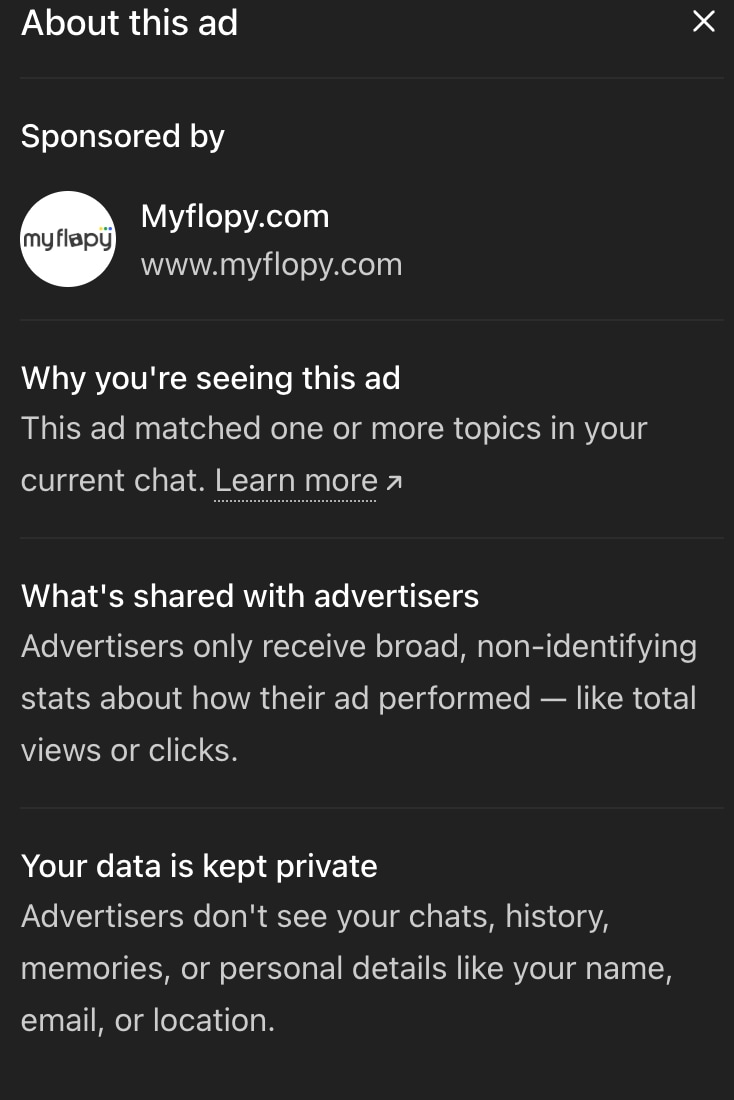
Screens rolled out with the ad system spell out four specific things OpenAI says advertisers never get access to: chats and chat history, memories, name and email, and location or IP address. A separate “Transparency and control” screen lists four things users can do: hide ads they aren’t interested in, see why a specific ad was shown to them, delete their ad data at any time, and go ad-free by subscribing to ChatGPT Plus.
Tapping “About this ad” on any sponsored card also opens a panel naming who paid for it, the advertiser’s website, and a short explanation of why that particular ad appeared in that chat.
OpenAI first began testing ads for US Free and Go users on February 9, 2026, expanding gradually to Canada, Australia and New Zealand in the following months, then to the UK, Mexico, Brazil, Japan and South Korea by August. India, with over 300 million monthly ChatGPT users, joined the ad rollout in the last week of August, alongside a self-serve Ads Manager for Indian businesses that opened around September 4. By the end of August, OpenAI said the ad business had crossed a $1 billion annualised revenue run rate.
What You Can Do If You Don’t Want Ads
If ads bother you, three options exist right now: upgrade to a paid tier like Plus, use the in-app ad controls to hide specific ads and manage personalisation, or delete your ad interaction data from settings. OpenAI has also said it is testing a version of the Free tier where users can opt out of ad personalisation in exchange for a lower daily message limit, though this isn’t the same as removing ads entirely.