
/images/ppid_59c68470-image-177098752880979418.webp)

/images/ppid_a911dc6a-image-177098609283733676.webp)
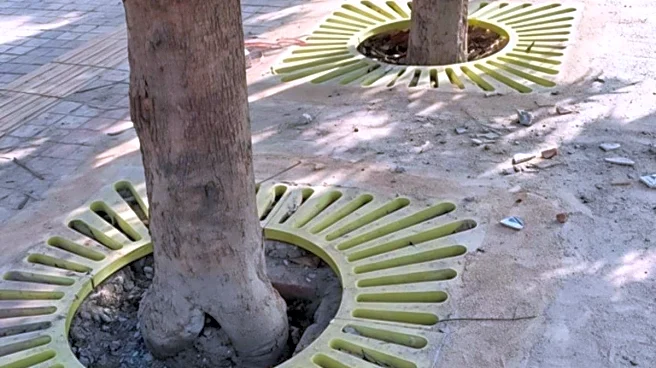
Urban greenery in Indian cities is slowly getting a facelift, and Lucknow is leading the way. The capital of Uttar Pradesh has introduced a new method to protect trees along footpaths, which has caught widespread attention online.
The image making rounds online shows trees safeguarded using a grid system. These structures help protect roots, allow air and water to reach them, and stabilise the surrounding soil. The method looks similar to what is used in many foreign countries.
Sharing the image on X (formerly Twitter), one user wrote, “This is happening in Lucknow. Great! Someone in the LDA/municipality has travelled to the EU/Dubai/Thailand!”
See The Post Here
This is happening in Lucknow.
Great!
Someone in the LDA/municipality has travelled to
EU/Dubai/Thailand! pic.twitter.com/QJ2oPN3z51
— We, the people of India (@India_Policy) January 15, 2026
More Phases To Come?
According to the X account, Lucknow Index, which shares updates on various infrastructure developments in the city, these grates are part of the Chief Minister Grid Road Project. Phases 1 and 2 are launched in which various parts of Mahanagar, Gomtinagar, and Hazratganj. The post further mentioned that more such phases will be initiated to cover other parts of the city.
Lucknow Roads are getting massive transformation under CM Grid Road Project
As per the post, the Chief Minister Grid Road Project aims at improving footpaths, upgrading the underground wires, cables and pipelines. Fences will be installed across the city to protect plants and trees, along with more street lights. Upgrading the traffic management system is also part of the project.
Under the CM Grid Scheme –
1- Proper Footpath
2- Underground Wires, Cables & Water Pipelines
3- Fencing of Greenery
4- Benches, beautiful street lights
5- Proper Traffic Management SystemsAnd many other things.
2/2 pic.twitter.com/grPjTYZi2Q
— Lucknow Index (@lucknow_index) January 15, 2026
What Are People Saying Online
Many users praised the new initiative to protect trees. But at the same time, they also raised concerns about how long the initiative will last without proper civic responsibility.
One user commented, “Glad to see this improvement from our Indian cities.”
Another added, “Under the CM Grid scheme, efforts are underway in Lucknow to beautify trees along roads in a manner similar to foreign countries. Just let the general public preserve the beauty of the city. Smile, you are in Lucknow.”
“Mera Desh badal raha hai (My country is changing),” someone else remarked.
A person suggested “Govt must do this nationwide…starting from the states with the highest level of pollution. Should plant evergreen, low-maintenance trees along footpaths at regular intervals. This is a little costly, but worth it in the long run.”
“A lot of Kannadigas also travel to the same places, but we in Bengaluru do not have this type of tree/soil grills,” another added.
At the same time, some also raised concerns about the initiative’s longevity without proper civic sense, with an individual writing, “UP paanparag walas spit and spoil. We Indians don’t think our country is precious. We Indians are educated, irrational, stupid.”
“Civic sense of People is a bigger problem. 2 months from now, you will see plastics and other waste at the bottom of the tree,” a commenter pointed out.
“Loving the new tree guards, benches & lights under CM GRIDS! But the question is, how will long-term maintenance & anti-encroachment be ensured so these don’t get damaged/spat on in a few months? Do they have any plans for mechanised cleaning or community involvement?” an X user questioned.
“Good Initiative. But this has to be maintained otherwise it might be filled with garbage in no time,” “The main thing to improve now is civic sense,” read some more reactions.
What Are The Different Types Of Tree Protection Systems?
Cellular Confinement Systems (Geogrids): These are made of high-density polyethylene (HDPE) strips forming small cells that stabilise the soil, prevent erosion, and allow water and air to reach roots. They are mostly installed at driveways, parking lots and areas with high traffic.
Metal Or Concrete Tree Grates: Made up of steel, cast iron or concrete, these grates are useful in protecting the trunk. At the same time, it also provides a flat and safe walking surface. These are often installed in streets, parks and public spaces.
Mulch Rings: These rings are made with organic mulch like wood chips or bark. They help in retaining soil moisture, insulate roots and improve soil quality. These are often seen in gardens and residential areas.
Plastic Or Metal: Which Tree Grates Are Better?
- Durability: Metal grates are sturdy but can rust over time, while plastic ones resist the sun and moisture and last much longer.
- Cost And Setup: Metal is heavy, expensive and requires multiple people to install, whereas plastic is lighter, cheaper and easier to place.
- Maintenance: Metal grates need regular painting and repairs. On the other hand, plastic grates need almost no upkeep.
- Security: Metal grates can be stolen for scrap. That is why plastic grates are mostly installed because they have no resale value.
- Environment: Plastic grates are recyclable and have a lower carbon footprint, while metal production generates more emissions.
Where In The World Do Cities Use Tree Grates?
- US: Cities like Seattle and New York protect street trees with grates in sidewalks and transit areas.
- Canada: Vancouver, Winnipeg and Abbotsford have installed grates.
- Australia: Cities use products like Invisigrate for tree protection.
- Singapore: Reinforced stone grates shield trees from heavy urban traffic.
- Europe & Latin America: Cities in France, Spain, Mexico and Brazil also adopt tree grates.
Why Tree Grates Matter?
- Protects roots from damage and soil compaction.
- Improves soil aeration and water penetration
- Creates a level, safe walking surface for pedestrians.
- Enhances urban aesthetics and defines tree spaces.
- Some geogrids can even support vehicle traffic without harming the tree.
What Are The Key Measures To Remember While Installing Them?
- Ensure water and air can pass through the system.
- Openings must allow for the future growth of trees.
- Use durable, weather-resistant materials like HDPE or coated metals.
/images/ppid_a911dc6a-image-177098954007759066.webp)

/images/ppid_a911dc6a-image-177098884753017905.webp)






/images/ppid_59c68470-image-1770987582774322.webp)

/images/ppid_59c68470-image-177098761981591595.webp)
/images/ppid_59c68470-image-1770987529810585.webp)
/images/ppid_59c68470-image-177098766350256772.webp)