

/images/ppid_a911dc6a-image-177883310340796623.webp)
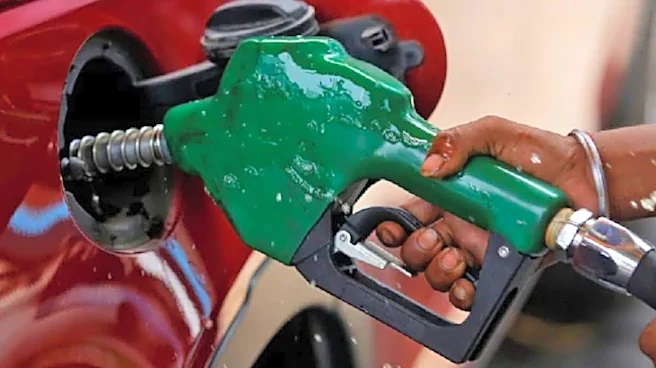
Petrol and diesel prices were hiked by Rs 3 per litre each on Friday, the first rate increase in more than four years, amid mounting losses of fuel retailers due to surging global crude prices.
Is this enough at a time when state-run oil marketing companies (OMCs) are facing severe losses of roughly ₹1,600 crore per day due to soaring global crude prices and stagnant retail fuel prices? News18 explains.
How US-Iran war impacted the prices
Energy pricesglobally shot up after the US-Israel attack on Iran on February 28, and the subsequent retaliation by Tehran effectively shut down the Strait of Hormuz – the sea lane through which a fifth of the world’s oil and gas transits. Crude oil, the input raw material for making petrol and diesel, surged above USD 120 per barrel during the peak
of the West Asia conflict, as opposed to the USD 70-72 range before the conflict. More recently, prices have eased but remained elevated around the USD 104-110 per barrel range. This triggered massive losses for state-owned fuel retailers, but retail rates remained unchanged as five critical states went to polls.
The price rise
The increasecomes 16 days after assembly elections concluded in Assam, Kerala, Tamil Nadu and West Bengal. Fuel prices had remained unchanged through the polling period despite a sharp rise in international oil prices triggered by the West Asia conflict.
Petrol price was hiked to Rs 97.77 per litre from Rs 94.77 in the national capital. Diesel now costs Rs 90.67 as against Rs 87.67 per litre previously, industry sources said.
Prices have remained on freeze since April 2022 but for a one-off reduction by Rs 2 a litre each on petrol and diesel in March 2024, just before Lok Sabha elections. Rates were last hiked in April 2022. Petrol in Mumbai now costs Rs 106.68 a litre and diesel comes for Rs 93.14 per litre. In Kolkata, petrol now costs Rs 108.74 per litre and diesel Rs 95.13, while in Chennai, prices increased to Rs 103.67 for petrol and Rs 95.25 for diesel. Rates vary across states due to differences in value-added tax.
Is the hike enough?
While the ₹3 per litre fuel price hike implemented on May 15 helps cushion a fraction of the operational stress, the OMCs—comprising Indian Oil Corporation (IOCL), Bharat Petroleum (BPCL), and Hindustan Petroleum (HPCL)—are still heavily in the red.
OMCs are accumulating losses of around ₹1,000–1,600 crore per day, with predicted Q1 FY27 losses reaching ₹1.2 lakh crore due to high global crude oil prices over $100/barrel. Fuel prices have remained stagnant, while the cost of crude oil has significantly increased, with OMCs losing an estimated ₹14 per litre on petrol, say reports. Without further action, sustained losses beyond ₹3-4 per litre are unsustainable, making further hikes likely, say reports.
Impact of the ₹3 hike versus total losses
The oil companies were losing Rs 14 per litre on petrol, Rs 42 a litre on diesel and Rs 674 a litre on cooking gas LPG before Friday’s decision. Earlier this week, Oil Minister Hardeep Singh Puri said the three fuel retailers were losing about Rs 1,000 crore per day, and the cumulative losses in a quarter were enough to wipe away all the profit they made in a full year. He had put the losses at about Rs 1 lakh crore.
To cushion consumers from rising global prices, the government, on March 27, reduced excise duty on petrol and diesel by Rs 10 per litre each.
Private fuel retailers had already increased pump prices. Domestic cooking gas LPG prices were raised in March by Rs 60 per cylinder, but they are still way lower than the actual cost.
Industry sources said the price hike appears calibrated – enough to partially ease margin pressure on oil companies without creating major inflationary shock.
| Metric Status | Before Hike | Impact of ₹3 Hike | Remaining Gap |
| Petrol Loss/Litre | ₹14 to ₹18 loss | Reduces loss by ₹3 | ₹11 to ₹15 loss remaining |
| Diesel Loss/Litre | ₹35 to ₹42 loss | Reduces loss by ₹3 | ₹32 to ₹39 loss remaining |
| Daily OMC Losses | ₹1,600 – ₹1,700 Cr | Marginally lowers daily burn | Stays deep in the red |
| Quarterly Outlook | Staring at ₹2 lakh cr under-recovery | Minor stabilisation of balance sheet | Massive capital hit expected |
Understanding the deficit
OMCs are bleeding between ₹1,600 crore to ₹1,700 crore every single day. Before the hike, OMCs were losing approximately ₹14 to ₹18 per litre on petrol and an astronomical ₹35 to ₹42 per litre on diesel.
The companies are also absorbing a structural loss of ₹674 per domestic LPG cylinder. Over the last 10 weeks of the West Asia conflict, cumulative losses have already crossed ₹1 lakh crore, putting them on track to completely wipe out last year’s annual profits.
In a nutshell
- The “Band-Aid” Effect: Industry data shows that every 50 paise increase in per-litre margins lifts OMC Ebitda by 7% to 11%. A ₹3 hike triples that boost but fails to bring the companies back to break-even levels, which require a crude price of $80–$85 per barrel.
- Geopolitical Headwinds: Global crude oil has surged to over $110–$115 per barrel due to escalating West Asia tensions, drone attacks, and shipping restrictions around the critical Strait of Hormuz.
- Refining & Freight Spikes: Beyond raw crude costs, OMCs are facing exponentially higher risk premiums, marine charter rates, and elevated global refining costs.
- Government Fiscal Constraints: The Central Government is already absorbing a revenue loss of ₹14,000 crore per month due to previous excise duty cuts, leaving very little room to offer direct financial bailouts to the OMCs.
What next?
Because the ₹3 hike acts only as a minor buffer, energy analysts warn that if the global crude basket remains above $100 per barrel, further calibrated fuel price hikes or an overhaul of tax structures will be unavoidable to save state-run oil corporations from financial capitulation.
KEY FAQs
Why are oil companies losing around ₹1,600 crore daily?
State-runfuel retailers like Indian Oil Corporation, Bharat Petroleum, and Hindustan Petroleum are selling petrol and diesel below market-linked costs while global crude prices remain high due to West Asia tensions and supply disruptions.
Will a ₹3 petrol and diesel price hike fully cover the losses?
Probably not. Reports suggest oil firms were losing ₹18 per litre on petrol and ₹35 per litre on diesel before the hike, so a ₹3 increase only partly reduces the financial pressure.
Why didn’t the government raise fuel prices earlier?
India kept prices relatively stable for years to control inflation and protect consumers despite rising crude oil costs. Oil Minister Hardeep Singh Puri said the current situation had become financially difficult for oil marketing companies to sustain.
With agency inputs





/images/ppid_a911dc6a-image-177883426022945646.webp)

/images/ppid_a911dc6a-image-177883422555542248.webp)
/images/ppid_a911dc6a-image-177883392849036068.webp)