
/images/ppid_a911dc6a-image-177752127494180052.webp)

/images/ppid_a911dc6a-image-177735222870485680.webp)
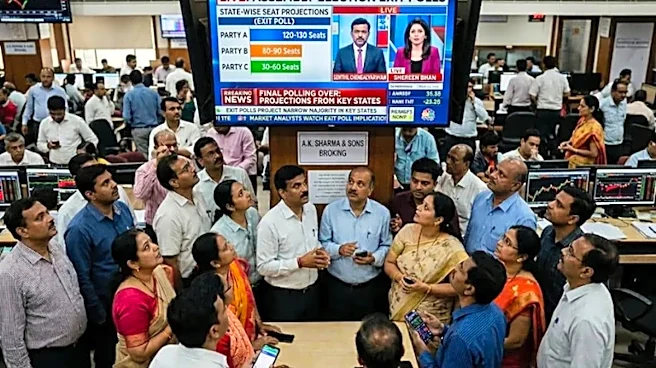
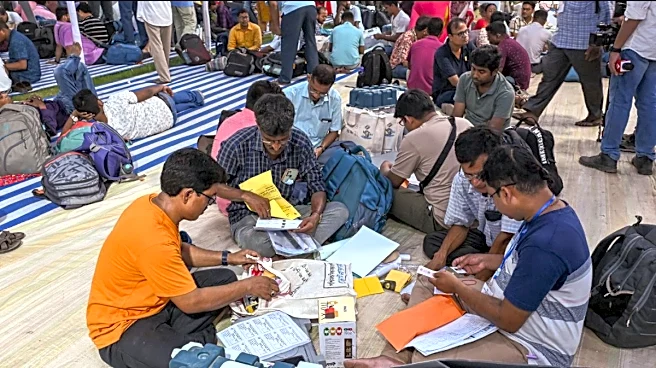
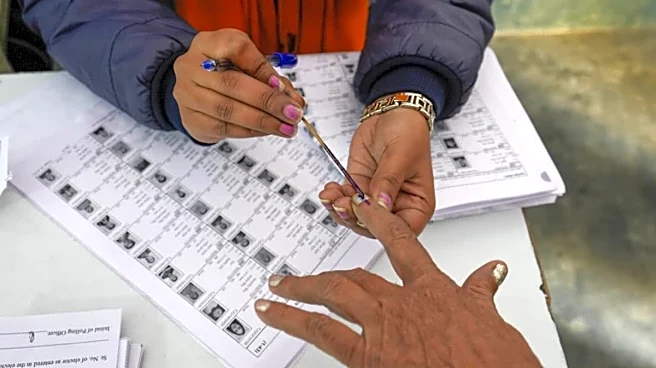
Stock market participants are closely tracking the outcome of assembly elections in West Bengal, Kerala, Assam, Tamil Nadu and Puducherry, with results due on May 4. Exit polls suggest a likely BJP win in Assam and a tight contest in West Bengal, while Tamil Nadu and Kerala are expected to see continuity and a regime change respectively. While these are state elections, their outcomes often carry broader implications for market sentiment—especially when they signal political momentum or shifts ahead of national elections.
Short-term: Sentiment-driven moves, especially from Bengal
According to Feroze Azeez, Joint CEO at Anand Rathi Wealth Limited, the biggest near-term market trigger could come from West Bengal. He notes that markets are currently
in a fragile, oversold phase, with the Nifty down around 9% from its highs, heavy foreign institutional investor (FII) outflows of about ₹56,000 crore in April, and elevated short positions in index futures.
“In such an environment, markets don’t need a big positive surprise to move—they react sharply to changes in perception,” Azeez said.
If the election results indicate stronger-than-expected performance by the BJP—especially in a politically significant state like West Bengal where it has expanded rapidly—markets could see a knee-jerk rally. Past trends support this pattern. For instance, markets reacted sharply after the December 2023 state election results and showed intraday recovery following the Bihar outcome in 2025.
Importantly, markets tend to react not to expected outcomes but to deviations from them—and West Bengal, given its unpredictable electoral history, carries that potential.
Medium-term: Political signals vs market fundamentals
Beyond the initial reaction, the impact of election results tends to fade as core market drivers take over. Azeez emphasises that earnings growth, interest rates, liquidity, and global factors such as oil prices remain the dominant forces shaping market direction.
However, political outcomes are not entirely irrelevant. In a country like India, policy continuity and political stability play a meaningful role in investor confidence. A strong showing by the ruling party in a large and politically challenging state like West Bengal—home to 42 Lok Sabha seats—could reinforce expectations of continuity at the national level.
This, in turn, may influence medium-term sentiment by increasing confidence in policy stability heading into the 2029 general elections.
While state election results can trigger short-term volatility—especially if outcomes surprise the market—their long-term impact is limited. Once the initial reaction settles, markets typically revert to fundamentals such as earnings visibility, macroeconomic stability, and global trends. Political developments act more as a sentiment overlay rather than a primary driver of sustained market movement.

/images/ppid_a911dc6a-image-177738083071131862.webp)


/images/ppid_a911dc6a-image-177743025951458314.webp)

/images/ppid_a911dc6a-image-177751343059230534.webp)
/images/ppid_a911dc6a-image-177747450385921007.webp)