
/images/ppid_59c68470-image-178658761653440080.webp)
/images/ppid_59c68470-image-178654006521624387.webp)
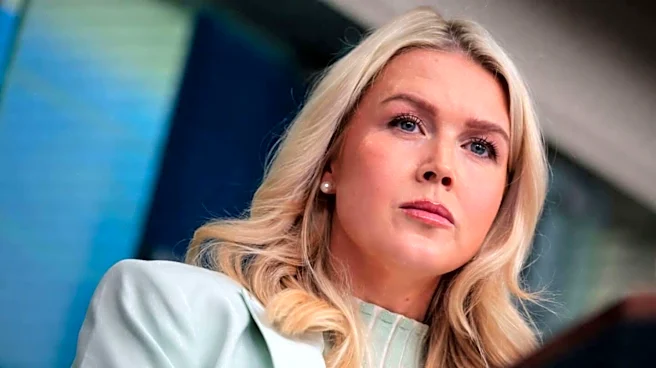
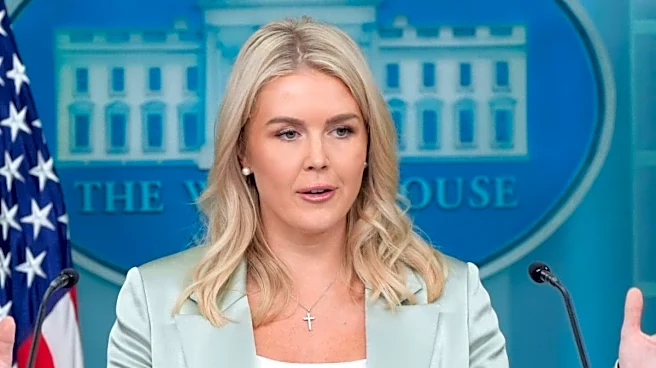
Imagine Donald Trump at the White House without Karoline Leavitt standing at the podium, taking questions, fighting with reporters and defending the administration’s most controversial moves. That is the reality the Trump administration will face by the end of August, after Leavitt announced she was stepping down as White House press secretary.
Trump announced her departure on Wednesday, saying Leavitt would leave the role at the end of the month to spend more time with her young children and family. He also made clear that this is not a complete break—Leavitt will remain one of his top outside advisers and an influential voice in the Republican Party. Trump did not immediately name her successor.
Her exit is therefore less about losing a government
employee and more about losing one of the most recognisable public faces of Trump’s second presidency. For nearly 19 months, Leavitt was the person frequently tasked with taking the administration’s message into the White House briefing room, often in the face of aggressive questioning from journalists.
So, who will now speak for Trump? And why did Leavitt become such an important part of his political communication machine?
Why Is Karoline Leavitt Leaving?
Leavitt’s departure comes only weeks after she returned from maternity leave following the birth of her second child in May.
She described the decision as a difficult one, saying the White House press secretary’s job had been both an honour and an adventure but that balancing the demands of the position with motherhood had become increasingly difficult.
Serving as the White House Press Secretary over the past year and a half has been the honor and adventure of a lifetime. I am incredibly grateful to President Trump for granting me so many extraordinary opportunities, such as working in the West Wing and spending countless hours… https://t.co/4jyW61DGGh pic.twitter.com/xny1yccuBn
— Karoline Leavitt (@karolineleavitt) August 12, 2026
Trump, meanwhile, presented the departure as an amicable and family-driven decision. He praised Leavitt as one of his most trusted aides and said she would continue working with him from outside the administration. “Karoline will now be one of my top outside advisors, and an influential voice within the Republican Party, as we work to defy History, and conclusively win the Midterm Elections,” the US president wrote on Truth Social.
That distinction matters. Leavitt is leaving the podium, not Trump’s political orbit. Her new role as an outside adviser could allow Trump to retain a trusted communicator while giving Leavitt greater flexibility to spend time with her family.
Who Will Replace Her?
For now, Trump has not announced a successor.
That leaves an important communications position open at a particularly consequential moment. The White House press secretary is not merely responsible for conducting briefings. The job involves explaining presidential decisions, responding to controversies, defending administration officials and setting the tone for the White House’s relationship with the media.
The vacancy also comes with the 2026 midterm elections approaching. Trump himself said Leavitt would remain an influential Republican voice as his administration works towards the midterms.
Until a permanent replacement is announced, other members of the White House communications operation could be called upon to fill the gap.
Why Did Leavitt Matter So Much To Trump?
Leavitt was unusually well suited to the Trump communications style.
She was not simply a spokesperson who explained policies after the fact. She became a political defender of Trump, often adopting the president’s combative approach towards the media and Democrats.
The Financial Times described her as one of Trump’s most effective press secretaries, highlighting her aggressive style, loyalty to the president and ability to generate viral moments on social media. It also noted that she helped reshape the White House press operation by giving greater access to conservative and non-traditional media outlets.
That made her particularly valuable to Trump, whose relationship with the mainstream media has remained intensely adversarial.
When reporters challenged the administration, Leavitt was often the person sent to respond. When Trump faced criticism over a policy or controversy, she was frequently the person defending him. And when the administration wanted to speak directly to Trump’s political base, she was one of its most recognisable messengers.
She Spoke Trump’s Political Language
One reason Leavitt became so effective within Trump’s White House was that she appeared comfortable communicating in the same political register as the president.
Her briefings frequently featured attacks on what Trump calls the “fake news” media, criticism of Democrats and forceful defences of administration policies.
Official records of White House briefings also show Trump repeatedly praising Leavitt’s performance and drawing her into exchanges with reporters. In one 2025 briefing, Trump called her his “superstar” and said she was doing a great job.
In another exchange documented by the US government, Trump joked about whether Leavitt should be replaced and said: “It will never happen.”
That gives an indication of the unusual personal confidence Trump placed in her.
More Than Just A Press Secretary
Leavitt’s importance to Trump also stemmed from her history with him.
She worked in the first Trump administration and later served as communications director for Republican congresswoman Elise Stefanik. She then became national press secretary for Trump’s 2024 presidential campaign before Trump selected her to become his White House press secretary.
At 27, she became the youngest person ever to hold the White House press secretary position when she took office in January 2025.
That meant she was not an outsider brought in simply to manage the briefing room. She had already spent years inside Trump’s political operation and understood both his messaging and his political base.
How Did She Change The White House Briefing?
Leavitt’s tenure also coincided with a broader change in how the Trump White House dealt with the media.
Rather than relying exclusively on traditional Washington news organisations, her operation opened the briefing room to a wider range of conservative and independent outlets. The Financial Times noted that she helped introduce influencer and non-traditional media participation into White House communications.
That fits into Trump’s broader strategy of communicating directly with supporters through social media and friendly media platforms rather than relying solely on conventional press coverage.
Leavitt therefore served two audiences simultaneously: the journalists in front of her and the millions of Trump supporters watching clips of her exchanges online.
A confrontation at the briefing room podium could quickly become a social-media clip aimed at the MAGA base.
Why Was She So Combative With Reporters?
Leavitt’s style was very different from the traditional image of a White House press secretary as a relatively restrained government spokesperson.
She frequently challenged journalists’ premises, accused outlets of bias and defended Trump aggressively.
The Guardian has highlighted her confrontational approach, including her repeated efforts to redirect difficult questions back towards Democrats or criticism of the media. It also noted that she often faced scrutiny over claims made at the podium.
Supporters saw that as strength and loyalty. But critics saw it as turning the briefing room into an extension of Trump’s political messaging operation.
Either way, it made Leavitt highly visible and highly valuable to a President who has always placed enormous importance on controlling the political narrative.
Did Trump Actually Need Her To Speak For Him?
This is where Leavitt’s departure becomes particularly interesting.
Trump is arguably the most direct communicator in modern American politics. He can speak for himself through Truth Social, rallies, interviews and public appearances. He does not necessarily need a spokesperson to communicate his views to his supporters.
But the White House still needs someone to deal with the institutional media ecosystem.
A President cannot personally answer every question from journalists, explain every administrative decision or respond to every controversy. The press secretary acts as the administration’s daily interpreter, turning presidential policy and political messaging into an organised White House response.
Leavitt had become particularly effective at that job because she knew how Trump wanted his message delivered.
What Does Trump Lose With Leavitt’s Exit?
He loses a communicator who combined three things that are difficult to replicate:
Access: She was close enough to Trump to understand his thinking and priorities.
Loyalty: She consistently defended him and his agenda, even under intense questioning.
Political instinct: She understood how a White House message would land with Trump’s supporters, not just with Washington journalists.
The Financial Times argued that her aggressive approach and ability to produce viral moments made her particularly effective for Trump. That combination could make finding her replacement more difficult than simply filling a vacant government post.
What Happens To Trump’s Voice Now?
The obvious answer is that Trump himself will remain Trump’s most important voice. But the White House will need someone who can translate his presidency into a daily media strategy.
The eventual replacement will inherit a difficult job: defending an administration whose policies routinely generate controversy, while maintaining Trump’s preference for an aggressive approach towards the press.
And there is another complication. The replacement will inevitably be compared with Leavitt. She was the youngest person ever to hold the job, became a highly recognisable Trump surrogate and remained closely aligned with the president’s political style.
Trump has already signalled that she is not disappearing from his political world. Instead, she is moving from the podium to the advisory room.
That could mean that while the White House gets a new face, Trump is not necessarily losing Leavitt’s voice. In fact, by making her an outside adviser, he may be trying to keep one of his most trusted political communicators close, just without the daily demands of the press secretary’s job.

/images/ppid_59c68470-image-178676253462528726.webp)

/images/ppid_59c68470-image-178659752898373162.webp)

/images/ppid_59c68470-image-178662253597111037.webp)