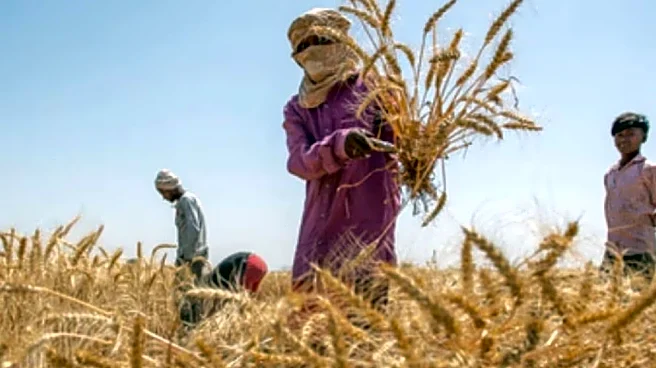

The ambitious national goal of achieving Viksit Bharat 2047 rests on fundamental shifts in economic policy, technology, and sustainability. While infrastructure and digital transformation garner headlines,
the quiet revolution unfolding in India’s farmlands, driven by the demand for organic food, is perhaps the most significant engine for equitable and ecological development. Prime Minister Narendra Modi, in a speech, clarified, “Our goal is to make India the food basket for organic foods globally.” The organic sector is no longer a niche market; it is a strategic economic imperative. As health, sustainability, and conscious consumption increasingly shape India’s food evolution, the domestic organic food market is currently estimated at over Rs 10,000 crore and is poised for high growth. By committing to organic agriculture, India is uniquely positioned to maximise its demographic dividend, empower its largest workforce — the farmers — and achieve global environmental leadership. The foundation of a healthy workforce; this lies in clean, chemical-free food. Organic farming-which strictly prohibits the use of synthetic pesticides and fertilizers-directly supports the national health agenda. This focus on nutrition-led healthy foods is essential for addressing dietary deficiencies and ensuring that India’s vast population enjoys a quality of life commensurate with a developed economy. The demand for conscious consumption, underpinned by the desire for cleaner food, is one of the primary drivers accelerating this market’s growth. India’s potential in the global organic sphere is huge. The country is a significant organic producer in the world and has one of the largest areas under organic agriculture. This inherent strength gives India a profound competitive advantage in international trade. Crucially, the organic market is a powerful economic tool for rural upliftment. By creating a certified, premium segment, organic farming allows farmers to earn better returns on their produce, leading to higher disposable income and economic stability. These farmers are the backbone of a reliable supply chain that guarantees purity and quality. For example, a pioneering model involves 27,000 farmers cultivating 1.4 lakh acres of certified organic farmland across 71 clusters in 10 states, demonstrating the viability of this large-scale system. The long-term success of Viksit Bharat hinges on sustainable agriculture. Organic cultivation directly contributes to this vision by promoting eco-friendly farming practices. These methods focus on enhancing soil health, conserving water, and increasing biodiversity, thereby building agricultural resilience against the impacts of climate change. This commitment ensures that economic progress today does not compromise the ecological resources needed by future generations. Despite this immense potential, the organic category remains under-penetrated, largely due to low consumer awareness and the critical need to establish market credibility. For organic products to truly become a mainstream choice, there must be absolute transparency and trust. The solution lies in adopting rigorous standards and implementing full “Farm-to-Fork” traceability — a model pioneered by early brands in the sector. Leading brands ensure their products are certified under both national NPOP (India) and international NOP (US) standards, often using technologies like on-pack QR codes to allow consumers to trace their product’s origin. This scaling process requires significant institutional capital, technological integration, and distribution strength. The convergence of organic farming and the Viksit Bharat 2047 vision is a pillar of sustainable national development. By championing organic methods, India secures a triple benefit: ecological restoration through better soil health and water conservation, economic empowerment for the 27,000 farmers who receive better returns and stability, and improved public health through nutrition-led, chemical-free food. This will transform a niche practice into a foundational pillar for a healthier, more prosperous, and truly developed India. Rajesh Mehta is an international affairs expert who focuses on areas such as market entry, innovation, geopolitics, and public policy. Views expressed are personal and solely those of the author. They do not necessarily reflect News18’s views.
/images/ppid_a911dc6a-image-17709981268676934.webp)

/images/ppid_a911dc6a-image-177099783324954399.webp)
/images/ppid_59c68470-image-177099754261412614.webp)



/images/ppid_59c68470-image-177099758366755621.webp)



/images/ppid_59c68470-image-177099754477221119.webp)
/images/ppid_59c68470-image-177099754306846588.webp)