
/images/ppid_a911dc6a-image-177658783268865572.webp)
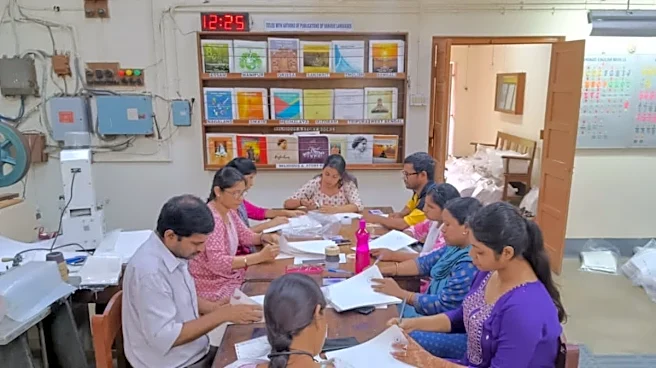
Braille ballot production has commenced at the Ramakrishna Mission Narendrapur Regional Braille Press, a facility operating under the Blind Boys Academy Narendrapur. The initiative underscores a structured effort to ensure that visually impaired citizens can exercise their franchise independently, reinforcing accessibility within the electoral process.
Through the systematic production of Braille ballots, the institution has enabled thousands of visually impaired voters to participate in elections without assistance. This marks a measurable shift from reliance on intermediaries towards independent decision-making at polling stations, addressing long-standing concerns related to privacy and autonomy in voting.
The project has been implemented in
collaboration with the Election Commission of India and has evolved over time. Initially introduced during Parliamentary elections, the initiative was later expanded to cover Assembly elections across West Bengal and several Northeastern states, including Tripura. It has since become an established component of accessible election management practices in the region.
For the recent West Bengal Assembly elections, the scale of operations was significant. Out of 294 Assembly constituencies, the Narendrapur Regional Braille Press was assigned responsibility for producing ballots for 183 constituencies. Despite a compressed production window between April 10 and April 17, the entire process was completed within the stipulated timeline, ensuring readiness for two phases of polling. This was confirmed by Arup Chatterjee, Manager of the Regional Braille Press.
The ballots were designed to replicate the standard ballot format prescribed by the Election Commission. Each included candidate names, party symbols, and sequence order, ensuring consistency with conventional ballots. To accommodate linguistic diversity, the ballots were produced in both Bengali and English.
Quality assurance mechanisms were integral to the process. The Election Commission deployed a dedicated oversight framework, including supervision by a Disability Commissioner and a verification team comprising ten members. Notably, five members of this team were visually impaired, contributing directly to the validation process. Each ballot underwent multiple stages of scrutiny before final approval, ensuring accuracy and usability.
Historically, visually impaired voters often depended on companions or polling personnel to cast their votes, raising issues around confidentiality. The introduction of Braille ballots has altered this dynamic by enabling voters to independently identify candidates and record their choices. This development strengthens both the secrecy of the ballot and the autonomy of the voter.
The initiative aligns with broader efforts to enhance inclusivity in electoral participation. By reducing structural barriers, it contributes to a more representative democratic process and supports the constitutional mandate of universal adult suffrage.
The Narendrapur facility remains one of the oldest and most advanced Braille printing centres in Eastern India. In addition to election materials, it has undertaken projects such as publishing the Constitution of India in Braille, further expanding access to legal and civic information for visually impaired individuals.
Operating under the philosophical guidance of Sri Ramakrishna, Sarada Devi, and Swami Vivekananda, the institution follows the principle of service-oriented work. Its infrastructure and trained personnel have enabled consistent delivery of high-volume, precision-based output within constrained timelines.
The continued emphasis by the Election Commission on accessibility reflects an institutional focus on inclusive governance. By facilitating independent participation for persons with disabilities, such initiatives contribute to strengthening electoral integrity and public confidence in the democratic system.
As noted by Swami Mahananda, Principal of the Blind Boys Academy, the initiative extends beyond ballot production. It represents a structured approach to enabling citizens to exercise their constitutional rights with dignity. The execution of the Braille ballot project demonstrates how administrative coordination, technological application, and service delivery can converge to address accessibility challenges in a measurable and scalable manner.


/images/ppid_a911dc6a-image-1776790629516616.webp)

/images/ppid_a911dc6a-image-177678802867735303.webp)
/images/ppid_a911dc6a-image-177667103009935765.webp)