
/images/ppid_59c68470-image-17707175370479328.webp)

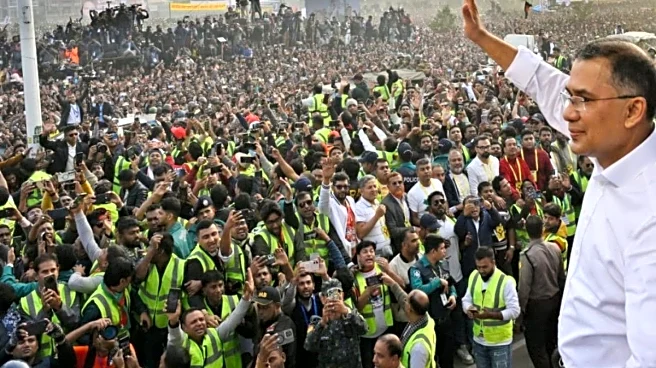
A day after returning to Bangladesh following nearly 19 years in self-imposed exile, Tarique Rahman visited the grave of his father, former president Ziaur Rahman, in Dhaka. It was his first visit to the site in almost two decades.
Standing at Zia Udyan under tight security, the acting chairman of the Bangladesh Nationalist Party placed wreaths, offered prayers and observed a long silence.
The visit marked his first public appearance in the country since 2006 and brought renewed attention to one of the darkest chapters in Bangladesh’s political history — the killing of Ziaur Rahman.
Ziaur Rahman was assassinated in the early hours of May 30, 1981, during an official visit to Chittagong. He had travelled there to deal with internal party issues
and was staying at the Circuit House, a government guest residence protected by army personnel.
Shortly before 4 AM, a group of mid-ranking army officers moved towards the building. Heavily armed, they launched a sudden assault. Rockets struck the structure, damaging the building and killing several of Ziaur Rahman’s guards. The attackers then entered the residence and searched it room by room.
As the attack unfolded, Ziaur Rahman attempted to leave his room. Two officers initially told him they would escort him to safety at the cantonment. Moments later, another group arrived. One of the key conspirators shot him at close range with a submachine gun. The firing continued even after he fell. The entire operation lasted less than 20 minutes.
After the assassination, the officers transported the bodies of Ziaur Rahman and two guards to the Chittagong Cantonment in a military vehicle. Soon after, Major General Abul Manzoor, the regional army commander, went on radio broadcasts declaring a rebellion, removing the army chief in Dhaka and calling on other officers to support the uprising.
The coup attempt collapsed within hours. Then army chief Hussain Muhammad Ershad stayed loyal to the government and ordered troops to take back control. Most of the officers involved surrendered, while others were killed during escape attempts. Major General Manzoor was arrested days later and later died in custody.
A military tribunal swiftly tried the accused. Within weeks, 12 army officers were executed in 1981 after trials that lasted less than three weeks.
At the time, reports pointed to growing dissatisfaction within the army over postings, promotions and deep divisions between officers who had fought in the 1971 Liberation War and those who had returned from Pakistan.
Following Ziaur Rahman’s death, Vice President Justice Abdus Sattar took charge as acting president.
Ziaur Rahman had emerged as a national figure during the 1971 Liberation War, when his radio announcement declaring independence became a defining moment in Bangladesh’s history.
After years of political instability marked by coups and counter-coups, he rose to become army chief and later president in 1977. In office, he founded the BNP in 1978, reintroduced multi-party democracy and pursued economic reforms while strengthening Bangladesh’s foreign relations.
More than 40 years later, his influence continues to shape the country’s politics. His widow Khaleda Zia served twice as prime minister, and his son Tarique Rahman now leads the party at a time of renewed political tension in Bangladesh.


/images/ppid_a911dc6a-image-177078725708786992.webp)