
/images/ppid_a911dc6a-image-17710070301901476.webp)
/images/ppid_a911dc6a-image-177100572282276854.webp)
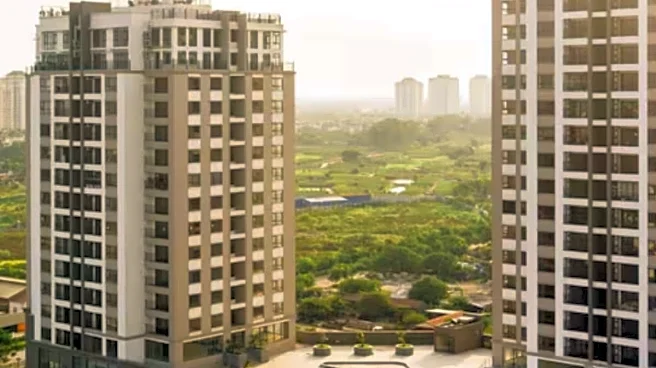
The story of the Indian luxury property market has been moving out of the heart of metro cities towards their suburbs and prominent Tier 2 cities for the last few years. As a result, prominent towns such as Lucknow, Jaipur, Kochi, and others are vying for prominence with metros. Not only is the Indian luxury market being redefined around these locations, but, according to 2025 numbers, these are not just deviations but the bottom line of the silent revolution taking shape.
Starting with the first half of 2025, sales in Tier 2 & 3 cities contributed close to 1,907 acres in land sales, vastly outdoing the 991 acres registered in Tier 1 cities, as per the ANAROCK report, a significant indicator of future sales enthusiasm. Taking in account the details,
sales, however, contracted by 4% in Q3 2025 on a yearly basis, but the overall sales in the top Tier 2 cities were up by 4% at Rs 37,409 crores. One thing this very clearly establishes is this shift in sales patterns, premiumisation. Properties above Rs 1-crore price points accounted for an astonishing 62% of sales in H1 2025, up from 51% in the previous year. Prices surged by an average of 17.6% in these cities, vastly outdoing the 11.1% in major cities.
Cities like Lucknow are examples. It defied national trends with a 48% jump in sales value in Q1 2025, alongside a 22.6% capital appreciation according to the report. This isn’t generic growth; it is targeted, high-value consumption. The affordable segment, by contrast, saw a 54% supply plunge in Q1 2025, as builders chase higher-margin, aspiration-driven projects.
Sehaj Chawla, managing director of TREVOC Group, said, “The outlook for Tier 2 cities in 2026 indicates a phase of sustained and structural growth, driven by the creation of integrated urban ecosystems rather than short-term market cycles. Cities such as Sonipat, Panipat, and Karnal are benefitting from infrastructure corridors, expanding employment zones, and improved social infrastructure, which together are reshaping housing demand. The focus is gradually shifting towards high-quality townships that offer a holistic living environment combining residential spaces, wellness-led design, green planning, and everyday conveniences. Going forward, growth will remain micro-market specific, closely linked to the pace of infrastructure execution and the development of local job corridors, with developers increasingly aligning their land acquisition and project strategies to long-term, ecosystem-driven urban growth.”
Piyush Kansal, executive director of Royale Estate Group, said, “The Tricity region has emerged as a strong example of how second homes are transitioning into full time lifestyle choices. Today’s buyers are not seeking occasional holiday retreats they are looking for thoughtfully planned communities that offer space, greenery and long term liveability. Tricity’s appeal lies in its unique balance robust social infrastructure, proximity to the hills, and a calm yet well connected urban environment. We are seeing professionals increasingly split their time between metros and tricity often spending the larger part of the year here. This shift is encouraging developers to design homes for everyday living rather than seasonal use.”
Ankit Kansal, founder & MD of Axon Developers, said, “What we are witnessing is a shift in how Indians define ownership and aspiration. Tier-II cities are increasingly being chosen not just for primary residences, but as thoughtfully planned second-home destinations. Improved highway networks, regional airports, and better rail connectivity have made weekend living and extended stays both practical and desirable. Developers are responding with low-density, well-integrated communities that prioritise space, wellness, and sustainability. These developments go beyond homes to offer green corridors, solar-powered amenities, and lifestyle infrastructure, making Tier-II cities a natural extension of urban living rather than a compromise.”
Aspiration alone cannot sustain a market. It needs economic fuel. This is being provided by the aggressive corporate decentralisation. As reported in the media, Global Capability Centers (GCCs) doubled their leasing share in Tier 2 cities to 15% in FY25, bringing high-paying IT jobs to such towns. Simultaneously, growth in manufacturing, education, and logistics is creating a diversified local economy and a stable, high-income talent pool that can afford these homes.
Infrastructure is the critical connective tissue. Projects like the Delhi-Dehradun Expressway, metro expansions in Lucknow and Kochi, and new airports are collapsing perceived distances and enhancing liveability. Digital connectivity has ensured professional parity. This physical and digital leap is transforming these cities from provincial towns into cosmopolitan nodes.
Adding robust investment gravity is the Non-Resident Indian. Over 80% of developers expect increased NRI demand in 2025.
For the NRI, investing in a luxury apartment in their hometown is a dual proposition: a tangible emotional anchor and a sound financial bet offering higher yields and appreciation potential than saturated metros. They demand global-standard amenities, which further elevate market offerings.
In essence, India’s urban narrative is being rewritten. The Tier 2 city is no longer the reluctant backbencher awaiting a metro’s overflow. It has stepped onto the main stage, offering a compelling, upgraded alternative. Here, luxury is democratized, not in price, but in proposition: offering a superior quality of life that the chaotic, costly megacity can no longer provide.



/images/ppid_a911dc6a-image-177101752951095973.webp)


/images/ppid_a911dc6a-image-177101403147018469.webp)
/images/ppid_a911dc6a-image-177101053501199609.webp)
/images/ppid_59c68470-image-177101003680064644.webp)