
/images/ppid_59c68470-image-178196002591996799.webp)
/images/ppid_a911dc6a-image-178195943166076749.webp)


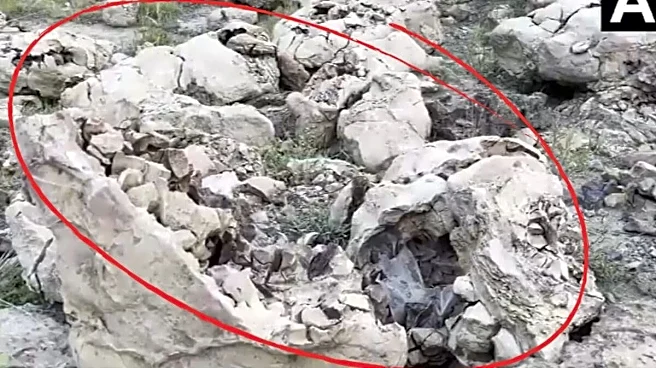
Researchers have discovered a fossil estimated to be around 15 million years old in Odisha’s Mayurbhanj district, a finding that could offer fresh insights into the region’s ancient marine ecosystem. The discovery suggests that parts of present-day Mayurbhanj were once submerged under shallow seas millions of years ago.
The fossil was unearthed in the Baripada Fossil Bed, a geologically significant stretch that extends from Dera in Kuliana block to Pratappur in Badasahi block. The site is known for preserving evidence of the region’s prehistoric past.
The fossil is believed to be from the Miocene epoch. This period was known for its rich biodiversity and the climatic changes that occurred then.
How Was This Fossil Discovered
The discovery actually began with a field visit for
students, said Dr. Debabrata Nandi as quoted by ANI. Nandi is a researcher and professor in the Department of GIS at Maharaja Sriram Chandra Bhanja Deo (MSCB) University.
“Actually, when I took our students on a tour, I noticed some fossil-like remnants there. We went to the local people and asked them what it was, and they referred to it as ‘Asura Hadda’, or ‘demon’s bones’. After that, we investigated further and found several fossils, including microfossils such as shark teeth and shark vertebrae, along with some other elements that we haven’t been able to identify yet,” the professor said.
Palaeontologists and researchers from other scientific institutions are being engaged to determine the full significance of this discovery, Nandi said.
“This is most probably from 15 million years ago, which is called the Miocene period. The fossil dates back to that time. If it weren’t a marine belt, we wouldn’t have found shark teeth or fossils of other sea animals. The presence of these fossils means there was a sea there,” he said.
The place didn’t just have shark bones. Researchers also found bones of other fishes, mollusc shells, and microscopic marine organisms, which point to a rich and diverse underwater ecosystem.
According to studies, sharks account for nearly half of the fish fossils discovered at the site.
Further Research Potential
Nandi also stressed the need for climate-based studies to understand how the sea receded nearly 60 kilometres from present-day Baripada.
Stressing the need to study the moving away of the sea from Baripada, Dr. Nandi said, “everyone should study why it receded so far, whether it happened due to climate change or other disasters. If more research is conducted, we will be able to discover a lot more.”
“I would say that we can develop it as a geoheritage site or promote geotourism because this is the only place in Odisha where Miocene-age fossils are found. If we establish a fossil park or declare it a geoheritage site, we can showcase it to tourists and encourage extensive research,” he added.
Experts believe the Baripada Fossil Bed could emerge as a significant geological heritage destination, helping scientists unravel Odisha’s prehistoric past while promoting education, conservation and tourism.
(With ANI inputs)
![[WATCH] Dinesh Karthik provides insightful wicketkeeping lessons during second ENG vs NZ Test](https://glance-mob.glance-cdn.com/public/cardpress/binge-magazine-card-generation/spaces/IN/en/crictracker-spaces/images/ppid_49c02804-image-178196252452621254.webp)




/images/ppid_59c68470-image-178196252537553000.webp)

/images/ppid_a911dc6a-image-178196202340777422.webp)

/images/ppid_a911dc6a-image-178196205069318156.webp)




/images/ppid_a911dc6a-image-178196012984118981.webp)