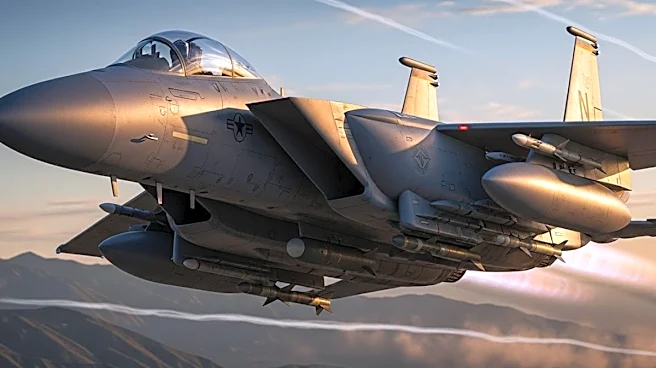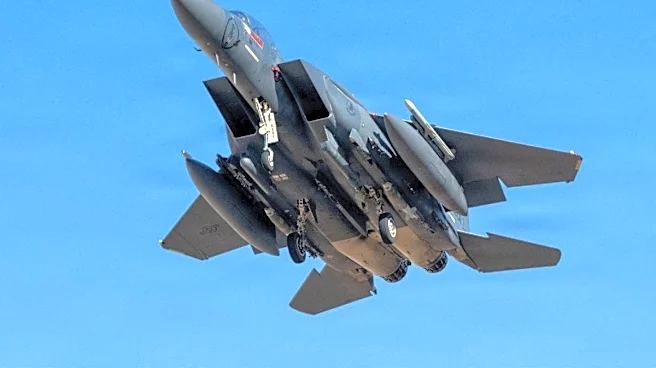

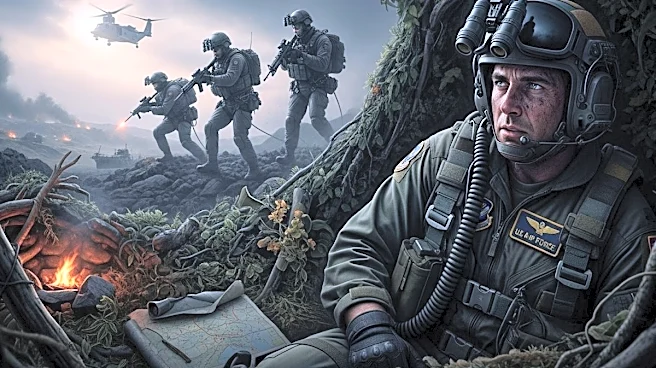
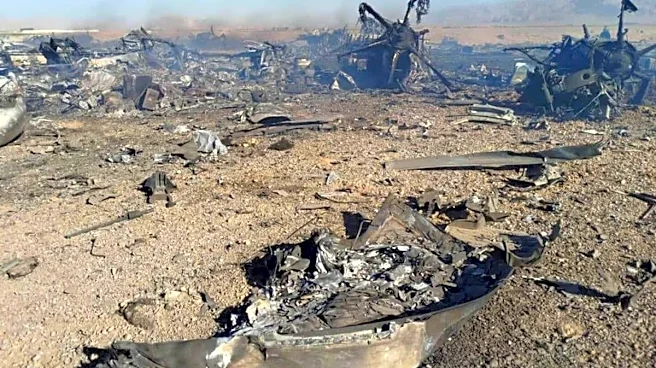
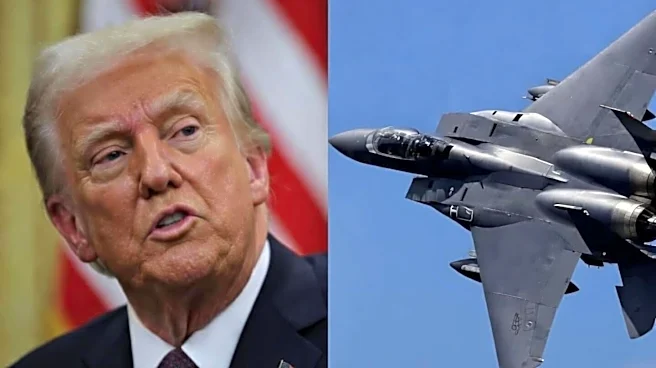
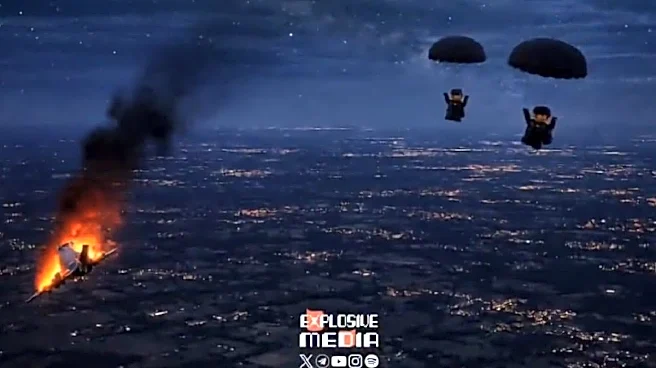
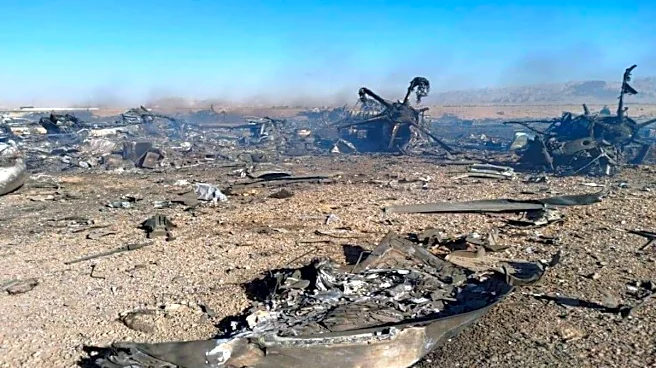
When a downed American airman, stranded deep in hostile territory after his F-15 was shot down, managed to make radio contact, the message should have been a moment of relief. Instead, it set off alarm bells in Washington.
As the radio crackled, a phrase—“Power be to God”—unusual and off-script for US military
communication, was enough to make officials consider a chilling possibility: Was this a trap?
Why The Phrase Raised Eyebrows
According to Axios, US pilots are trained under strict Survival, Evasion, Resistance and Escape (SERE) protocols. Communication in such situations is rarely casual or improvised. It follows patterns that are designed to confirm identity, signal distress, and avoid manipulation.
However, “Power be to God” didn’t fit that pattern.
ALSO READ | Trump
Says Rescued US F-15 Pilot In Iran Was ‘Seriously Wounded’, Identifies Him As Colonel
To American ears, it sounded linguistically and culturally out of place, closer to phrasing heard in the Middle East than in standard US military radio exchanges. That deviation mattered. As Axios notes, in hostile territory, even small anomalies can signal danger: coercion, impersonation, or deception.
Fear Of A ‘Trap’
The concern wasn’t abstract. Not just Iranian forces but citizens were actively searching for the downed pilot. A compromised communication could have been part of a broader ploy to lure US rescue teams into a vulnerable position.
Military planners had to weigh a brutal calculation: Move fast and risk walking into an ambush or hesitate and leave a wounded airman exposed behind enemy lines.
When Language Becomes A Liability
Combat environments compress time and amplify uncertainty. There is no room for ambiguity, yet ambiguity is everywhere, especially in human communication.
According to The Guardian, under stress, injury, or exhaustion, people don’t always speak in rehearsed codes. They fall back on instinct, which includes fragments of language, emotional expressions, and cultural echoes picked up over time.
What may have been a spontaneous expression of relief or faith could, in another context, be read as a sign of compromise.
The episode also reveals a deeper truth about modern warfare: technology may dominate the battlefield, but human judgment still governs it and that judgment is often made with incomplete, imperfect information.
In the end, the airman was rescued. Little is known about his identity, but he was the weapons system operator sitting behind the pilot aboard the advanced F-15E fighter jet shot down last Friday.
After ejecting, the missing weapons expert shouted “God is good” over the radio, apparently reflecting his firm religious beliefs, the Axios news site reported, citing Trump and US officials. The airman was wounded after his ejection but could still walk, reportedly scaling a 2,100-metre (7,000-foot) ridgeline in the mountains before hiding in a crevice, according to The New York Times and Axios.
The Navy commandos, best known for taking part in the 2011 operation to kill Al-Qaeda leader Osama bin Laden, were tasked with extracting the airman, while US attack aircraft provided cover, The New York Times added, citing unnamed officials.
The incident lingers as a case study in how fragile certainty can be in war. Because sometimes, survival hinges not just on being heard, but on being understood exactly as intended.


/images/ppid_59c68470-image-177558503108838398.webp)

/images/ppid_59c68470-image-1775592571288204.webp)
/images/ppid_59c68470-image-177546252996877041.webp)