

/images/ppid_59c68470-image-178344253181585478.webp)
/images/ppid_a911dc6a-image-178347262580919340.webp)
/images/ppid_59c68470-image-178344256531955165.webp)


Good evening, readers.
We’ve made it to the end of another busy week—and what a week it has been.
From a renewed US-Iran conflict and a FIFA World Cup VAR controversy that has football fans fuming, to Prime Minister Narendra Modi’s high-profile three-nation tour and a major breakthrough in diabetes treatment, the news cycle barely slowed down over the past five days.
So, before you switch into weekend mode, here’s a quick catch-up on some of the biggest stories that dominated headlines between July 6 and July 10.
US-Iran Conflict Returns To The Brink
Just when it appeared that tensions in the West Asia had cooled, the fragile ceasefire between the United States and Iran collapsed this week.
The trigger came on July 7, when three commercial ships
were struck in the strategically vital Strait of Hormuz. In response, US President Donald Trump declared the ceasefire “over”, following which American forces launched a series of strikes targeting Iranian military installations, air-defence systems and naval assets.
The latest escalation has once again raised concerns about the stability of one of the world’s most important energy corridors—and what it could mean for global oil prices in the weeks ahead.
FIA World Cup Drama: Argentina’s Victory Overshadowed By VAR Row
The FIFA World Cup delivered one of its most dramatic matches this week—but not everyone was talking about football.
Argentina’s thrilling 3-2 comeback win over Egypt in the Round of 16 quickly became overshadowed by allegations surrounding the use of Video Assistant Referee (VAR) technology.
Egypt coach Hossam Hassan accused tournament officials of favouring the defending champions, suggesting that officials wanted to keep both Argentina and Lionel Messi in the competition.
Whether those claims hold any weight or not, the controversy has become one of the tournament’s biggest talking points.
PM Modi’s 3-Nation Tour
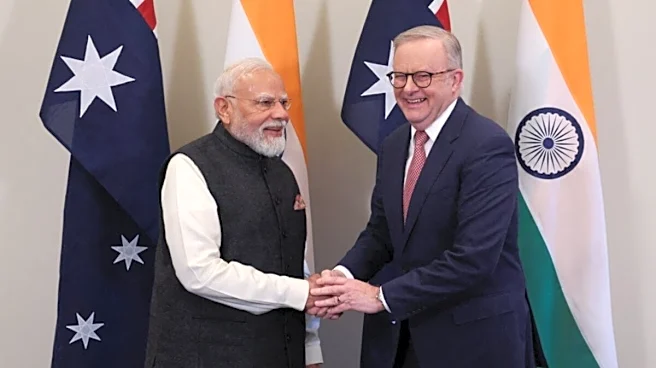
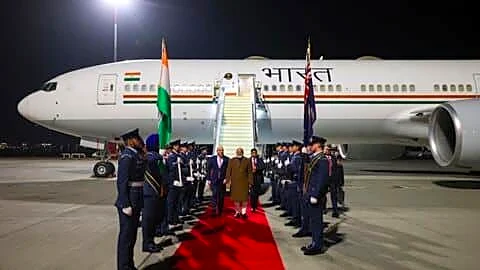
Prime Minister Narendra Modi spent much of the week travelling across the Indo-Pacific region, visiting Indonesia, Australia and New Zealand.
In Jakarta, Indonesia conferred its highest civilian honour—the Bintang Adipurna—on the Prime Minister. The visit also saw the signing of 14 agreements, including a major deal involving the supply of BrahMos missiles to the Indonesian armed forces.
In Australia, Modi and Prime Minister Anthony Albanese finalised a landmark agreement that will allow Australian uranium exports to support India’s expanding nuclear energy programme.
The final stop was New Zealand, marking the first visit by an Indian Prime Minister to the country in four decades.
‘Satluj’ Controversy
A film release that had already faced years of delays found itself at the centre of another controversy this week.
Satluj—previously titled Punjab ’95—was removed from ZEE5 just days after its release, triggering political backlash across Punjab.
The film chronicles the life of human-rights activist Jaswant Singh Khalra, who investigated the cremation of thousands of unidentified bodies during Punjab’s turbulent insurgency years before he himself disappeared in 1995.
Political parties, Sikh organisations and civil society groups have criticised the film’s removal, arguing that difficult chapters of history should be confronted rather than suppressed.
The Ministry of Information and Broadcasting has since constituted a review committee to examine the circumstances surrounding the takedown.
Meanwhile, the film has found an unexpected second life. Community groups and volunteers have begun organising screenings in gurdwaras, village grounds and public spaces across Punjab.
A Once-A-Week Insulin Shot Arrives In India
And finally, a development that could make life easier for millions of diabetes patients.
Danish pharmaceutical company Novo Nordisk launched the world’s first once-weekly insulin injection in India this week.
Marketed under the brandname Awiqli, the treatment reduces the number of insulin injections from 365 per year to just 52.
The company says the innovation represents the latest milestone in a century-long journey of insulin development—from short-acting formulations to daily injections, and now to a once-a-week option.
For many patients, fewer injections could mean better treatment adherence and a significantly improved quality of life.
That’s all from us this week.
Whether you’ve been following every headline or are just catching up now, thank you for spending part of your week with us.
Have a great weekend, stay informed, and we’ll be back next week with another roundup of the stories that matter.
/images/ppid_59c68470-image-178357756949045574.webp)


/images/ppid_a911dc6a-image-178353762327552468.webp)






/images/ppid_a911dc6a-image-178343106688578477.webp)