


/images/ppid_a911dc6a-image-177817363416963287.webp)
It was in the early 1920s when a young Akita dog called Hachikō met his owner. The professor Hidesaburō Ueno of Imperial University of Tokyo took the puppy into his house, where he lived until his unexpected death in 1925. From that day, Hachikō became famous for the extraordinary bond of friendship and loyalty to his deceased owner, making him a subject of a memorable story about animals.
Every day, the loyal animal walked alongside his owner from their house to Shibuya Station where Professor Ueno took his train to go to work. Later in the evening, Hachikō waited for his owner at Shibuya Station. For years, Hachikō had been coming to the station to pick up Professor Ueno.
However, on May 21, 1925, the professor had a cerebral hemorrhage and
died at the age of 53 at his workplace; thus, he did not return to Shibuya Station again.
And still, Hachikō waited.
As it is reported from historical accounts, Hachikō appeared at Shibuya Station each day at the same time, expecting his owner to arrive by train. Employees of the station, commuters, and shop owners living nearby gradually started to notice the animal’s presence there.
Initially, some individuals viewed Hachikō as a stray and endeavored to shoo him away from his territory. Nevertheless, after some time, Hachikō became the responsibility of station workers who fed him and gave him water. The tale later became well-known in the city of Tokyo after the Japanese newspaper released an article on the loyal dog in the early 1930s.
The release of the article transformed Hachikō into a symbol of loyalty in Japan.
Crowds then began visiting Shibuya Station to visit the loyal dog. It is alleged that tourists brought him food and even photographed him, while children learned about him in school.
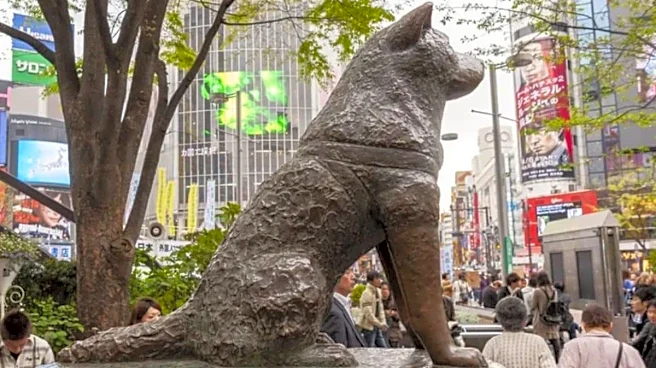
In 1934, a bronze statue of Hachikō was erected outside Shibuya Station, and it was still alive then. It is alleged that Hachikō was present at the dedication ceremony.
Hachikō passed away on March 8, 1935, after waiting nine years for his master, outside Shibuya Station. Hachikō’s demise received coverage in Japanese newspapers, and crowds went to Shibuya Station to honor his memory.
On performing the postmortem of Hachikō, it was established that the dog died as a result of terminal diseases like cancer and parasites.
To date, the statue dedicated to Hachikō at the entrance of Shibuya train station is still one of the most famous landmarks in Japan. In 1948, a new statue replaced the original because of recycling during World War II.
More than fifty years after he died, the Akita dog that used to wait for its owner daily still lives in the hearts of people all over the world.


/images/ppid_a911dc6a-image-177843059899864102.webp)