
/images/ppid_a911dc6a-image-17710654257455666.webp)
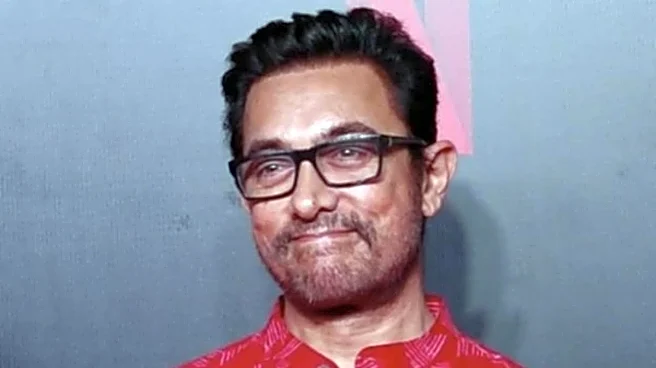
Aamir Khan has revisited one of the most difficult phases of his early career — a chapter marked by confusion, missteps, and a creative restlessness that nearly pushed him out of Bollywood before he fully arrived. Speaking at the Hindustan Times Leadership Summit 2025, the actor offered a rare, candid look at the years following his breakout in Qayamat Se Qayamat Tak, and how those turbulent beginnings reshaped his entire philosophy of filmmaking.
‘I Realised I Wasn’t Built For Juggling Films’
In conversation with Sonal Kalra, Chief Managing Editor – Entertainment and Lifestyle at Hindustan Times, Aamir recalled the dizzying aftermath of his QSQT success. Virtually overnight, he became the face everyone wanted — except the filmmakers he had dreamt
of working with.
“My first film QSQT was a huge success, and made me an overnight star,” he said. “I started getting a lot of offers for films. I wasn’t getting offers from the directors I wanted to work with… but I thought if everyone else is doing 30–40 films, doing under 10 should be okay for me.”
It was a decision he soon regretted. As the shooting schedules stacked up, reality struck.
“I realised what a big mistake I had made. I am not built to do 2–3 films together… that was my first realisation.”
‘One film Wonder — And Rightly So’
Aamir didn’t mince words about the painful fallout that followed. He described the moment he understood that a film was only as strong as the foundation it rested on.
“Three things are crucial in every film: the script, the director and the producer. Until these three are ticked off, I won’t do a film again,” he said.
The projects he had hastily signed began to release — and one after another, they collapsed at the box office.
“Ek flop hui, dusri flop hui, teesri flop hui. I was labelled a ‘one film wonder,’ and rightly so,” he said with disarming honesty. His sensibilities simply did not align with the filmmakers he was working with.
He remembers coming home in the evenings and crying, convinced his career was ending.
“I knew how bad the remaining films were. I felt I was sunk. I swore to myself that never again will I compromise with my work.”
The Turning Of The Tide
The course correction began soon after. With Dil in 1990, Aamir slowly reclaimed the path he wanted to walk. The 90s saw him headline some of the decade’s biggest blockbusters — Raja Hindustani and Sarfarosh among them — paving the way for a streak of cultural behemoths: Ghajini, 3 Idiots, PK, and Dangal, the last of which still stands as the highest-grossing Indian film in history.
It was the long way around, but it taught him clarity — a quality that has since become synonymous with his name.
The Present Chapter
Aamir’s latest release, Sitaare Zameen Par, crossed ₹200 crore worldwide. Directed by R.S. Prasanna and starring Genelia D’Souza, the film skipped an OTT platform and shifted straight to a digital release on YouTube after completing its theatrical run.
If nothing else, Aamir’s journey — from weeping over early failures to redefining the contours of mainstream Hindi cinema — is its own testimony to the power of reinvention. Not through luck, not through image-building, but through the one thing he says he refused to compromise on ever again: the work.





/images/ppid_59c68470-image-177106753408288480.webp)

/images/ppid_a911dc6a-image-17710672654155818.webp)