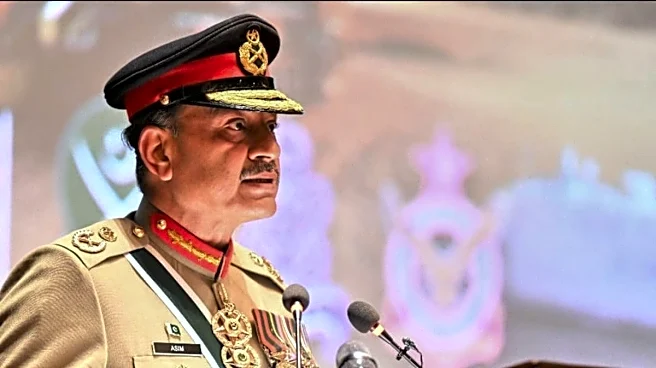




Pakistan’s military has carried out major changes in its senior command, reassigning key intelligence, General Headquarters (GHQ) and field positions amid a worsening security situation in Khyber Pakhtunkhwa and Balochistan, CNN-News18 has learnt.
The changes include a new Director General of Military Intelligence, fresh appointments at GHQ and field formations, and new leadership for the Frontier Corps in Balochistan.
The move comes against the backdrop of persistent security and intelligence failures in Khyber Pakhtunkhwa and Balochistan, as Army Chief Field Marshal Asim Munir moves to put a new team in key positions.
New DG Military Intelligence
Among the most significant changes, Major General Wajid Aziz has been removed as Director General of
Military Intelligence (DG MI), with Major General Adil Waraich appointed in his place.
Major General Jawad has been given a key Director-General-level appointment at GHQ, while Major General Sajid has been appointed DG Z and Major General Shamrez has been named DG S.
Changes In Field Command
Major General Khurram Shabbir has been appointed General Officer Commanding (GOC) of the 17 Division.
Major General Ateeq Rafiq, meanwhile, has been appointed Director General of the Pakistan Coast Guard.
New Frontier Corps Leadership In Balochistan
Significant changes have also been made to the Frontier Corps leadership in Balochistan, where Pakistan’s military has been facing persistent security challenges.
Major General Zafar has been appointed Inspector General of Frontier Corps South Balochistan.
Major General Farhan has been named Inspector General of Frontier Corps West Balochistan, a newly created division or wing of the Frontier Corps.
More Promotions Expected
Around 11 Major Generals are also expected to be promoted to the rank of Lieutenant General soon, potentially paving the way for further changes in the Pakistan Army’s senior command.
Pakistan’s Military Command Overhaul
The latest appointments come a month after Pakistan gave statutory backing to a much wider overhaul of its military command structure.
On August 20, the National Assembly approved the Defence Forces of Pakistan Act, 2026, along with changes to the National Command Authority Act, formalising the powers of the Chief of Defence Forces (CDF), a position held by Munir alongside his role as army chief. The legislation followed the 27th Constitutional Amendment passed in November 2025, which had created the CDF post.
Under the new structure, the earlier post of Chairman of the Joint Chiefs of Staff Committee has been abolished and replaced by a Defence Forces Headquarters headed by the CDF. Unlike the former joint chiefs chairman, whose role was primarily one of coordination between the three services, the CDF has statutory operational command and control over the armed forces, placing the army, navy and air force under a more clearly defined unified command.