


As the government signals that one of India’s longest-running internal conflicts may finally be nearing its end, the conversation around Naxalism is once again in focus. Beyond politics and policy, the subject has also found space in cinema, though only occasionally, through films that tried to capture its complexity.
Over the years, Bollywood has rarely explored Naxalism in depth. But when it has, filmmakers have attempted to show different sides of the issue, from rebellion and ideology to survival and systemic failure. These films, set across decades, offer glimpses into a world that many know of, but few fully understand.
Pratidwandi (1970)
Directed by Satyajit Ray, the film isn’t directly about Naxals but captures the unrest and political
tension of the era.
The Naxalites (1980)
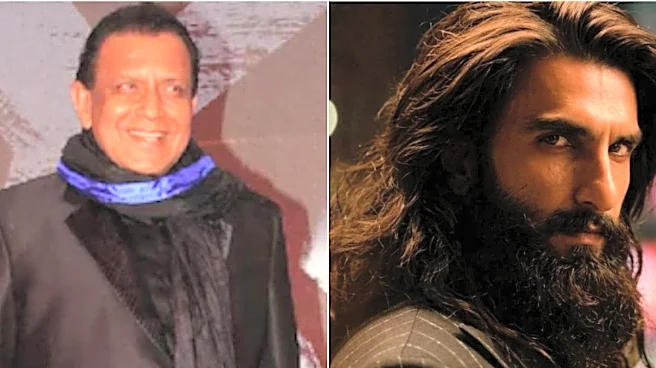
One of the earliest Hindi films on the subject, K.A. Abbas’ The Naxalites starred Mithun Chakraborty, Smita Patil and Dina Pathak. The film focused on the lives of people who joined the movement and their struggle against the system. It showed how individuals from different backgrounds came together under a shared cause.
Andhi Gali (1984)
Directed by Buddhadev Dasgupta, Andhi Gali was set in 1970s Bengal at the height of the Naxalite movement. Featuring Deepti Naval and Kulbhushan Kharbanda, the film explored the emotional and social impact of the movement on ordinary lives.
Panchagni (1986)
Inspired by real-life Naxalite leader Ajitha, this film follows a woman revolutionary after her release from prison, offering a rare feminist lens on the movement.
Sindhooram (1997)
A Telugu cult classic that traces the journey of an innocent man who slowly gets drawn into the Naxalite movement. The film is known for its raw, ground-level depiction of how radicalisation happens.
Lal Salaam (2002)
This lesser-known film by Gaganvihari Borate starred Nandita Das in a central role. It followed the story of a woman who joins a Maoist group after facing police brutality in her village, highlighting themes of revenge and injustice.
Hazaaron Khwaishein Aisi (2005)
Sudhir Mishra’s critically acclaimed film, starring Kay Kay Menon, Chitrangada Singh and Shiney Ahuja, was set during the Emergency. Through the journey of three friends, it touched upon political ideologies, youth activism and the influence of the Naxalite movement during that time.
Thalappavu (2008)
Based on a real-life incident, this Malayalam film stands out for its emotional storytelling, focusing on the bond between a policeman and a Naxalite that ends in tragedy.
Chamku (2008)
Directed by Kabeer Kaushik, Chamku featured Bobby Deol, Priyanka Chopra and Irrfan Khan. The film, though not a box office success, dealt with Naxalism in Bihar and followed a man drawn into violence and political operations.
Red Alert: The War Within (2010)
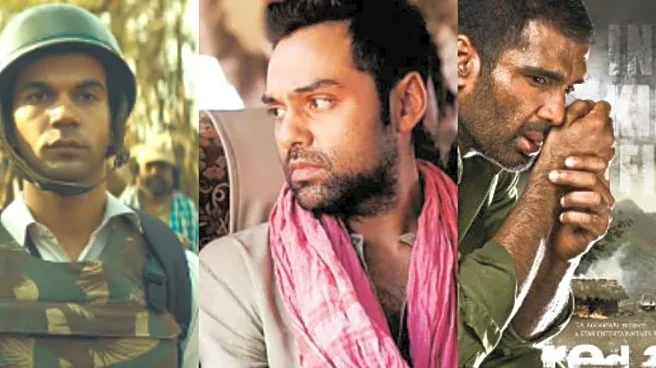
Ananth Mahadevan’s Red Alert told the story of a poor man played by Suniel Shetty, who is forced into the Naxalite movement due to circumstances. Inspired by real events, the film focused on how poverty and survival push people into conflict zones.
Rakta Charitra (2010)
While primarily about political violence, the film touches upon the intersection of Naxal influence and factional politics in Andhra Pradesh.
Chakravyuh (2012)
Prakash Jha’s Chakravyuh, starring Arjun Rampal, Abhay Deol and Manoj Bajpayee, explored the ongoing conflict between security forces and Maoists. The film attempted to present both sides, showing the political and human cost of the issue.
Newton (2017)
Directed by Amit V. Masurkar, Newton starred Rajkummar Rao as a government clerk sent to conduct elections in a Naxal-affected area. The film used satire and realism to highlight the challenges of democracy in conflict regions.
Virata Parvam (2022)
Virata Parvam (2022) is a Telugu-language period romantic action drama directed by Venu Udugula and backed by Suresh Productions along with SLV Cinemas. The film features Sai Pallavi and Rana Daggubati in the lead, supported by a strong ensemble including Priyamani, Nandita Das, Naveen Chandra, Zarina Wahab, Easwari Rao, and Sai Chand.
Set in 1990s Telangana during the height of the Naxalite movement, the story follows Vennela, played by Sai Pallavi, a young woman driven by love as she sets out to find Ravi Shankar, a Naxal leader portrayed by Rana Daggubati.
Lohardaga (2023)
Based on real events, Lohardaga focused on young people in Jharkhand who are drawn into the Naxal movement due to lack of opportunities. It also showed attempts at rehabilitation and reintegration into mainstream society.
Bastar: The Naxal Story (2024)
Directed by Sudipto Sen and starring Adah Sharma, the film looked at real-life incidents in Chhattisgarh, including deadly attacks on security personnel. It presented a more recent and intense take on the conflict.
Govt Says Naxalism Nears End In India
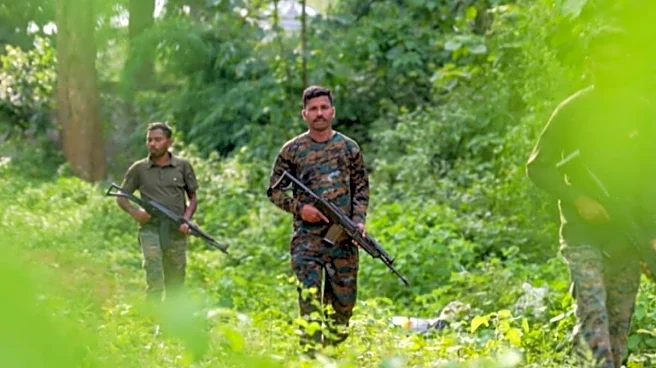
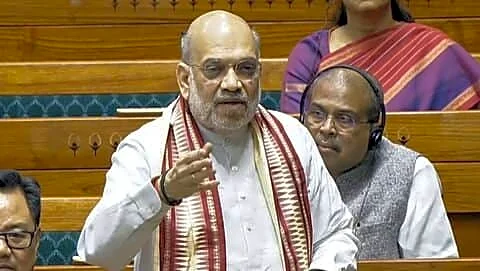
Union Home Minister Amit Shah recently stated that Naxalism in India is “on the verge of extinction,” adding that the country is close to becoming free of Maoist violence. Speaking in the Lok Sabha, he said that regions like Bastar in Chhattisgarh, once considered strongholds, are now seeing development.
He highlighted efforts such as setting up schools, ration shops, health centres and issuing Aadhaar and ration cards to residents. “Today, Naxalism has been almost eradicated from Bastar,” he said, adding that development had earlier been held back due to the presence of what he described as “Red Terror.”
Shah also reiterated the government’s position on rehabilitation, stating that those who lay down arms would be supported, while those continuing violence would face strict action.
The issue also sparked political debate, with the BJP criticising the Congress for the spread of Maoism during its years in power. Shah noted that Maoist violence had claimed around 20,000 lives and impacted millions, calling it a long-standing challenge that is now nearing resolution.
/images/ppid_a911dc6a-image-177510553442843188.webp)

/images/ppid_a911dc6a-image-177511108376277486.webp)


/images/ppid_a911dc6a-image-177502853410311068.webp)
/images/ppid_a911dc6a-image-177502152592615354.webp)