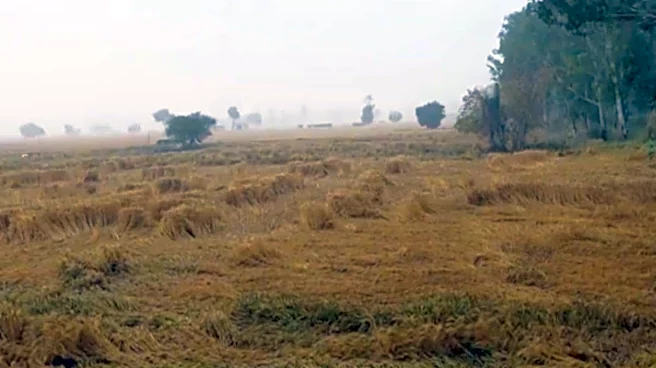


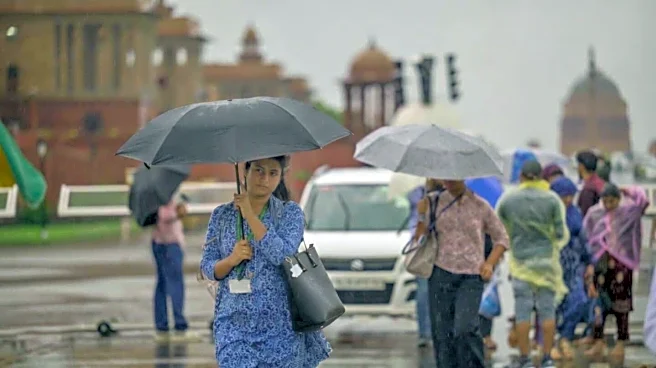

While unseasonal rain in early April has brought relief from rising temperatures in several cities, the same erratic weather has left farmers grappling with crop losses as hailstorms and heavy showers damaged standing rabi crops across multiple states.
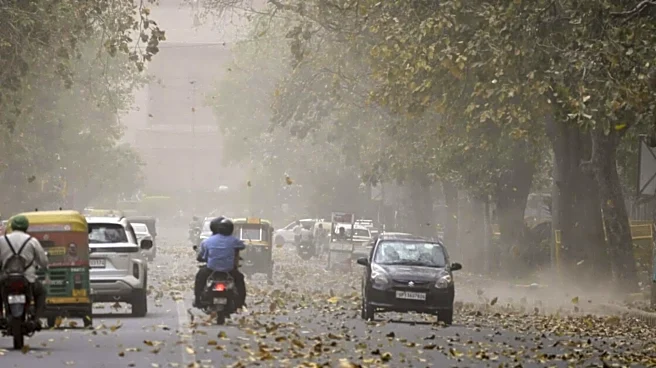
Residents of Delhi and nearby areas, including Noida, woke up to a dust storm and hazy skies on Friday morning following a sharp shift in weather. The change came after a notably warm Thursday, when the city recorded a maximum temperature of 36.8°C, significantly above the seasonal average, while the minimum temperature stood at 18.9°C.
According to meteorological officials, the evolving weather is linked to a larger atmospheric system affecting northern India.
Winds are expected to blow at 20–30
km/h, with gusts reaching up to 40 km/h, which may offer some relief from the heat but could also cause brief disruptions.
However, farmers across states are bearing the brunt of the erratic April weather, urging governments to conduct timely assessments and provide compensation.
Farmers Demand Timely Relief
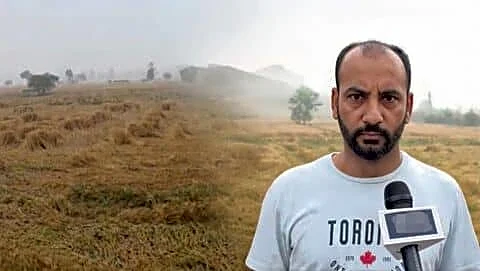
In Jhajjar, Haryana, a farmer said most of his crop had been destroyed due to the sudden weather conditions. He further demanded an appropriate compensation from the government.
“My almost entire crop has been damaged, apart from the 10–20% that might be left. There will be a lot of problems in the sale of this crop. We demand from the government that a timely survey of this damage is carried out and appropriate compensation is given on time,” he said.
#WATCH | Haryana | Unseasonal rain and hail have flattened and damaged the wheat crop in Jhajjar’s Madana Kalan village.
A farmer says, “The crop has been entirely damaged. We demand compensation from the government… Conditions are worse in the entire village…” pic.twitter.com/z5k6GmdOKq
— ANI (@ANI) April 4, 2026
Similar concerns were raised by farmers in Prayagraj, Uttar Pradesh, where unseasonal rain and hailstorms affected standing rabi crops. A farmer, Satyam, said wheat, mustard, pigeon pea (arhar) and some quantity of gram had been damaged due to the rainfall.
“For us farmers, everything depends on farming. Our household expenses include preparation for the next paddy sowing, ploughing and purchasing fertilisers like DAP in advance. We often have to buy these ahead of time because when the season arrives, there is usually a shortage of DAP and urea,” he said.
Satyam added that farming sustains families and covers daily needs such as weddings, children’s clothing, school fees and uniforms.
Earlier, Rajasthan CM Bhajanlal Sharma directed all district collectors to survey crop damage from unseasonal rain and hail and submit their reports.
According a statement, the chief minister said that the pain of farmers is the pain of his government. All affected farmers will be provided adequate assistance, he added.
Meanwhile, Maharashtra Revenue Minister Chandrashekhar Bawankule said on Thursday that the state government will compensate farmers affected by widespread crop damage due to unseasonal rains.
Speaking to the media, he said, “Directions have been given to carry out spot inspections without delay, and compensation will be provided to affected farmers thereafter.”
The minister’s assurance comes as demands grow for quicker damage assessments and timely relief measures.
What Are Rabi Crops?
Rabi crops are crops that are sown in winter and harvested in spring in India. These crops are sown between October and December and harvested in the spring months of March and April.
Major rabi crops grown in India include wheat, mustard, barley, gram (chana), lentils (masoor), peas and pigeon pea (arhar). These crops typically require cool weather for growth and are an important part of India’s agricultural production, particularly in northern states.
(With inputs from agencies)