


/images/ppid_59c68470-image-17780000316803521.webp)
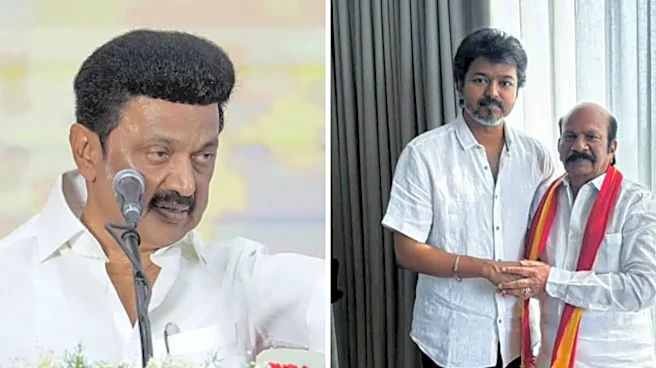
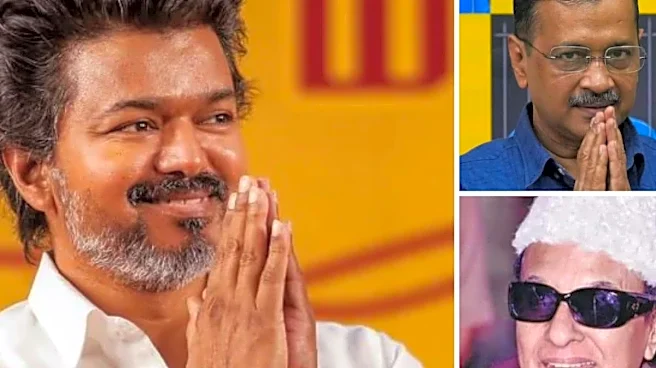
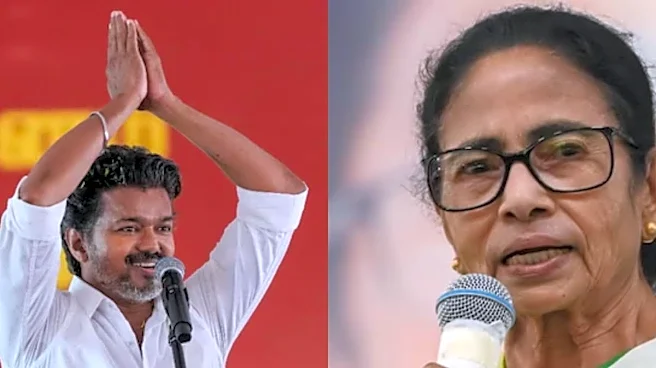
Two states- Tamil Nadu and West Bengal- are witnessing unprecedented constitutional and political uncertainty following the 2026 Assembly elections. In Tamil Nadu, no party has been able to form a government after a fractured mandate produced a hung Assembly. In West Bengal, outgoing Chief Minister Mamata Banerjee has refused to resign. The twin crises raised a key constitutional question: what happens when a state effectively has no functioning chief minister or government?
Read more: DMK’s ‘Resolution 3’ Sparks Buzz: Will It Lend Outside Support To Vijay’s TVK Or AIADMK To Avoid Tamil Nadu Repolling?
Why Is Tamil Nadu Facing A Government Formation Crisis?
The Tamil Nadu Assembly election ended the state’s long-standing two-party dominance, with
actor-turned-politician Vijay’s party, Tamilaga Vettri Kazhagam (TVK), emerging as the single largest party. However, TVK won 108 seats in the 234-member Assembly- short of the 118 seats needed for a majority. The Tamil Nadu governor refused to invite the party to form the government unless it demonstrates majority support through signatures from MLAs. As a result, Tamil Nadu currently remains without a sworn-in chief minister or new cabinet.
Read more: Floor Test Or Governor’s Call? How Past Cases From Goa To Karnataka Frame Tamil Nadu Impasse
What Is Happening In West Bengal?
In West Bengal, the crisis is of a different nature. The BJP secured a massive victory with 208 seats in the Assembly elections, defeating the ruling All India Trinamool Congress government. However, Mamata Banerjee alleged election irregularities and termed the result an “immoral mandate,” refusing to step down immediately. In response, Governor R.N. Ravi dissolved the Assembly under Article 174(2)(b) of the Constitution, escalating the constitutional standoff.
Can A State Function Without A Chief Minister?
Technically, no state can remain indefinitely without an elected executive government. Under the Constitution, the Governor acts as the constitutional head of the state but real executive power is exercised through the Council of Ministers headed by the chief minister.
However, there can be temporary periods when no chief minister is in office- such as after elections, after a resignation or during political deadlock. During such periods, the outgoing chief minister may continue in a caretaker capacity until alternative arrangements are made. In cases where no party is able to form a stable government within a reasonable time, constitutional mechanisms begin to activate.
What Role Does Governor Play In Such Situations?
The Governor becomes the key constitutional authority during a hung Assembly or political breakdown. Typically, the Governor can invite the single largest party to form the government, ask alliances or coalitions to prove majority support, set deadlines for floor tests and recommend President’s Rule if no stable government appears possible.
Read more: ‘Gen-Z Coalition Politics’: Left Parties Scoff At Vijay’s ‘WhatsApp Outreach’ Amid TVK’s Scramble For Majority
In Tamil Nadu’s case, the Governor is insisting on proof of majority before administering the oath of office. In West Bengal, the Governor has already exercised powers to dissolve the Assembly amid the ongoing political confrontation.
Can President’s Rule Be Imposed?
Yes. If constitutional machinery in a state is deemed to have failed, the Governor can send a report to the President under Article 356 recommending President’s Rule.
Under President’s Rule the elected state government is suspended, the Governor administers the state on behalf of the Centre and the Assembly may either be dissolved or kept in suspended animation. President’s Rule must be approved by Parliament within two months.

/images/ppid_a911dc6a-image-1778158268738718.webp)

/images/ppid_a911dc6a-image-177789823060044379.webp)


/images/ppid_a911dc6a-image-177797102769042715.webp)