
/images/ppid_59c68470-image-178887759951919086.webp)
/images/ppid_59c68470-image-178872502581030823.webp)

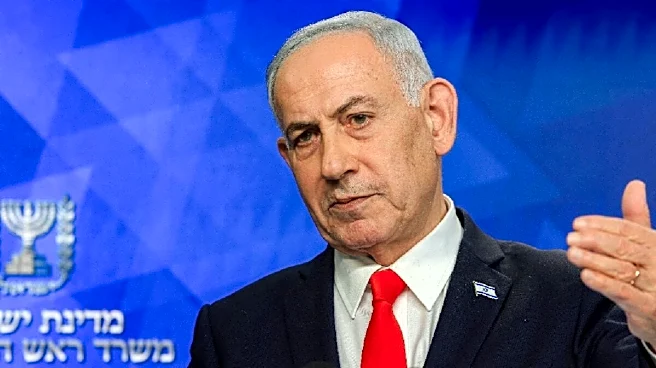
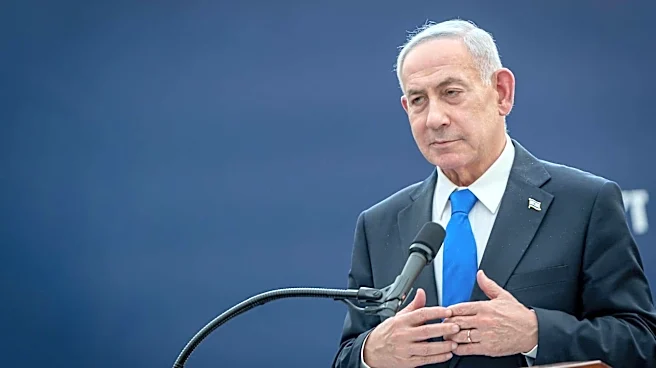
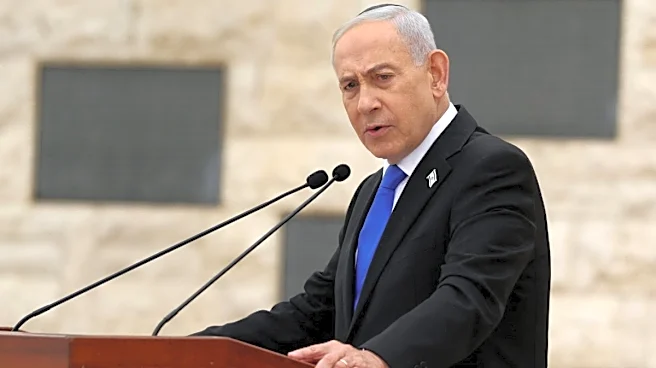
Israeli Prime Minister Benjamin Netanyahu is facing fresh political pressure after a report claimed that the United Arab Emirates had warned him about a planned Hamas attack roughly 10 days before the October 7, 2023, assault.
The report, published by Israeli newspaper Haaretz and excerpted from a forthcoming book by its reporters, said UAE President Mohamed bin Zayed Al Nahyan had spoken to Netanyahu and warned him that Hamas was preparing a major operation.
Netanyahu’s office has strongly denied the report, calling it an “absolute lie” and saying the Israeli prime minister did not speak to the Emirati leader at the time.
The allegations have nevertheless triggered a fresh political row in Israel, with opposition leaders accusing Netanyahu of
failing to act on warnings ahead of the country’s deadliest attack.
What Did The UAE Reportedly Warn Netanyahu About?
According to Haaretz, Hamas leader Yahya Sinwar, who was later killed by Israeli forces, had told a former Palestinian official that the group was preparing a “terrifying operation” that he described as an “earthquake”.
The former Palestinian official allegedly passed the information to an Emirati adviser, who then conveyed it to UAE President Mohamed bin Zayed.
The report said bin Zayed subsequently contacted Netanyahu and warned him about Hamas’ plans.
Haaretz, citing mostly anonymous sources, reported that Netanyahu responded calmly to the warning.
However, Netanyahu’s office has rejected the account and denied that such a conversation between the Israeli and Emirati leaders took place.
The UAE and Israel established diplomatic relations in 2020 under the US-brokered Abraham Accords during Donald Trump’s first presidency.
Why Is Netanyahu Facing Opposition Pressure?
The latest report has intensified existing criticism of Netanyahu over the security failures surrounding October 7.
Gadi Eisenkot, a former military commander and one of Netanyahu’s leading political rivals, accused the prime minister of repeatedly ignoring warnings before the attack.
“Netanyahu received dozens of warnings for October 7 and ignored them all. He is unfit,” Eisenkot wrote on X.
Also Read | Who Is Gadi Eizenkot? Israel’s Former IDF Chief Leads Big Against Netanyahu In PM Race
Former prime minister Naftali Bennett, who is also running in the elections, said Netanyahu bears “personal and direct responsibility” for the deaths on October 7.
“Netanyahu cannot continue to serve in his position for even one more minute,” Bennett said.
Yair Golan, leader of the centre-left Democrats Party, also accused Netanyahu of putting Israel’s security at risk.
“The stories about ‘no one woke me up’ are over. You knew, you ignored, you failed, you are to blame,” Golan said in a video posted on social media.
The opposition’s criticism comes amid a broader debate over who should bear responsibility for the intelligence and security failures that preceded the Hamas assault.
Also Read | Fighters On Parachutes, A Massacre, A Turning Point: Revisiting October 7 Hamas Attacks Against Israel | Video
What Happened On October 7?
On October 7, 2023, Hamas-led militants launched a large-scale assault on southern Israel, killing civilians and security personnel and taking hundreds of people hostage.
As many as 1,221 people were killed in the attack, while 251 people were taken hostage and brought into Gaza. Israeli authorities have said 44 of those hostages were already dead.
Israel responded with a massive military campaign in Gaza. According to Gaza’s Health Ministry, which is controlled by Hamas, 73,658 people have been killed in the conflict. The United Nations has cited Gaza Health Ministry casualty figures in its reporting, while noting that the figures are not independently verified in real time.
What Do Israel Election Numbers Show?
The controversy comes as Netanyahu faces a closely contested political battle.
A poll by Israel’s public broadcaster Kan, published Sunday, projected Gadi Eisenkot’s Yashar party to win 23 seats in the 120-member Knesset, slightly ahead of Netanyahu’s Likud, which was projected to win 20.
The poll put the broader anti-Netanyahu bloc at 51 seats, while Likud and its coalition partners were projected to secure 52.
Neither side would therefore reach the 61 seats required for a parliamentary majority, meaning the formation of the next government could depend on smaller or unaffiliated parties.
/images/ppid_59c68470-image-178888752412785697.webp)


/images/ppid_59c68470-image-178888508004545350.webp)
/images/ppid_59c68470-image-1788840076481300.webp)