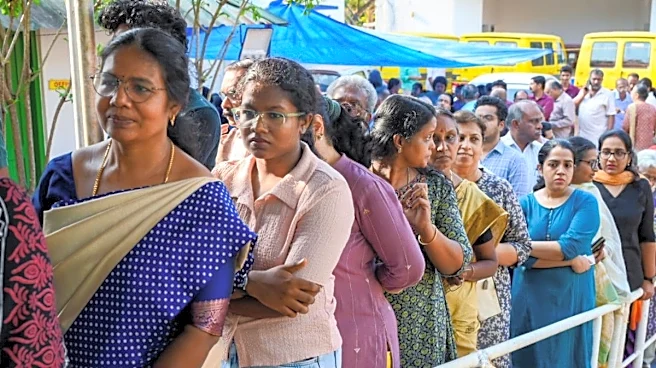


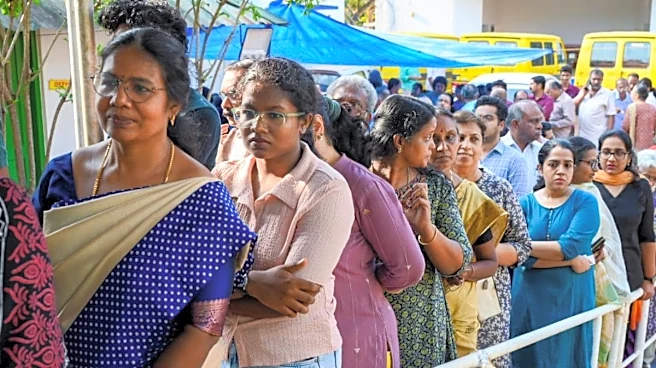
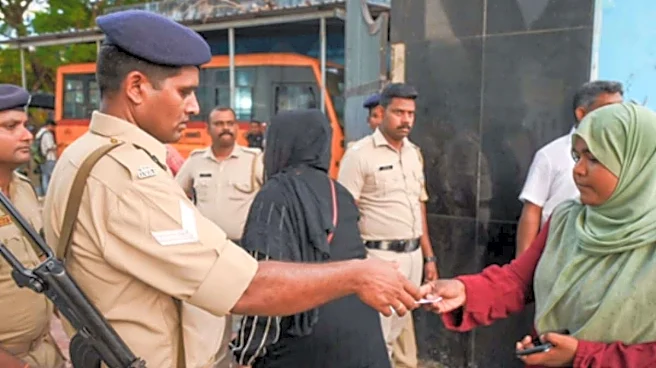
Kerala Assembly Elections 2026: As the polling booths closed across the state on Thursday, Kerala once again lived up to its reputation for high democratic engagement. While the state-wide average settled at a robust 78.23 per cent, a deeper dive into the Election Commission data reveals that the true story of this election is written in the gender divide. In a decisive surge that has caught the attention of every political war room, women voters in Kerala outpolled men by a staggering margin, potentially holding the key to whether the LDF secures a historic third term or the UDF stages a comeback.
Why did women voters dominate the 2026 polling booths?
The final figures from the Election Commission indicate that 80.86 per cent of women cast their votes, significantly outpacing the 75.01 per cent recorded
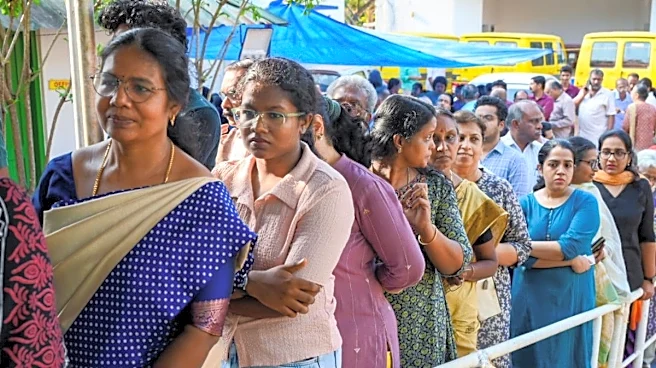
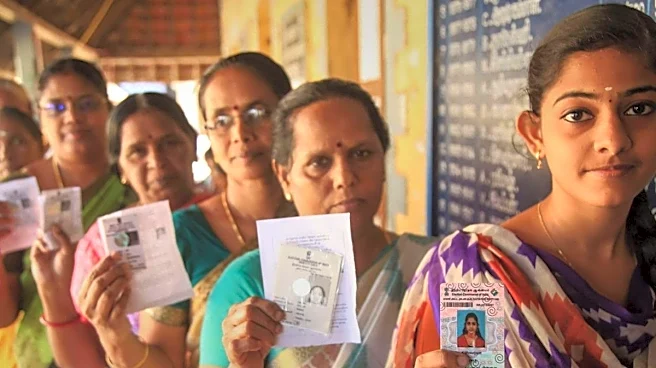
for men. This nearly 6-percentage-point gap is not merely a statistic; it represents a significant political shift. Historically, Kerala’s women have been consistent voters, but an 80-plus per cent turnout suggests a level of mobilisation rarely seen even in this politically conscious state.
Political analysts suggest this surge was driven by a combination of factors, ranging from the LDF’s focus on welfare schemes like the “Kudumbashree” network to the UDF’s aggressive campaigning on local administrative issues and safety. With the “silent majority” of women turning out in such record numbers, the traditional bi-polar contest between the two fronts has been injected with a new layer of unpredictability.
What do the district-level trends tell us?
The enthusiasm was not uniform, but it was most visible in northern and central Kerala. Palakkad district recorded a massive 80.09 per cent overall turnout, while Thrissur saw a rise to 77.06 per cent, up significantly from 2021. In these regions, the queues at women-only booths remained long well into the evening.
In the southern districts, including Thiruvananthapuram, the turnout hovered around 76.98 per cent. Interestingly, even in highly contested seats like Nemom—where a three-way fight between the LDF, UDF, and BJP is underway—the female participation rate was a critical driver of the total volume. When women turn out in such high numbers, it often indicates that “micro-issues” such as inflation, kitchen budgets, and local governance have outweighed the grand ideological rallies that dominated the airwaves.
How will this gender gap impact the final results?
The million-rupee question for the May 4 counting day is which way the women’s vote swung. In 2021, the LDF maintained a comfortable 7.5 per cent lead among women voters, which was instrumental in Pinarayi Vijayan’s re-election. However, recent local body polls showed the UDF making inroads into this crucial demographic.
With transgender voters also participating at a rate of 57.04 per cent, the 2026 election is being viewed as the most inclusive in the state’s history. If even a 3 per cent shift has occurred in the female voter preference, it could flip dozens of seats, potentially unseating several high-profile ministers. As the state enters a month-long wait for the results, one thing is certain: the path to the Secretariat in Thiruvananthapuram was paved today by the women of Kerala.
/images/ppid_a911dc6a-image-177575583398982888.webp)

/images/ppid_a911dc6a-image-177571460608352580.webp)

/images/ppid_a911dc6a-image-177568043393445796.webp)