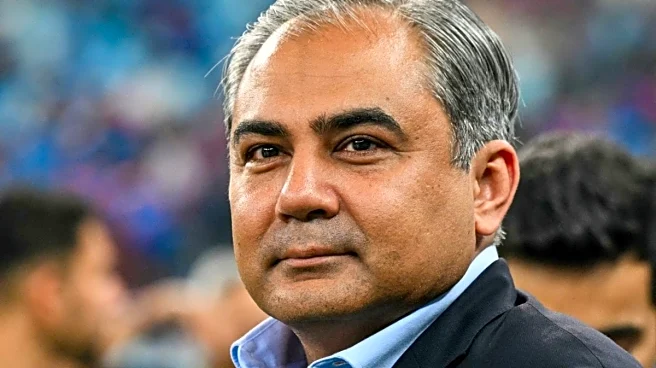

The Pakistan Cricket Board’s threat to boycott the 2026 T20 World Cup in solidarity with Bangladesh could have serious consequences, potentially pushing Pakistan cricket into an unprecedented financial
and administrative crisis. With strict International Cricket Council (ICC) regulations and binding broadcast contracts in place, a withdrawal from the tournament may not be a viable option for Mohsin Naqvi-led PCB.
According to sources, pulling out of the World Cup, to be hosted jointly by India and Sri Lanka, could cost the PCB millions of dollars and even risk suspension from international cricket. The board is expected to take a final call by Monday on whether the national team will participate in the event. The issue has gained urgency after Bangladesh withdrew from the tournament, paving the way for Scotland’s inclusion. Any similar move by Pakistan, however, would trigger far more severe repercussions, particularly on the commercial front.
Broadcasters are believed to be the PCB’s biggest concern. Reports suggest that if Pakistan pulls out of its high-profile clash against India scheduled for February 15, broadcasters could initiate legal action seeking damages of up to $38 million (approximately Rs 320 crore). Advertising and sponsorship revenues are heavily dependent on that single fixture, and for a board already under financial strain, such a penalty could prove devastating.
The PCB also faces the risk of disciplinary action from the ICC. Under the ICC’s Tournament Participation Agreement (TPA), member nations are legally obligated to participate in global events. A withdrawal without a compelling security justification could invite suspension. In recent years, Sri Lanka and Zimbabwe have faced punitive action, including loss of membership rights, on grounds such as government interference.
Financially, the stakes are equally high. The PCB stands to lose its annual share of ICC revenue, estimated at $34.5 million (around Rs 285 crore), if it chooses to boycott the tournament. This income, largely generated from the Indian market, forms a significant portion of Pakistan cricket’s funding. Its loss could cripple domestic cricket operations and disrupt player salary payments.
The fallout could also extend to the Pakistan Super League (PSL), the country’s flagship T20 tournament. The league relies heavily on overseas players, but a hardline stance from the ICC could result in other cricket boards refusing to grant No Objection Certificates (NOCs) to their players. A depleted foreign contingent would significantly dent the PSL’s commercial value, driving away sponsors and fans.
Beyond finances, a boycott could lead to Pakistan’s further isolation in international cricket. Diplomatic ties between boards play a crucial role in scheduling tours, and major teams such as Australia and England may be reluctant to visit Pakistan in the future. There is also the risk of losing hosting rights for upcoming events, including the 2028 Women’s T20 World Cup.
/images/ppid_a911dc6a-image-177101752951095973.webp)




/images/ppid_a911dc6a-image-177101403147018469.webp)
/images/ppid_a911dc6a-image-177101053501199609.webp)
/images/ppid_59c68470-image-177101003680064644.webp)