
/images/ppid_59c68470-image-178931502409322130.webp)
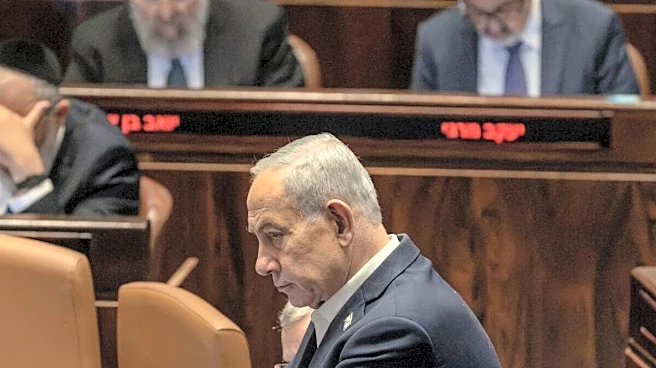
Israeli opposition leaders are calling Prime Minister Benjamin Netanyahu “unfit” to remain in office after a report that UAE President Mohammed bin Zayed Al Nahyan warned him about a major Hamas operation days before the October 7, 2023 attack — a claim Netanyahu has denied. The allegation has reopened questions over what Netanyahu knew before the deadliest attack in Israel’s history and whether his handling of the warnings could become a defining issue in the October 27 election.
The controversy comes at a politically sensitive moment. Netanyahu is already facing a strong challenge from former military chief Gadi Eisenkot, whose Yashar party has emerged as the leading party in several recent polls. Neither side, however, has a clear path to
the 61 seats needed to form a government in the 120-member Knesset.
For Israel, therefore, this is not simply another election. It could determine whether Netanyahu remains at the centre of Israeli politics, whether the country gets a new government after years of political turbulence and how Jerusalem approaches the wars and alliances reshaping West Asia.
Why Netanyahu Is Fighting For Political Survival
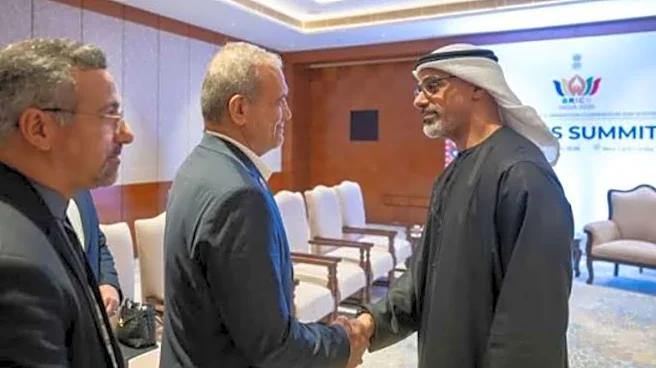
A Haaretz investigation, based on a forthcoming book by its journalists, reported that the UAE president spoke to Netanyahu around 10 days before the Hamas assault and warned him that Hamas leader Yahya Sinwar was preparing a major operation. The report said the warning was passed on after intelligence gathered through contacts involving Hamas and the UAE. It also alleged that Netanyahu did not alert Israel’s security chiefs or take action based on the information.
Netanyahu has rejected the allegation, calling the report false and saying there was no such conversation. His office has also said that relevant intelligence was exchanged between the two countries through official intelligence channels. The UAE, meanwhile, has declined to confirm or deny the reported conversation. Netanyahu has said he will sue Haaretz over the report.
But politically, the damage may not depend only on whether the report is ultimately proven. Opposition leaders have seized on it as further evidence of what they describe as a pattern of failures surrounding October 7.
Eisenkot has accused Netanyahu of ignoring warnings and called him “unfit for office”. Former prime minister Naftali Bennett and other opposition figures have also demanded greater accountability over the intelligence and security failures preceding the attack.
That makes October 7 more than a historical issue in this election. It is becoming a referendum on Netanyahu’s record as the leader responsible for Israel’s security.
Why This Election Is Different From 2022
The October 27 vote will be Israel’s first national election since the October 7 attack and the wars that followed.
Netanyahu’s political problem is that the issue is no longer simply whether Israelis believe he is the best person to manage the country’s security. It is whether they believe his leadership contributed to the failure that allowed the attack to happen in the first place.
The political landscape has also changed. Gadi Eisenkot, a former chief of staff of the Israel Defense Forces, has emerged as Netanyahu’s strongest challenger. His centrist Yashar party is leading Likud in several recent surveys.
A Channel 12 poll released after the parties finalised their candidate lists put Yashar at 25 seats and Likud at 21. The anti-Netanyahu bloc was projected to win 57 seats, compared with 52 for Netanyahu’s bloc, with Arab parties accounting for the remaining 11. Other recent surveys have shown the two blocs much closer, underlining how fluid the contest remains. And that is where Israel’s parliamentary system becomes crucial.
Winning the most seats does not automatically make someone prime minister. The leader who can assemble a coalition of at least 61 lawmakers gets the chance to form the government. So, Eisenkot could emerge with the largest party and still fail to replace Netanyahu if he cannot put together a governing coalition.
Who Could Replace Netanyahu?
Eisenkot is currently the most prominent challenger, but he is not the only opposition figure who could influence the outcome. He could make history as Israel’s first Mizrahi prime minister. The son of Moroccan immigrants, he grew up outside Israel’s traditional centres of power, in Tiberias on the Sea of Galilee and later Eilat on the Red Sea. He rose through the ranks of the elite Golani Brigade, a unit with strong ties to working-class Israelis, before eventually reaching the top of the country’s military hierarchy.
His personal experience of the Gaza war has also shaped his political image. His youngest son, Gal, was killed in combat in the Gaza Strip in December 2023 while taking part in a mission to recover the bodies of Israeli hostages. Two of Eisenkot’s nephews were also killed during the war. The losses have made him a powerful symbol of personal sacrifice in a conflict in which Netanyahu’s sons have not served.
Former prime minister Naftali Bennett remains an important player, while centrist and left-wing parties are competing for seats that could ultimately determine the coalition arithmetic. Smaller religious, nationalist and Arab parties could also become decisive.
Recent polling illustrates the uncertainty. In one Channel 12 survey, Eisenkot led Netanyahu as the preferred prime minister by 42% to 38%. Yet other polls have shown the blocs tied or only marginally separated.
According to Jewish Report, Eisenkot’s party is consistently receiving 22 to 24 (out of the 120 that comprise the Knesset) in polls, while Bennett and Lapid’s party, Beyachad (Hebrew for “together”), is lagging far behind at 13 to 15 seats. In contrast, Netanyahu’s Likud garners about 21 to 23 seats in current polls.
Eisenkot has also made gains in areas once seen as firm Likud territory, including Dimona in southern Israel and Kiryat Shmona in the north. In recent months, Likud campaign’s social media accounts and spokespeople have directed much of their criticism at Eisenkot. The focus suggests the party sees the former military chief as the most serious challenge to Netanyahu, who has been Israel’s prime minister for 16 of the past 17 years.
The electoral threshold makes the situation even more complicated. Parties need to cross 3.25% of the vote to enter the Knesset. A small party crossing or falling below that line can effectively redistribute several seats and change the coalition mathematics.
This means the question on October 27 will not simply be “Netanyahu or Eisenkot?” It will be whether either camp can build a viable coalition after the votes are counted.
What Would Change After Netanyahu’s Defeat?
A Netanyahu defeat would likely bring a significant change in tone between Israel and the US, but it would be a mistake to assume that a new prime minister would automatically reset the relationship. Many of the disagreements between Washington and Jerusalem are rooted in policies that have broader support in Israel and could survive a change of government.
On the West Bank, for instance, the differences may be narrower than they appear. Naftali Bennett has backed development in the E1 corridor, an area whose construction could further complicate the territorial contiguity needed for a future Palestinian state. Eisenkot has called the move a mistake, but has stopped short of committing to abandon it. A change in leadership, therefore, may not translate into a fundamental shift on the Palestinian question, according to the Quincy Institute for Responsible Statecraft – an American think tank.
Gaza could see a clearer change. A new government would be unlikely to support the return of Jewish settlements to the Strip, but it would still inherit the difficult question of how Gaza is governed and rebuilt. Much would depend on how Israel works with the US and regional partners on the next phase of the post-war plan, including reconstruction and the future administration of the enclave.
Iran is another area where a new government may change the approach more than the objective. There is broad support within Israel for confronting Tehran and preventing it from expanding its military and nuclear capabilities. The bigger differences are likely to be over how that confrontation is managed, the role of the US and Israel’s wider regional alliances.
The most immediate domestic shift could come in the West Bank. Removing far-right figures such as Finance Minister Bezalel Smotrich and National Security Minister Itamar Ben-Gvir from government could reduce political backing for settler violence and lead to tougher enforcement. But reversing years of permissive enforcement would take more than a change of ministers, particularly when convictions in such cases remain rare.
Arab-Israeli relations could be an even bigger test. Saudi Arabia has made progress towards Palestinian statehood a key condition for normalisation with Israel. Neither Bennett nor Eisenkot currently appears ready to meet that threshold. Eisenkot, for example, has supported continued Israeli control over the Jordan Valley and major settlement blocs. A new government could therefore improve the atmosphere with Arab states without immediately delivering the political concessions Riyadh wants.
And then there is the question of Israel’s global image. A new leader might repair some of the diplomatic damage caused by Netanyahu’s long tenure, but changing perceptions in the US and elsewhere will be much harder. Years of war in Gaza, violence in the West Bank and the broader conflict with Iran have reshaped how many people view Israel. A change at the top in Jerusalem may alter the tone of the relationship, but it is unlikely to reverse those deeper shifts overnight.

/images/ppid_59c68470-image-17894650591305223.webp)