
/images/ppid_a911dc6a-image-177791390002190510.webp)
/images/ppid_a911dc6a-image-177797102769042715.webp)
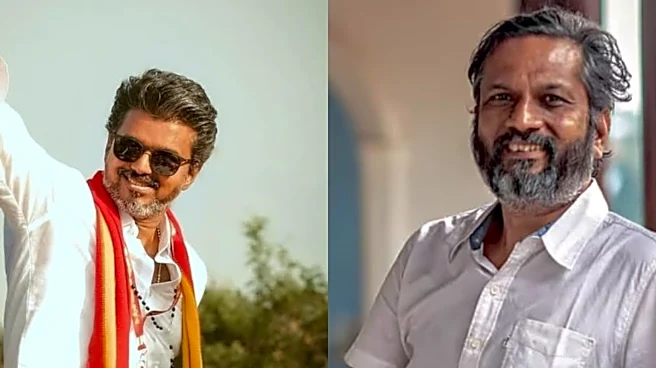
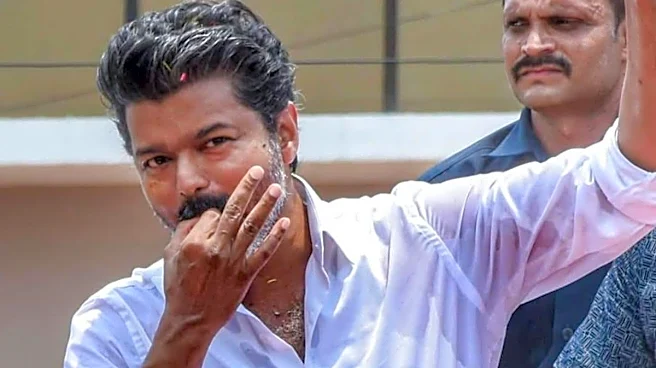
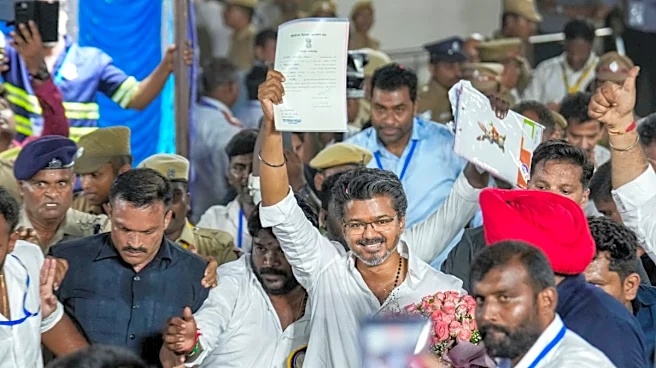
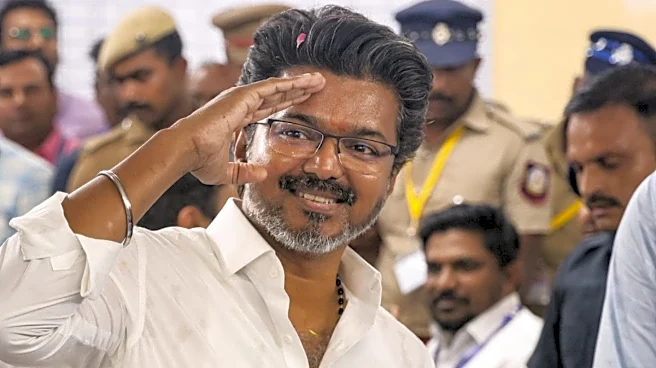
Tamil Nadu Government Formation: A dramatic political situation unfolded in Tamil Nadu after the 2026 Assembly election produced a hung verdict, with no party crossing the majority mark in the 234-member House. The actor-turned-politician Vijay led Tamilaga Vettri Kazhagam (TVK) emerged as the single largest party with 108 seats, but fell short of the 118-seat majority required to form government.
Read more: ‘Gen-Z Coalition Politics’: Left Parties Scoff At Vijay’s ‘WhatsApp Outreach’ Amid TVK’s Scramble For Majority
This triggered a constitutional and political debate over a familiar but often misunderstood question: in a hung Assembly, does the largest party automatically get the first right to form government?
What Happened After Tamil Nadu
Polls?
The results have left Tamil Nadu in a situation where no party can form a government on its own. TVK has the highest number of seats, while the outgoing ruling party and other opposition groups collectively hold the rest of the Assembly. The governor asked the largest party to demonstrate majority support before inviting it to form the government.
Read more: DMK’s ‘Resolution 3’ Sparks Buzz: Will It Lend Outside Support To Vijay’s TVK Or AIADMK To Avoid Tamil Nadu Repolling?
Does The Largest Party Automatically Get The First Chance?
The short answer is: not automatically. Under the Indian Constitution, there is no written rule that the single largest party must be invited first to form government. Instead, the decision rests with the Governor, who acts as the constitutional head of the state. The Governor’s primary responsibility is simple: ensure that a stable government that enjoys majority support in the Assembly is formed.
In practice, however, political convention often plays a role. In many past hung Assemblies, Governors have invited the single largest party first, giving it a chance to prove its majority on the floor of the House but it is a convention, not a rule.
Read more:One CM Won’t Resign, Another Can’t Be Sworn In: How Long Can A State Function Without A Chief Minister
What Powers Does Governor Have?
In a hung Assembly situation, the Governor can invite the single largest party to prove majority, invite a post-poll alliance or coalition claiming majority support, ask multiple parties to submit letters of support (MLA signatures), order a floor test in the Assembly
Recommend President’s Rule if no stable government can be formed. This discretion is meant to ensure that the state does not remain without an effective government for long.
Can Governor Skip The Largest Party?
Yes, under certain conditions. If the Governor believes that the largest party does not have a realistic chance of proving majority support, they may invite another alliance or combination of parties that appears more stable. However, this discretion is not unlimited. The Supreme Court of India has repeatedly held that Governors must act in a neutral, constitutional manner and avoid subjective or politically motivated decisions.
Read more: Floor Test Or Governor’s Call? How Past Cases From Goa To Karnataka Frame Tamil Nadu Impasse
Judgments over the years have clarified that the floor of the House is the ultimate test of majority, governors should not assume majority or minority based on political judgment alone and the democratic process must be respected through a floor test as early as possible. This means that while the Governor has discretion, the final test of legitimacy is always inside the Assembly.

/images/ppid_a911dc6a-image-1778158268738718.webp)

/images/ppid_a911dc6a-image-177812968792288885.webp)