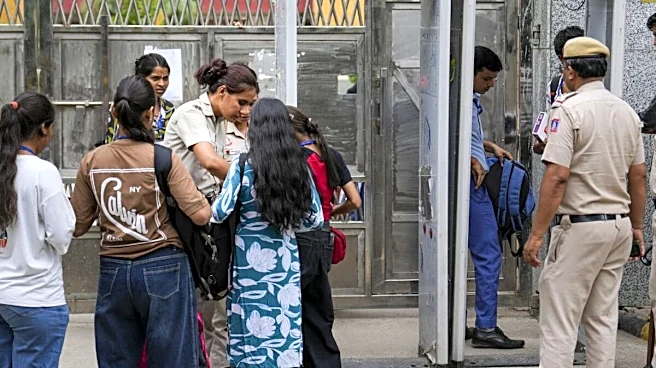






Medical entrance examination NEET-UG will be conducted as a computer-based test (CBT) from next year and is likely to be held over at least six days across more than 1,000 examination centres, according to sources, reported PTI.
The decision to shift the exam to a CBT format follows the controversy over the 2024 examination, which was hit by allegations of paper leaks and other irregularities. Although the Education and Health Ministries had been discussing the possibility of moving NEET from the pen-and-paper format to an online mode for several years, the controversy hastened the push for reforms.
Sources told the news agency that the exam next year would follow a model similar to the Joint Entrance Examination (JEE), with candidates taking
the test over multiple days. The schedule is expected to extend for at least six days, while examination centres will be shortlisted only after a detailed assessment of their infrastructure and credibility. The operational plan is still being finalised.
“Just like JEE which is conducted for admission to engineering colleges, the exam will be spread over at least six days. The exam centres will be selected after scrutiny about their credibility and infrastructure availability,” a source told the news agency, adding a detailed plan is still being firmed up.
NEET-UG is the country’s largest undergraduate entrance examination, with nearly 2.5 million candidates appearing each year for admission to medical and allied health courses.
The National Testing Agency (NTA) conducts NEET annually for admissions to undergraduate medical programmes. The examination is used for admission to around 108,000 MBBS seats, including nearly 56,000 in government medical colleges and about 52,000 in private institutions. NEET scores are also used for admissions to undergraduate courses in Dentistry, Ayurveda, Unani and Siddha.
While the proposal to introduce a computer-based format has been discussed on multiple occasions in the past, it gathered momentum following the 2024 paper leak controversy.
In June 2024, the Ministry of Education constituted a high-level committee chaired by former ISRO chairman K. Radhakrishnan to recommend reforms aimed at strengthening the examination system.
/images/ppid_a911dc6a-image-17838660992983233.webp)

/images/ppid_a911dc6a-image-178386607350294246.webp)
/images/ppid_a911dc6a-image-178386603949397994.webp)
/images/ppid_a911dc6a-image-178386603825765698.webp)