

/images/ppid_59c68470-image-178647255237243009.webp)
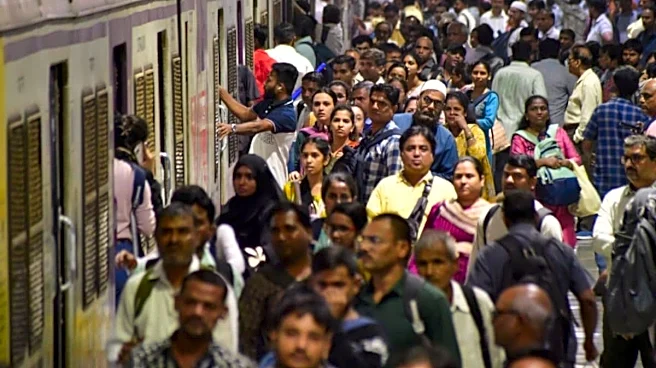
India’s biggest metropolitan cities have long been celebrated as melting pots where people from different states, languages and cultures live and work together. But growing disputes over language, migration, food and cultural identity are raising a larger question: Is India’s cosmopolitan character slowly giving way to a stronger regional identity?
The debate has intensified after Maharashtra made Marathi proficiency mandatory for commercial passenger-vehicle drivers, including app-based cab drivers. Similar tensions over Kannada have repeatedly surfaced in Bengaluru, while incidents involving Tamil in Chennai have highlighted the challenges some migrants face.
When Language Becomes A Fault Line
Language has emerged as one of the most visible points of friction in these cities.
Migrants have increasingly spoken about arguments and hostility over their inability to speak the local language, with some incidents escalating into violence.
In November 2025, a teenager died by suicide after reportedly suffering severe mental distress and fear following an alleged assault by a group of people in a moving local train over his inability to speak Marathi. The incident became another reminder of how language disputes can sometimes go far beyond verbal disagreements.
For migrants, such experiences can create a sense of being unwelcome in cities they moved to for education, employment or better opportunities.
Prerna Singh, a budding chef who travels extensively across India and abroad, recalled an experience in Chennai. “Some years ago, I went to Chennai for an interview. A friend and I went to an auto stand and started asking the driver about the route and fare. Within seconds, the driver, who was from the city, got riled up and began cursing us,” she said.
According to Singh, the driver objected to them not knowing Tamil and expressed hostility towards them for being North Indians and Delhiites.
“I still remember him saying, ‘Yeh Hindi nahi hai, yahan Hindi nahi hota.’ It made us feel different, unwelcome and unwanted,” she recalled.
She said she experienced a similar incident in Bengaluru, where an auto driver allegedly reacted angrily because she and her friend did not know Kannada.
“For daily commutes, I believe language can become a barrier for immigrants. But I guess some of these cities also lack tolerance, patience and inclusivity,” Singh said.
Also Read | ‘This Is India’: Bengaluru SBI Official Refuses To Speak Kannada, Transferred After Public Spat
But Is The Problem Only With Locals?
Not necessarily.
A former student of Christ (Deemed to be University), Bengaluru, who requested anonymity, said his overall experience in the city was positive despite encountering occasional problems.
He recalled Bengaluru’s neighbourhoods as largely welcoming and said adapting to the city’s multicultural environment was relatively easy. However, he also encountered disputes with auto drivers, including situations where some appeared to favour Kannada speakers. On one occasion, he said, he was even chased near Jayanagar 4th Block metro station after booking a Rapido bike.
At the same time, he believes migrants also have a responsibility to adapt.
“Most people who come to the state refuse to adapt,” he said, arguing that even learning a few basic Kannada words or addressing an auto driver as “anna” instead of “bhaiyya” can signal respect for the local culture.
Also Read | ‘Why Is She Here’: Canara Bank Staff Confronted For Not Understanding Kannada In Viral Video
According to him, many Kannadigas are protective of their language and do not want an outside language to dominate their state.
“If you try to impose only your manner of speaking, they will retaliate, or at least socially ostracise you until one shows that they are trying to integrate,” he said.
Despite these experiences, he described his overall time in Bengaluru positively, saying the city’s advantages far outweighed the negative encounters.
Also Read | Passenger, Ticket Checker Clash Over Marathi Language On Mumbai Local, Video Goes Viral
‘The Conflict Happens From Both Sides’
Sociologist Professor Dr Sudhansubala Sahu, an associate professor of sociology at Christ University, believes language tensions need to be viewed from both sides.
According to Sahu, such conflicts are not new. However, the rapid growth of the IT sector and new-age industries has changed the profile of migrants arriving in cities such as Bengaluru.
Many professionals can function using English or Hindi and may therefore feel less pressure to learn the local language. Friction can arise when migrants expect local service providers to communicate in Hindi or English.
“If you demand that you are in Karnataka and someone has to talk to you in Hindi because you don’t speak Kannada, that is where the conflict starts,” said Sahu, who hails from Odisha.
However, she stressed that intolerance exists on both sides.
“It would be very unfair to blame only one party,” she said, pointing out that both local communities and migrant groups can contribute to escalating tensions.
Also Read ‘Speak Marathi Or Leave’: Mumbai Woman Confronted As Language War Escalates | Video
A Few Words Can Make A Difference
Having lived in Bengaluru for around two decades, Sahu said her experience shows that language does not necessarily have to become a major barrier.
Even making an effort to learn a few Kannada words can help migrants connect with local residents. She cited “Kannada gotilla” — meaning “I don’t know Kannada” — as an example of acknowledging the local language.
“I don’t see it as such a big challenge. The way it gets reported sometimes makes it appear much bigger than it actually is,” she said.
For Sahu, the real issue is not fluency but mutual respect. Migrants should recognise local languages and customs, while local communities should avoid turning linguistic differences into hostility.
Is India’s Cosmopolitan Character Changing?
Mumbai, Bengaluru and Chennai continue to attract millions of migrants, and their workplaces, universities and neighbourhoods remain deeply multicultural. Yet alongside this diversity, regional identity appears to be receiving greater emphasis.
For many locals, protecting Marathi, Kannada or Tamil is about preserving cultural identity amid rapid migration and the growing influence of Hindi and English.
For migrants, however, aggressive enforcement of linguistic identity can sometimes feel exclusionary.
The tension is particularly visible in everyday interactions with taxi and auto drivers, restaurants, shops and other public-facing services.
Finding A Middle Ground
The debate ultimately goes beyond Marathi, Kannada or Tamil. It is about how India’s rapidly expanding cities can accommodate people from different backgrounds while allowing local communities to preserve their languages and cultures.
Sahu believes adaptation must happen on both sides. Migrants should make an effort to understand local languages and customs, while local communities should give newcomers time to adjust.
“You have to adapt to new places wherever you go,” she said.
The challenge for India’s cosmopolitan cities is therefore not choosing between regional identity and multiculturalism, but finding a way for both to coexist.
Mumbai, Bengaluru and Chennai became major cities precisely because people from across India were able to make them home. The question now is whether these cities can preserve that openness while also protecting the languages, cultures and identities that make them unique.

/images/ppid_59c68470-image-178653511629182915.webp)