
/images/ppid_a911dc6a-image-177735482748980332.webp)
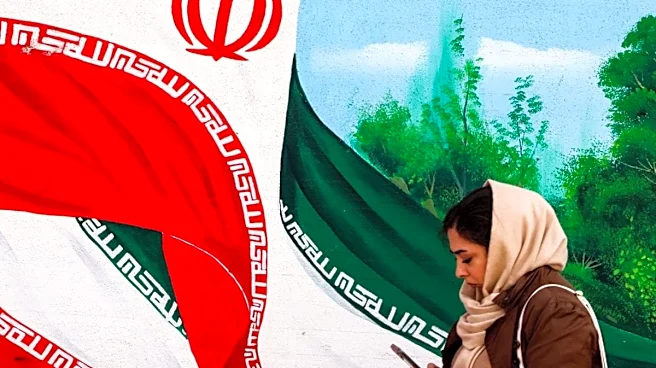
External Affairs Minister S Jaishankar, on Wednesday, spoke with his Iranian counterpart Abbas Araghchi amid the ongoing Iran conflict, signalling continued diplomatic engagement even as global divisions persist. “Had a detailed conversation about various aspects of the current situation. We agreed to remain in close touch,” Jaishankar said after the call. The outreach comes just days after an India-led meeting of BRICS envoys failed to arrive at a unified position on the Gulf crisis.
The war, which erupted on February 28 following the killing of Ali Khamenei in joint US-Israel strikes, has exposed sharp fault lines within the West, particularly within NATO. US President Donald Trump has repeatedly criticised allies for not backing Washington
militarily or deploying naval forces to secure the Strait of Hormuz.
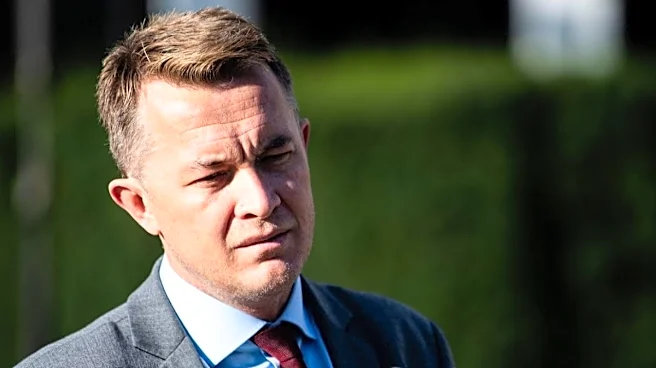
Against this backdrop, CNN-News18 sat down with Andreas Kravik, Deputy Foreign Minister of Norway, a member of NATO, to unpack the lack of a unified response within the alliance, the implications of emerging rifts, and whether they could shape the trajectory of the war. Kravik also weighed in on India’s role, describing New Delhi as a formidable global voice advocating diplomacy and peaceful resolution, even as it stays away from direct mediation.
Watch Full Interview Here
Edited excerpts below:
President Trump said, “you never know” when asked if the White House dinner shooting incident was linked to the Iran war. But more broadly, is this conflict contributing to rising anti-American sentiment globally? Do you think the conflict is now spilling over dangerously into societies far beyond the battlefield?
I can’t comment on the specifics of the incident in the US as that’s for investigators to determine. But broadly, conflicts like this can have ripple effects beyond the battlefield, and that’s something we have to be mindful of.
Our position has been consistent from the start, we need a diplomatic resolution to this conflict. And we strongly condemn any form of anti-Americanism or antisemitism, wherever it occurs.
Norway is a member of NATO. And we’re not seeing a unified NATO backing the US in this conflict. Is this a sign of deeper fractures within the alliance, or is Europe distancing itself from Washington?
See, NATO doesn’t have a formal role in this conflict. This is a war involving the US, Israel, and Iran, so the alliance itself is not directly engaged.
That said, NATO remains a very strong partnership, historically one of the most successful alliances, and our cooperation with the US continues across many areas.
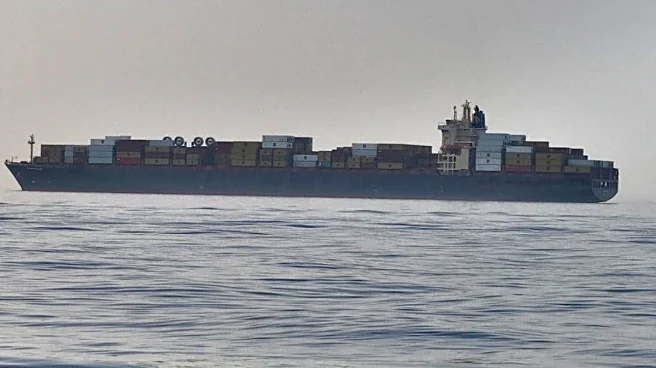
Where Europe is stepping in is around securing the Strait of Hormuz. Countries like the UK and France have launched initiatives, and we’re part of those efforts. There are also ongoing discussions with the US on how Europe can contribute.
So, while Europe isn’t involved in the fighting on the ground, there is a clear role in stabilising the situation, especially in keeping critical trade routes open, which is vital for the global economy.
You mentioned that “this is not NATO’s war. It’s a war between the US and Iran”. But President Trump has repeatedly rebuked NATO allies for not deploying their navies to help open up the Strait of Hormuz. The US is also reportedly considering withdrawing from the alliance. There are even reports of a Pentagon email suggesting that “difficult” countries like Spain can be sidelined from key positions within NATO. So, is that fundamentally possible? And how could this rift impact the future of the alliance?
The NATO alliance remains strong and continues to collaborate across a wide range of issues. But on this particular conflict involving Iran, it’s natural that there are different viewpoints within the alliance.
When you have 32 democracies, some divergence is expected. What matters is that the alliance continues to function and find common ground.
In fact, we’re seeing positive signs, defence spending is rising across Europe. Norway, for example, is now spending around 3.5% of its GDP on defence.
So yes, there are differences on this issue, but that’s normal. NATO is not formally part of this conflict, and member states are free to take their own positions.
So, with the Strait of Hormuz shut again, how serious is the risk of a global energy shock, and is Europe preparing for worst-case scenarios?
We’re already seeing the impact, prices are rising, especially in Asia, which has been hit first. When I was in India a few weeks ago, this was a major concern in almost every discussion, how to limit the economic fallout of this conflict. We’re having the same conversations across Europe, including in Norway.
The global economy is deeply interconnected, and so are supply chains. When a critical chokepoint like the Strait of Hormuz is disrupted, it affects the entire world.
That’s exactly why we’ve been pushing for peace talks to resume, to de-escalate the conflict, reopen the Strait, and prevent further damage to global growth.
Now, talks were expected in Islamabad, but Washington pulled out of the second round. So, are diplomatic off-ramps effectively closing, or is there still a viable channel left?
Only the parties themselves can speak with authority, but from our interactions, including with Pakistan, there does seem to be an appetite to resume negotiations. Both sides have indicated they don’t want a return to full-scale conflict and are open to a diplomatic solution.
That said, there is a lot of mistrust, which is natural in the middle of hostilities. That’s why a credible third party is important. We believe Pakistan has been playing a constructive role, putting forward proposals and trying to identify common ground.
From what we hear, both the US and Iran are comfortable with Pakistan acting as an intermediary. So, there is still a pathway, and we hope this can lead to talks resuming soon.
Speaking of Pakistan’s role, we’ve spoken to Israeli officials who have clearly said they do not trust Islamabad as a mediator. What is NATO’s assessment of Pakistan’s role?
NATO doesn’t have a formal assessment of Pakistan’s role, but from Norway’s perspective, we’ve been engaging closely with them, and the conversations have been constructive.
Pakistan’s approach aligns with ours, focusing on finding common ground and being creative in diplomacy. From what we hear, both the US and Iran are comfortable with Pakistan acting as a go-between.
So, we see Pakistan as a credible third party and are ready to support those efforts. The hope is that this can bring both sides back to the table and move towards a diplomatic solution.
Despite its strong ties with both Iran and Israel, India has stayed away from a formal mediation role in the conflict, largely in line with its multi-alignment strategy. So where does India fit into this crisis? Could New Delhi emerge as a stabilising force or a strategic balancer in the region?
India is a formidable player on the global stage, not just politically, but economically as well. It has a voice that carries weight, and when it speaks about the importance of international law and diplomacy, people listen.
From our perspective, India has been consistent on that front. When I was at the Raisina Dialogue 2026, my discussions with the foreign minister and other decision-makers were very clear: there is strong support for a peaceful resolution to this conflict.
That’s the role India often plays, backing international law, multilateralism, and the UN Charter. And we hope to see that continue going forward.
Coming back to the US narrative, it suggests it has already weakened Iran significantly. From Europe’s assessment, has Washington actually gained the upper hand, or does Iran still retain strategic leverage?
Let me say upfront, we support key concerns raised by the US, especially ensuring Iran does not acquire nuclear weapons and that highly enriched uranium is properly accounted for. We’ve also raised concerns about the Iranian regime’s treatment of its own people.
But ultimately, these issues need a diplomatic solution. For any outcome to be durable, it has to be anchored in a credible agreement. That’s the only way forward.
At the same time, while Iran has been militarily weakened, it still holds significant leverage, particularly over the Strait of Hormuz. That gives it the ability to influence the course of this conflict.
Which is why we continue to urge both sides to return to the negotiating table. A compromise is possible, but only if there’s a willingness to engage and work through the differences.
So, what does a realistic endgame even look like here—regime behaviour change in Iran, a negotiated settlement, or a prolonged frozen conflict?
Look, Iran cannot be allowed to have a nuclear weapon. That’s not just Norway’s position, it’s a view shared by most of the international community.
At the same time, we have to uphold international law and ensure that the use of force aligns with the UN Charter. We’ve raised concerns about actions that may not meet that standard.
Ultimately, the only durable solution is a negotiated one, where Iran receives sanctions relief in return for clear guarantees that it will not pursue nuclear weapons. That must be backed by strong international inspections and a credible plan to deal with highly enriched uranium, either by down-blending it or moving it out of Iran.
If talks can address these issues, there is a path forward. But it’s equally important to send a strong message on the regime’s treatment of its own people, which we have condemned in the strongest terms.
Turning to India-Norway ties, Prime Minister Modi is expected to visit Oslo next month for the India-Nordic Summit. What key areas of cooperation do you expect to be prioritised, and could we see the relationship expand beyond trade and climate into more strategic coordination?
I think, India is a formidable player on the global stage, with a strong voice on international law and multilateralism. It’s also a fast-growing, dynamic economy with a thriving high-tech sector.
There’s strong interest within Norway’s business community to deepen collaboration with Indian partners, and a high-level visit would be a valuable opportunity to take that forward.
We will continue to prioritise India, it’s one of our key partners in the Global South, and we look forward to expanding engagement at the highest levels.