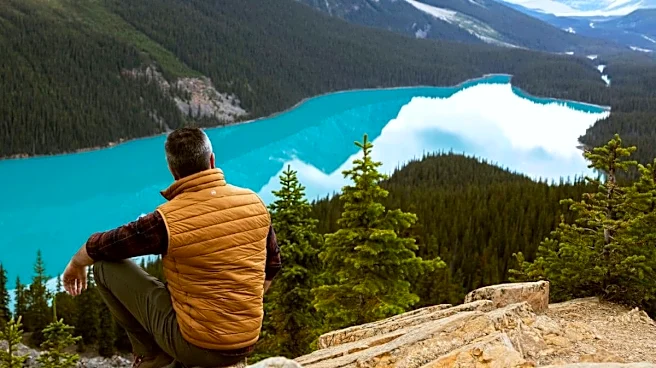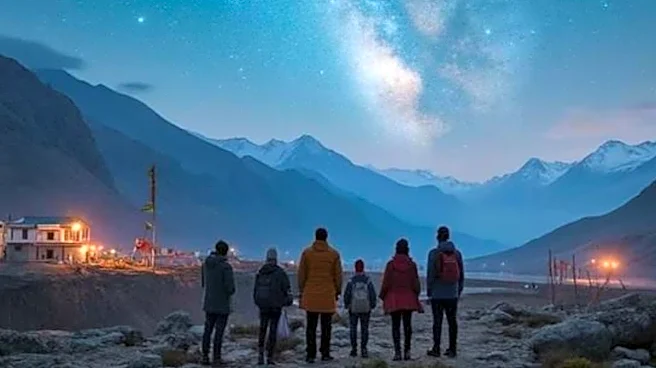




As city skylines grow brighter, the night sky is quietly fading from everyday view. But for a new generation of travellers, that loss is sparking curiosity and a journey in the opposite direction. Across India, a growing number of travellers are leaving behind light-polluted metros in search of something far more timeless: a sky full of stars.
What’s emerging is a clear shift toward astro-tourism, a niche that is rapidly moving into the mainstream.
“At many of our properties, the night sky truly comes alive,” says Keshav Baljee, Executive Director, Royal Orchid Hotels. “Away from city light pollution, guests can clearly see the Milky Way, constellations, and even meteor showers. Stargazing is increasingly becoming a sought-after experience.”
This
growing demand is closely tied to urban realities. As pollution and artificial lighting obscure the skies in major cities, the simple act of looking up has become a luxury. Hospitality brands are responding by highlighting properties located in low-light, high-altitude, or remote regions, places where the night sky remains untouched.
“Properties like Regenta Place Morni Hills, Regenta Resort Sakleshpur, and Regenta Resort & Spa Mashobra offer exactly that balance, they are accessible, yet delightfully offbeat,” notes Baljee. “They give guests the space and environment to truly engage with the night sky.”
But astro-tourism is no longer just about passive stargazing. It is evolving into a more immersive, experience-led form of travel, one that blends science, storytelling, and nature.
“In 2026, astro-tourism is set to emerge as one of the most exciting experiential travel segments in India,” says Govind Gaur, CEO and co-founder, WanderOn. He points to a clear rise in interest around curated night-sky experiences from telescope-based stargazing and astrophotography sessions to moonlight meditation and cultural sky tours.
Destinations like Hanle and Spiti Valley have already seen overwhelming demand, with organised stargazing experiences often selling out. But the map is expanding rapidly. “Places like Dhordo in Gujarat, Kaza in Himachal Pradesh, Munsiyari in Uttarakhand, Shaheed Dweep in the Andamans, Turtuk in Ladakh, Kalpa, Coorg, and even Pench Tiger Reserve are emerging as key astro-tourism hubs,” explains Gaur.
What’s particularly notable is how this trend is intersecting with rural and sustainable tourism. Several states are now identifying villages that can be developed into dedicated ‘Astro Villages’, creating new economic opportunities while preserving natural darkness, an increasingly rare resource.
At its core, this movement reflects a deeper shift in traveller behaviour. Today’s traveller is moving away from checklist tourism and toward more meaningful, immersive experiences.
“Consumers are no longer satisfied with conventional sightseeing,” says Gaur. “They are looking for experiences that connect them with nature, science, and a sense of wonder.”
That sense of wonder is perhaps the most powerful driver behind astro-tourism. In a hyper-connected, always-on world, the act of stepping into silence and looking at a sky untouched by artificial light offers something rare, perspective.
For the travel industry, the message is clear: the future lies not just in destinations, but in experiences that feel expansive, grounding, and unforgettable.
And sometimes, the most extraordinary journey isn’t across land or sea but upwards, into the vast, uncharted theatre of the night sky.