

Jisshu Sengupta does not enter a frame loudly. He has never needed to. There is a stillness to him that feels almost old-fashioned in an age of overstatement, a kind of watchful calm that can make even a supporting character feel like he is carrying a private weather system of his own. Across Bengali cinema, Hindi films, television, Telugu projects and now streaming, he has built a career on that quiet magnetism: the man beside formidable women, the actor who knows the worth of a pause, the performer who can turn restraint into revelation.
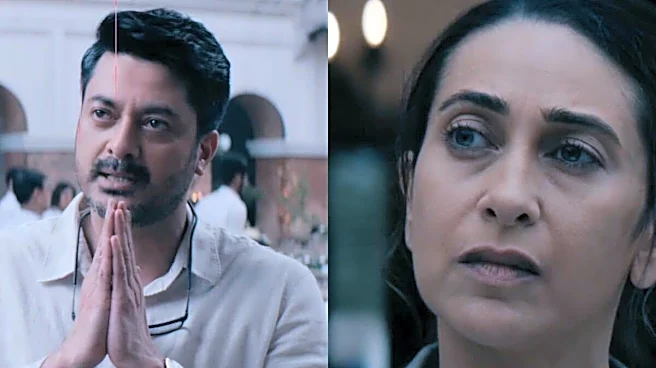
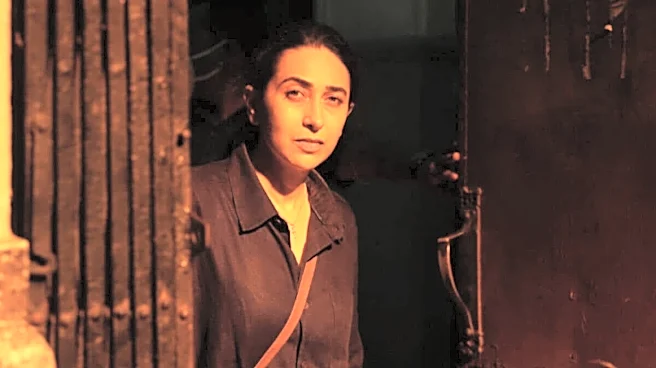
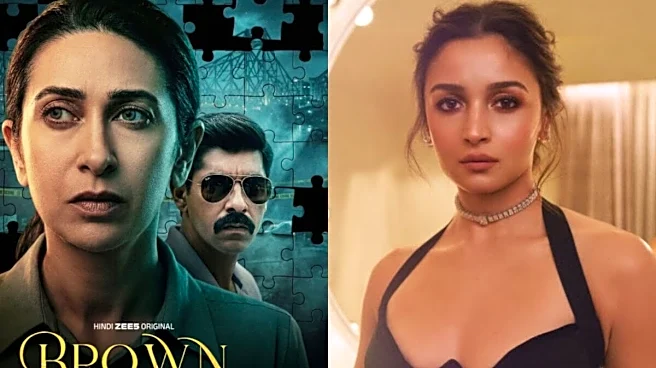
In ZEE5’s Brown, that restraint finds a shadowy new home. Set against a Kolkata that is far removed from the city of postcard romance, Abhinay Deo’s psychological crime thriller places Jisshu in the role of a psychiatrist
who seems to hold crucial fragments of the mystery unfolding around Karisma Kapoor’s damaged ex-cop Rita Brown. For an actor born and raised in Kolkata, the series is also a return to a city he thought he knew, only to encounter it through a darker, colder and more unfamiliar lens.
Speaking exclusively to News18 Showsha, Jisshu opens up about why Brown felt different from the many thrillers crowding the streaming space, the “new Karisma Kapoor” audiences are about to witness, the lesson from Rituparno Ghosh that changed the way he read characters, and why he refuses to be trapped in the labels of film star, television star or OTT actor. He also reflects on Piku’s enduring emotional truth, the business challenges facing Bengali cinema, his undying love for cricket, and the one cricketer he would have loved to play on screen: Sourav Ganguly.
Here are the excerpts:
Brown unfolds its mystery layer by layer, blending suspense with a deeply personal emotional core rather than treating the story like a conventional procedural. As a psychiatrist who seems to hold several vital threads in the narrative, what was it about the character or the writing that resonated with you most deeply?
Look, I got a call, my manager got a call, and then there was a meeting between me and Abhinay sir. I went in, of course, knowing the kind of work Abhinay sir has done, and I really wanted to meet him. When he told me the story, my part in it and the character brief, I really loved it.
That was one of the main reasons I wanted to do it. I wanted to work with Abhinay sir, and the story and the character he offered me were very interesting. I cannot say that I have never done something like this before, but I have definitely not done it with the kind of nuances this character has. So yes, that became the key reason for me to accept it.
Brown is also deeply rooted in Kolkata. As someone who knows the city intimately, what atmospheric or cultural textures do you think the series captures that a more generic crime thriller might have missed?
I have been saying this for quite some time now, in interviews and other places, that yes, I was born and brought up in Kolkata. If we talk about earlier cinema, about Ritwik Ghatak, Satyajit Ray or Mrinal Sen, the way they showed Kolkata was very different. You would fall in love with the city through their films.
Of course, there have been other directors in recent times who have also done that. But the way Abhinay sir and Amogh, the DOP, have captured Kolkata in Brown is something new for me at least. I haven’t seen this Kolkata through the lens in the way it has been shot here. I think it is incredible.
I don’t want to reveal too much, because today is the day, tonight is the night actually, when the show gets released. But I can say one thing. People who have seen Kolkata in different lights and different zones are going to see a new Kolkata here. That is one of the major reasons why Kolkata becomes such a big character in the show.
You are working opposite Karisma Kapoor in the series. What was that dynamic like on set, and what did her commitment to such an intense avatar bring out in your own scenes?
Look, on the first day when we went on set, there was definitely nostalgia for me seeing her. Before the scene, I was remembering all the David Dhawan films, the Govinda and Karisma films. That genre of cinema entertained us so much in our childhood. Those films were always our go-to films when we were not happy. We didn’t know the word “depressed” at that time, but we understood that something was happening, and we would think, “Let’s go and watch something.” And we would feel happy.
She and Govinda sir were key people during that time for our entertainment. So working with her had a certain nostalgia for me. And of course, she is a sweetheart. She is so down to earth. She will never make you feel that she is a superstar or that she has done an ample number of great films, whether it is Zubeidaa, Fiza or the many other kinds of cinema she has been part of.
Coming back to Brown, it was a beautiful give-and-take between me and her. It was a very lovely camaraderie. We have some beautiful scenes together. Amid all the chaos, the murders and the mysteries happening around us, we have a few good moments and good scenes.
What I figured out after doing this series, and I am sure of it, is that the way Karisma Kapoor has been shown, and what she has done in this series, is from a different universe. You have not seen Karisma Kapoor the way she has acted and the way she appears in this show. It is a new Karisma Kapoor that everyone will see.
It is a great feeling because, at this point in her career, she has taken such a risk and such a challenge, and she has passed with not only flying colours, but with the Oscars, the Emmys and everything one can possibly get in a lifetime. I think she has done an incredible job.
Since Brown is premiering, what has the build-up and the promotional conversation revealed to you about what audiences are craving from crime thrillers right now, especially stories that treat inner turmoil as central to the plot rather than just an incidental part of it?
Absolutely. Brown is primarily a crime thriller, no doubt about it. But it is also very human. It talks about a human story. It talks about the inner pain that a person is going through.
In today’s day and age, people don’t speak up. And that is one of the reasons why there are so many cases of depression, suicides and what not. You hear about these things from your surroundings itself. You don’t even need to read about them in the papers.
So yes, this show talks about those inner problems. It talks about the inner war that is going on inside us. That is what makes this show very different. That is what makes this show watchable, because there are so many crime thrillers around us today. With due respect to all of them, I think Brown is different from the other thrillers we are seeing because it talks about this very human grey area.
Usually, we talk about black and white. But as humans, we are all grey. We all have different shades of grey. I cannot say I am completely white. I would be lying to myself if I said that. I also cannot say I am completely black. That would also be a lie. We are all grey, everyone. Different shades of grey, for sure, but we are all grey. This show talks about that grey part.
You have moved fluidly between Bengali cinema, mainstream Hindi films, Telugu projects, reality shows, production, and now OTT series like Brown and The Trial. How do you protect the core of who you are as a performer while adapting to such different rhythms, expectations and collaborative energies?
The answer was there in your question itself. I am a performer.
For me, the medium is the same. I am facing a camera. It might be a film camera, a television camera or an OTT camera, whatever camera it is. I am just facing the camera, and that is my responsibility as an actor. Once I have taken up a project, and if it is something I want to do and wish to do well, then this is what I do.
After that, it is up to the audience. I also feel there should not be any boundaries for an artist. There can be a perception about an artist: film star, television star, OTT star. But I don’t want to be labelled as an OTT star or a film star.
Yes, I have done more than 100 films overall, if I talk about Hindi, Telugu and Bengali. I have been a star. I have been a hero. I have done commercial films in the early 2000s. I have done all of that. But now, if you want to explore as an actor, I am not saying films do not give you that opportunity. Of course they do. But the OTT space gives you more opportunities as an actor.
A long time ago, my mentor Rituparno Ghosh asked me a question. He asked, “What do you want to become? Do you want to become a hero who is an actor, or do you want to become an actor who is a hero?”
I said, “I want to be an actor who is a hero.”
That is because, as an actor, you will live longer. As a hero, you won’t. So yes, I want to be an actor who can be there in a film for 10 minutes, but those 10 minutes should belong to him. Maybe it is five minutes, maybe four, maybe two, maybe just one scene. But that scene has to be the best scene of that film, that content or that OTT series.
So I choose my scripts that way. After that day, it became very easy for me. When I hear a story and hear about my character, I ask myself one thing: if you take this character out of the story, does the story still go on? If it does, then there is no point in doing that character. But if the story stops there, if it feels incomplete without that character, then I would definitely consider that role.
You have often spoken about how your mentor Rituparno Ghosh stepped in almost like a parent after a personal loss. Beyond the films themselves, what specific lesson about character psychology or artistic integrity from that period still guides the way you read a script today?
Look, I don’t know whether you know about my background or not, but I was a cricketer. I played for Bengal Under-19. My father was a theatre actor, but my mother used to say, “One actor in the family is enough. We don’t need a second one.” So I was never really close to acting.
I was playing cricket. I am a drummer also. I still have a band and I play drums. So I was happy with cricket and music. But fortunately or unfortunately, whatever you want to call it, I was sucked into this profession, and the rest is history. I am giving you an interview today.
But acting was never something I made happen. It was all happening to me.
My first television show was a humongous hit. It was called Mahaprabhu, and I played Chaitanya in it. I became a star overnight on television. Then I left television and came into films. I started with the fourth lead. Earlier, in Bengal, there were more multi-starrer films being made, so I started my film career by playing the fourth lead, then the third, then the second, and then I became a hero.
At that time, Ritu Da was not there in my life. In 2008, he called me for a film called The Last Lear, where Mr Bachchan was there. For me, that was like a dream. I was doing Bengali commercial films, and suddenly I got a call for an English film, directed by Rituda, with Amitabh Bachchan in it.
After I started working with him, I understood what acting was all about. He made me curious about cinema. He made me ask, “Why cinema and why not anything else?”
He used to ask me, “How do you prepare yourself?”
I said, “I don’t. I go to the set, and the environment of the set helps me emote. Am I doing it wrong?”
He said, “No, no, it is right. But if you put a thought behind it, if you think about how the character has been brought up, how he was and what he is now, maybe all of that is not in the script, but it will help you.”
Those lines made me an actor today. That thought, that curiosity about what lies behind a character, still guides me.
More than a decade later, Piku remains celebrated for its gentle subversion of family drama and its progressive take on adult relationships. Looking back, what aspects of Syed Afroz or the film’s worldview feel even more relevant today, especially in the way we navigate independence, caregiving and companionship?
That will stay forever. As long as humans are there on earth, this will remain relevant.
The relationship between parents and children, between parents and a son or a daughter, is something you cannot take away. It is always going to be there. And it is especially relevant in today’s day and age, where so many people go abroad for studies, then stay back there, while their parents continue to live here.
It is difficult for them also. It is not easy for the children who are working there, because they got an opportunity and they have built a life there. But it is also difficult for the parents, of course, because there is no one around to look after them.
So this equation is going to stay forever. I think Piku will probably remain relevant even 50 years down the line.
Many observers have noted the renewed confidence in regional cinema, both in terms of storytelling ambition and pan-India crossovers. From your vantage point, what are the most exciting developments in contemporary Bengali cinema, and where do you see the biggest gaps or challenges that the industry still needs to address?
Look, the only thing that is different between all the industries, not just Bengal, but Marathi, Hindi, Telugu, Tamil, Kannada, Malayalam, Gujarati or Punjabi, is the money part. It is the business of that industry.
When you put in money, the industry grows. And when the business grows, you put in more money. So it is a vice versa game. It is a cycle, and you can’t really help it.
But yes, of course, the Bengali industry is pushing to become bigger. As an industry, every year we get National Awards. At least two or three National Awards come to Bengal. If you talk about other film festivals across the world, every year at least three or four films from Bengal win something. So in that sense, we are there.
But I don’t understand the division between commercial films and art films. I understand good cinema and bad cinema. Having said that, I would still talk about commercial cinema, because that is the cinema which makes money. The money part is what becomes commercial, or what you may call the more entertainment-driven films.
If I talk about that space, yes, we are lagging behind because of the budget. But slowly, there are people who are pushing that space and making it bigger every year. Hopefully, within a year or two, or maybe four years down the line, we will also be at par.
It is not that we don’t have technicians. We have brilliant technicians back home.
You once gave up competitive cricket aspirations for acting, but today you continue to carry that sporting spirit forward, whether through the Bengal Cricket League or the Celebrity Cricket League. Where do you see the cleanest parallels between the patience and strategy required on the pitch and the discipline required as an actor?
Just one line. If God comes to me today and asks me, “What do you want in life?”, I would say, “Give me whatever I have today. Let it remain. But I want to go back to cricket, and I want to be 20 years younger.”
I would still go back to cricket, because that is what it means to me. But I am very fortunate that my profession has given me that space too. It has allowed me to go back to cricket in some way.
There is the Celebrity Cricket League, which happens between eight industries every year. Last year was the 11th year, and I am the captain of the Bengal celebrity team. God has given me that opportunity, so I really cannot complain.
Would you like to do a biopic on a cricketer someday?
I would love to. If there is any opportunity, I would love to.
Which cricketer would you most like to play?
Look, my age is not on my side right now. I don’t know. But there are so many cricketers I would love to play.
I would love to play Dada, Sourav Ganguly. I know him. I have known him from the time he went to Australia for the first time. I am talking about the late 90s, because we were the Under-19 bowlers who used to bowl to Dada at the coaching camp.
So I know his struggle. I have seen him. I would love to do that. But then, that time has gone.
Finally, what is next in the pipeline for you after Brown?
After Brown, I have my home production, Abhimaan, which is releasing on June 19. Prosenjit Chatterjee is there in the film, I am there, and Subhashree is also there. It is a musical, and it has seven songs in it.
It is a relationship-based film, and it is my story. I really hope this film works, and we are keeping our fingers crossed.
Apart from that, I am also shooting for Rohit Shetty right now. Hopefully, we resume shooting sometime in the middle of this year, around August or September.
So these are the two projects I am doing at the moment. I am also reading a few scripts.
/images/ppid_a911dc6a-image-178050959472257712.webp)

/images/ppid_a911dc6a-image-178066006979193339.webp)
/images/ppid_a911dc6a-image-178052352808276551.webp)
/images/ppid_a911dc6a-image-178047454491019448.webp)
/images/ppid_59c68470-image-178049502923261756.webp)
