

/images/ppid_59c68470-image-177908505434630201.webp)
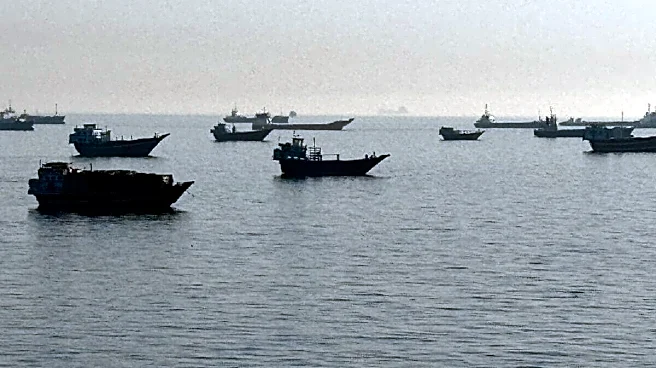
Traffic through the strategically critical Strait of Hormuz appeared to pick up over the past 24 hours, with several ships reportedly using Iran’s traffic lanes as Tehran loosened restrictions imposed during its conflict with the United States and Israel.
A social media post by commentator Mario Nawfal, citing Reuters and Marine Traffic data on Tuesday, claimed the Strait of Hormuz had “lit up” with vessels suddenly surging through Iranian-controlled lanes.
The development comes as Iran’s Revolutionary Guards navy said on Wednesday that it had allowed 26 commercial vessels, including oil tankers and container ships, to transit through the waterway over the last 24 hours.
“Over the past 24 hours, 26 vessels — including oil tankers, container ships
and other commercial vessels — transited the Strait of Hormuz,” the Guards navy said in a post on X, adding that the passage took place after “coordination and security provided by the IRGC navy”.
🇮🇷 Strait of Hormuz just lit up! Ships are suddenly surging through using Iran’s traffic lanes over the last 24 hours.
Source: Reuters, Marine Traffic https://t.co/H0ulNadper pic.twitter.com/u6M1NiUe7L
— Mario Nawfal (@MarioNawfal) May 20, 2026
Iran has heavily restricted shipping movement through the Strait of Hormuz since the outbreak of war with the US and Israel on February 28. Tehran has insisted that vessels crossing the waterway obtain permission from Iranian authorities, despite a ceasefire and an ongoing US naval blockade imposed in April.
The Strait of Hormuz remains one of the world’s most critical energy chokepoints, with a significant share of global oil and liquefied natural gas shipments passing through the narrow corridor connecting the Persian Gulf to international waters.
South Korea said Wednesday that one of its oil tankers had successfully passed through the strait, marking the first such transit by a South Korean vessel since the conflict began.
Iran has also announced the formation of a new “Persian Gulf Strait Authority” tasked with overseeing maritime traffic in the region, signalling Tehran’s intent to tighten administrative control over one of the world’s busiest shipping routes.
/images/ppid_59c68470-image-177915512067024615.webp)

/images/ppid_59c68470-image-177911502674525655.webp)
/images/ppid_59c68470-image-177910752877260544.webp)
/images/ppid_a911dc6a-image-177906562777217641.webp)

/images/ppid_59c68470-image-177910506462195765.webp)

/images/ppid_59c68470-image-177906758868418466.webp)