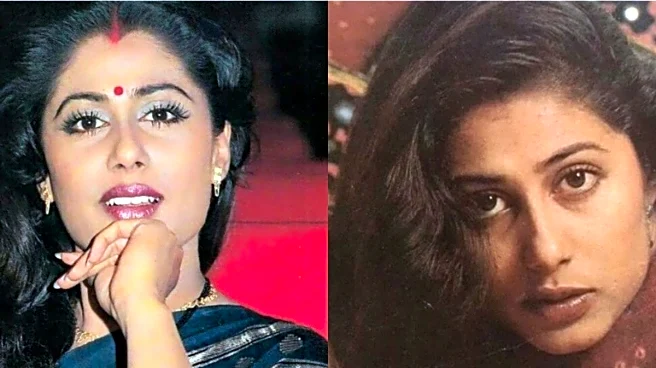

Long before conversations around female objectification became common, Smita Patil was already questioning the system. At a time when glamour was being pushed as the easiest way to sell films, Smita stood
her ground and spoke openly about how women were being used as marketing tools in cinema. She was never interested in being decorative. Smita Patil chose films that spoke about real people, real struggles and real emotions. Her work in parallel cinema changed how women were written and seen on screen. Films like Bhumika, Manthan, Aakrosh, Ardh Satya and Mirch Masala showed women with agency, strength and inner conflict, not just beauty. And off screen too, Smita was fearless.
In a powerful throwback interview, she openly criticised the mindset that films need half-naked women to pull crowds. She said, “Hero ko toh nanga dikha nahi sakte; usse kuch hone bhi wala nahi hai. Lekin aurat ko nanga dikhaye to unko lagta hai sau log aur aa jayenge. Hindustan ki audience par ye baat force ki gayi hai ki dekhiye ji, ismein sex hai; aadhe nange shareer hai to aap film dekhne ke liye aaiye. Yeh ek aisi attitude ban gayi hai jo bahut galat hai. Film agar chalni hai, to film jo hai, agar sachche dil se ek baat keh rahi hai, to woh film chalegi. Sirf aise poster se film chalti nahi hai.”
Whatever Smita Patil said in this interview is still relevant. And this is exactly what Sandeep Reddy vanga does in his film.
byu/Other_Cucumber7750 inBollyBlindsNGossip
With this statement, Smita questioned not just filmmakers, but the larger belief system that assumed audiences could be attracted only through sexualised images of women. She called out the double standard clearly: women were repeatedly used to sell tickets. What made her voice stronger was that she practised what she preached. Smita Patil was known for choosing films that had meaning. She became a strong part of India’s parallel cinema with films like Bhumika, Manthan, Aakrosh, Ardh Satya and Mirch Masala. These films showed real stories and strong characters, especially women dealing with social pressure, power and injustice.
Tragically, her life ended far too early. Smita Patil died on 13 December 1986, at just 31 years old, due to complications following childbirth. Her death shocked the film industry and left a gap that has never truly been filled.


/images/ppid_59c68470-image-177029253831382725.webp)




/images/ppid_a911dc6a-image-177028252659440475.webp)


/images/ppid_a911dc6a-image-177037007519589647.webp)