
/images/ppid_a911dc6a-image-178037306476514399.webp)
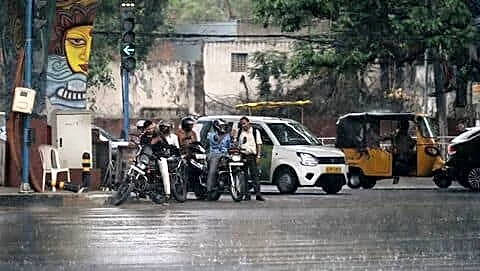
There are places in India where crossing a single road can quietly change almost everything around you.
The language on shop signs changes. Fuel prices shift. Alcohol rules become different. Tax structures vary. Even restaurant menus and business timings may suddenly feel unfamiliar despite being only a few metres apart.
Some of the most fascinating examples of this exist in India’s “twin towns” — urban settlements that grew side by side along state borders until a highway, bridge or narrow dividing strip effectively became the line between two different worlds.
One of the clearest examples is the Karnataka-Goa border around towns like Karwar and Canacona, where crossing between states can immediately alter alcohol taxation, fuel pricing and dominant
spoken language patterns. Similar transitions appear near Belagavi, where Kannada and Marathi identities overlap strongly because of the long-running Karnataka-Maharashtra border dispute.
But perhaps the most striking examples are found in places where the urban landscape itself merges almost seamlessly.
In north India, Ghaziabad and Delhi blend so tightly together along highways and metro corridors that residents often move between them daily without noticing when one jurisdiction ends and another begins. Yet crossing that invisible boundary can change property regulations, vehicle taxes, liquor policies and electricity structures almost instantly.
The same phenomenon appears around Gurugram and Delhi.
One side falls under Haryana’s laws and tax systems, while the other operates under Delhi’s entirely separate administrative structure. Real estate prices, excise policies and even policing arrangements shift despite roads flowing continuously through both regions.
According to urban studies, these border urban zones often create unusual economic behaviour because residents strategically use price differences between states.
People may cross borders for cheaper alcohol, lower fuel taxes, different property registration charges or reduced commercial costs. Businesses also adapt accordingly, clustering around state boundaries to benefit from tax differences or regulatory loopholes.
Language changes can feel equally dramatic.
Near the Kerala-Karnataka and Karnataka-Tamil Nadu borders, towns sometimes shift linguistically within minutes of travel. Signboards transition between Malayalam, Kannada and Tamil while food styles, architecture and political messaging visibly change despite geographic continuity.
One particularly interesting case is the Telangana-Andhra Pradesh border around Hyderabad’s outer growth zones after Telangana became a separate state in 2014. Administrative separation created new taxation and governance systems even though social and economic networks remained deeply interconnected.
Border highways also become politically sensitive spaces.
The Maharashtra-Karnataka border dispute around Belagavi has remained active for decades because linguistic and cultural identities overlap heavily in the region. Political parties from both states periodically revive demands over territorial control, showing how these “twin town” regions are often far more complex than ordinary state boundaries on maps suggest.
Infrastructure sometimes intensifies the effect.
Large highways, flyovers and bridges frequently become visible dividing lines where one side suddenly falls under different municipal rules, road maintenance systems or policing jurisdictions. Residents living only a few hundred metres apart may therefore operate under entirely different legal and taxation frameworks.
Yet daily life usually continues fluidly across these borders.
People work on one side and live on the other. Families speak multiple languages interchangeably. Traders exploit tax differences while commuters move constantly between jurisdictions.
Which is perhaps what makes these Indian twin towns so fascinating.
In a country large enough to contain dozens of languages, tax systems and political cultures, sometimes all it takes to enter another administrative world is crossing a single road.

/images/ppid_59c68470-image-178029753147192433.webp)