
/images/ppid_59c68470-image-178068507148175888.webp)
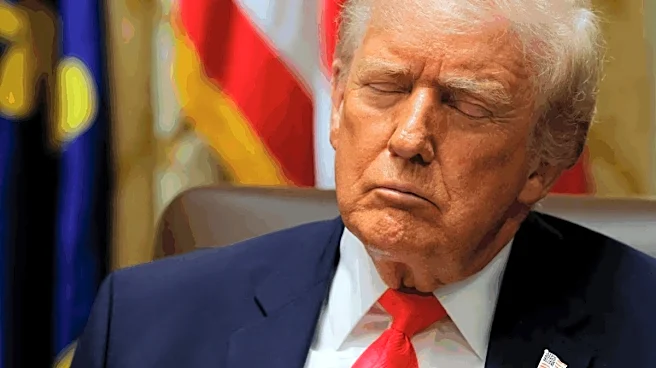
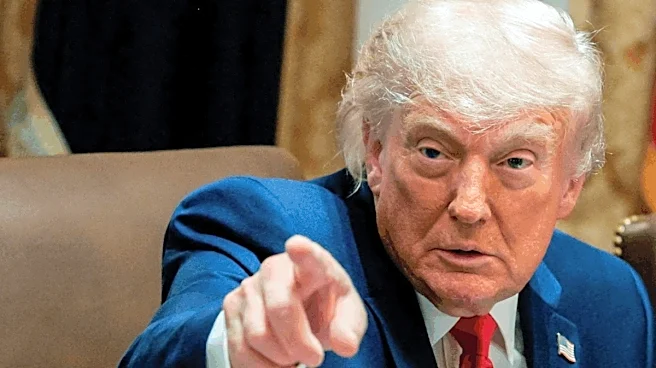
In a major relief for foreign professionals and employers, a US federal court struck down President Donald Trump’s controversial move to impose a $100,000 fee on new H-1B visas, ruling that the measure amounted to an unlawful tax that Congress had never authorised.
US District Judge Leo Sorokin in Boston ruled in favour of a lawsuit brought by 20 Democratic state attorneys general, who challenged the fee announced by Trump in September. The administration had argued that the levy was a lawful monetary penalty designed to restrict the entry of foreign nationals under federal immigration law.
However, Judge Sorokin held that the fee exceeded presidential authority and could not be imposed without congressional approval, according to Reuters.
The
decision marks a setback for the Trump administration’s broader efforts to tighten immigration rules and reshape employment-based visa programmes.
The H-1B visa programme, widely used by US technology companies and other employers to hire highly skilled foreign workers, currently provides 65,000 visas annually, along with an additional 20,000 visas for applicants holding advanced degrees. Before the fee hike, employers typically paid between $2,000 and $5,000 in application-related charges.
Court filings revealed that the steep increase had significantly discouraged visa applications. The administration said that as of February 15, the US Citizenship and Immigration Services (USCIS) had received only 85 payments of the new $100,000 fee.
Recent USCIS data also pointed to a sharp decline in demand. Properly submitted H-1B registrations dropped by 38.5 per cent year-on-year, falling from 343,981 in fiscal year 2026 to 211,600 for fiscal year 2027.
In announcing the fee hike, the Trump administration had argued that the H-1B programme was being misused by some employers to replace American workers with lower-paid foreign labour.
The presidential proclamation stated that the programme had been “deliberately exploited to replace, rather than supplement, American workers with lower-paid, lower-skilled labor,” thereby undermining both economic and national security interests.
It further argued that certain employers had abused the H-1B system to suppress wages and distort the labour market, making it more difficult to attract and retain highly skilled workers, particularly in science, technology, engineering and mathematics (STEM) fields.
The policy had triggered concern in India, the largest beneficiary of H-1B visas, as Indian professionals account for a substantial share of visa holders in the United States.
The issue was raised by External Affairs Minister S Jaishankar during discussions with US Secretary of State Marco Rubio in May. Rubio acknowledged that there could be “some bumps” and “friction points” during the transition as Washington sought to overhaul its immigration framework.
At the same time, Rubio stressed that the reforms were not directed at India and were instead aimed at addressing broader immigration challenges facing the United States.
“This is not because of India, but broadly, we have had over 20 million people illegally enter the United States over the last few years, and we have had to address that challenge,” Rubio had said.
The ruling is expected to provide relief to businesses that rely on foreign talent and to thousands of prospective H-1B applicants, particularly from India, who had faced uncertainty following the administration’s unprecedented fee increase.
/images/ppid_a911dc6a-image-178077642639160075.webp)

/images/ppid_59c68470-image-178089756597095710.webp)


/images/ppid_a911dc6a-image-178068022465911156.webp)
/images/ppid_59c68470-image-178067752977084686.webp)